
In recent years, social media influencers and wellness enthusiasts have reignited interest in an ancient Ayurvedic practice called oil pulling. This traditional oral hygiene technique, which dates back 3,000 to 5,000 years, involves swishing oil in your mouth to promote dental health and overall well-being. But does this time-honored practice hold up to modern scientific scrutiny? Let’s explore what oil pulling is, what the research says, and how to do it correctly.

What Is Oil Pulling?
Oil pulling, known in Ayurvedic medicine as “Kavala” or “Gandusha,” is a simple practice that involves swishing a tablespoon of edible oil around your mouth for an extended period, typically 15-20 minutes, before spitting it out. The term “pulling” refers to the motion of drawing or pulling the oil through your teeth and around your gums.
Traditional Ayurvedic texts, including the ancient Charaka Samhita dating back thousands of years, recommended this practice for strengthening jaws, deep cleansing the tongue, and preventing various diseases. According to Ayurvedic philosophy, the tongue is connected to various organs throughout the body, and oil pulling was believed to help excrete toxic heavy metals and purify the entire system.

What Does Science Say About Oil Pulling?
While oil pulling has been practiced for millennia, modern scientific research on its effectiveness is relatively limited but growing. Here’s what recent studies reveal:
Bacterial Reduction
The most consistent finding in research is that oil pulling may help reduce harmful bacteria in the mouth. A comprehensive meta-analysis published in 2022 found that oil pulling had a beneficial effect in reducing salivary bacterial colony counts compared to control groups. The medium-chain fatty acids in coconut oil and phenolic compounds in olive and sesame oils appear to act as antimicrobial agents against oral bacteria and fungi.
Studies have shown that oil pulling can reduce Streptococcus mutans, a primary bacteria responsible for tooth decay, as well as other harmful oral microorganisms. Research from 2016 demonstrated that oil pulling was as effective as chlorhexidine mouthwash—a chemical commonly used in commercial mouthwashes—in reducing bacterial counts.
Plaque and Gingival Health
The evidence regarding plaque and gum health is more mixed. A 2024 systematic review and meta-analysis published in the International Journal of Dental Hygiene found that while oil pulling reduced plaque and gingival inflammation, effectiveness was comparable to control interventions in some studies. However, research involving 60 adolescents showed a 50% decrease in gingival and plaque indices after four weeks of oil pulling with coconut oil—results similar to those produced by chlorhexidine.
A 2009 study found oil pulling equally effective as chlorhexidine against plaque-induced gingivitis, supporting its use as a preventive measure for maintaining dental health.
What Oil Pulling May NOT Do
It’s important to distinguish evidence-based benefits from unsubstantiated claims. According to the American Dental Association (ADA), there is insufficient reliable scientific evidence to support claims that oil pulling can:
- Whiten teeth significantly (though some surface stain reduction may occur)
- Cure systemic diseases like diabetes, asthma, or heart disease
- Replace regular brushing and flossing
- Prevent cavities definitively
- Detoxify the entire body
The expansive claims sometimes made about oil pulling—that it cures 30 different diseases or provides miraculous health transformations—lack scientific support and should be viewed with skepticism.
How to Do Oil Pulling Correctly
If you’re interested in trying oil pulling, here’s the proper technique based on traditional practice and research protocols:
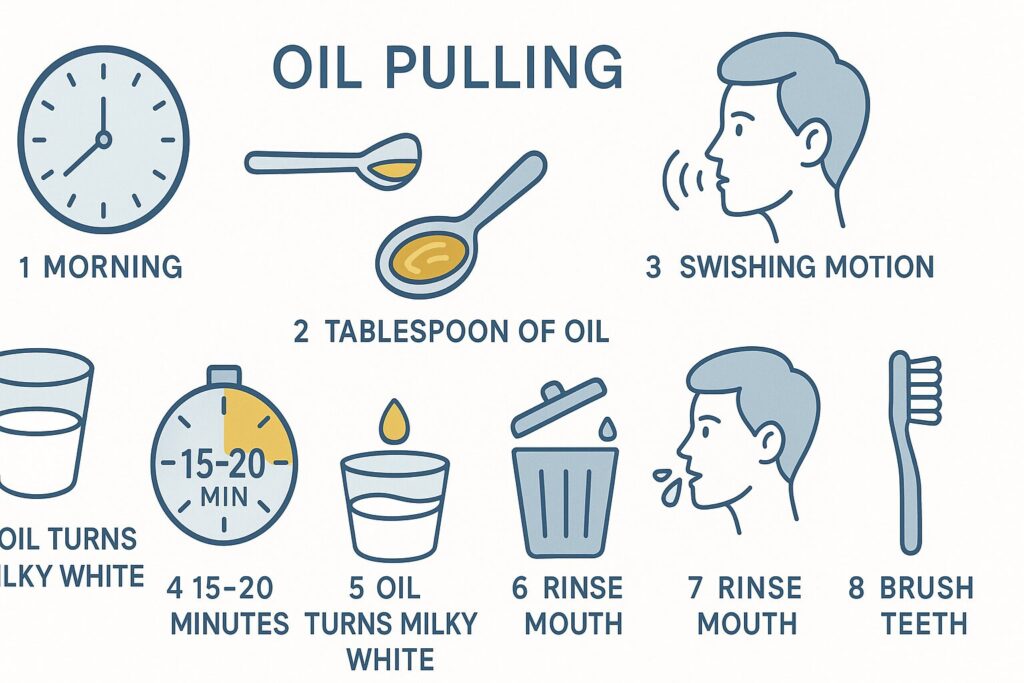
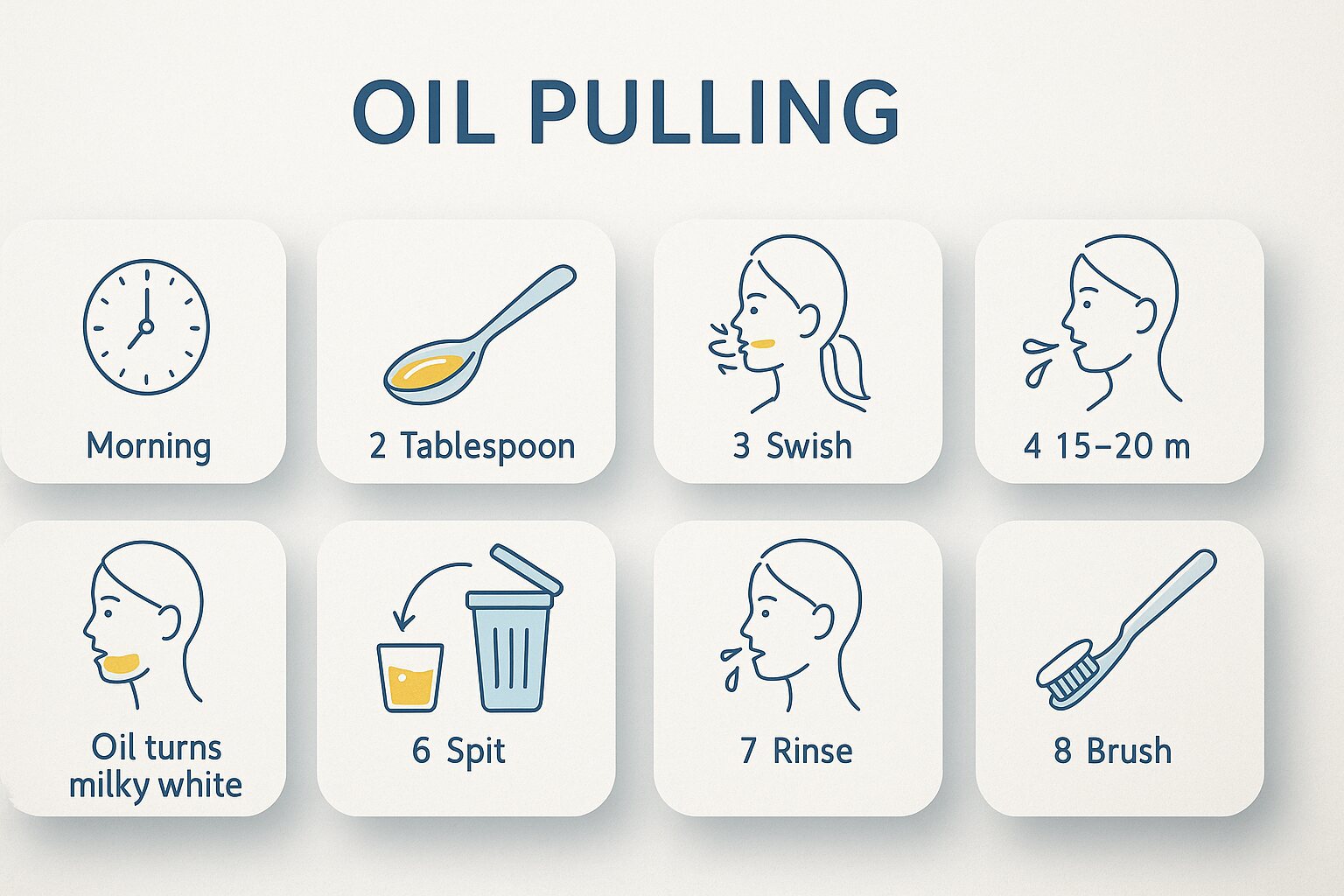
Step-by-Step Guide
1. Choose Your Timing: Perform oil pulling first thing in the morning on an empty stomach, before eating, drinking, or brushing your teeth. This timing is considered optimal because bacteria accumulate in the mouth overnight, and an empty stomach prevents any digestive discomfort.
2. Select Your Oil: Use one tablespoon of high-quality edible oil. Adults use one tablespoon; children over five years old should use one teaspoon.
3. Swish Vigorously: Place the oil in your mouth and swish it around vigorously, pulling it through your teeth and around your gums. The motion should be active, not passive. Move the oil to all areas of your mouth—between teeth, along gum lines, and around your tongue.
4. Duration: Continue for 15-20 minutes. If this seems too long initially, start with 5-10 minutes and gradually increase the duration as you become comfortable. Your jaw may ache at first, which is normal.
5. Observe the Change: If done correctly, the oil will become milky white and thinner in consistency by the end of the session. This transformation indicates that the oil has mixed with saliva and captured bacteria.
6. Spit It Out: Do NOT swallow the oil, as it contains bacteria and toxins from your mouth. Spit the oil into a trash can or paper towel—not the sink, as oil can clog pipes over time.
7. Rinse: Thoroughly rinse your mouth with warm water or warm saline water.
8. Brush Normally: Follow up with your regular tooth brushing and flossing routine.
Which Oil Should You Use?
Different oils offer various properties, though research hasn’t definitively proven one superior to others:
Coconut Oil (Most Popular)
- Contains lauric acid with antimicrobial properties
- Pleasant taste that many find tolerable
- Anti-inflammatory effects
- Most commonly used in modern practice
- Solid at room temperature but melts quickly in the mouth
Sesame Oil (Traditional Choice)
- Most traditional oil used in Ayurvedic practice
- Rich in antioxidants and vitamin E
- Contains phenolic compounds with antimicrobial properties
- Considered “warming” in Ayurvedic terms
Sunflower Oil
- Milder flavor than sesame
- Contains vitamin E
- More affordable option
- Studied in several clinical trials
Olive Oil
- Contains phenolic compounds
- Well-tolerated by most people
- Anti-inflammatory properties
- “Cooling” quality in Ayurvedic terms
Choose organic, cold-pressed, unrefined oils when possible for maximum benefit and purity.
Best Time to Practice Oil Pulling
Morning (Most Recommended)
According to both Ayurvedic tradition and practical considerations, morning is the optimal time for oil pulling. Here’s why:
- Bacteria accumulate in the mouth overnight, making morning the ideal time to remove them
- Your body is in a natural detoxification state upon waking
- An empty stomach prevents nausea or discomfort
- Sets a positive tone for your daily oral hygiene routine
- Freshens breath for the day ahead
Alternative Times
While morning is ideal, oil pulling can be done at other times if that’s more convenient:
- Evening: Can be performed before bed, at least one hour after eating. This removes accumulated food particles and bacteria from the day.
- Midday: Can serve as an extra boost if you’ve had multiple meals, though this is less traditional and potentially less effective.
The key is consistency. Regular practice matters more than perfect timing, so choose a time you can maintain daily.
How Often Should You Oil Pull?
Ayurvedic tradition recommends daily practice, and most research studies used daily oil pulling protocols. For therapeutic benefits like plaque reduction and improved gum health, aim to practice:
- Daily: Once per day, preferably in the morning
- Duration of practice: Most studies showing benefits used protocols of 14-30 days
- Consistency is key: Regular practice yields better results than sporadic use
If daily practice feels overwhelming, even 3-4 times per week may provide some benefits, though this hasn’t been as thoroughly studied.
Important Precautions and Considerations
Safety Notes
Oil pulling is generally safe for most people, but keep these precautions in mind:
Not recommended for:
- Children under 5 years old (risk of swallowing or aspiration)
- Anyone with swallowing difficulties
- People with jaw problems or TMJ disorders (the extended swishing may cause discomfort)
Rare risks include:
- Lipoid pneumonia from accidentally inhaling oil into the lungs (very rare, but documented cases exist)
- Jaw fatigue or soreness, especially when starting
- Nausea if performed after eating or if oil is accidentally swallowed
Allergy considerations: Do not use coconut oil if you have a coconut allergy. Similarly, avoid sesame oil if you’re allergic to sesame.
What Oil Pulling Cannot Replace
Oil pulling is not a substitute for established oral hygiene practices. You must still:
- Brush your teeth twice daily with fluoride toothpaste
- Floss daily
- Visit your dentist regularly for checkups and cleanings
- Maintain a healthy diet low in sugar
Think of oil pulling as a complementary practice that may enhance your oral hygiene routine, not replace it.
The Bottom Line: Is Oil Pulling Worth Trying?
Oil pulling offers an interesting intersection of ancient wisdom and modern research. The current scientific evidence suggests it may provide modest benefits for oral health, particularly in reducing oral bacteria, and shows promise for plaque and gum health. However, the research is still limited in scope and quality, with many studies having small sample sizes or inconsistent methodologies.
The Case For Oil Pulling:
- Reduces harmful oral bacteria
- May improve plaque and gingival scores
- No significant side effects when done correctly
- Inexpensive and accessible
- Simple to incorporate into daily routine
- Natural alternative to chemical mouthwashes for those who prefer it
The Case for Caution:
- Evidence is limited and inconsistent
- American Dental Association does not officially endorse the practice
- Time-consuming (15-20 minutes daily)
- Cannot replace brushing and flossing
- Expansive health claims lack scientific support
Who Might Benefit Most:
Oil pulling may be particularly useful for:
- People seeking natural oral hygiene alternatives
- Those with mild gum inflammation or plaque buildup
- Individuals in areas with limited access to dental products
- People who cannot tolerate chemical mouthwashes
- Anyone interested in complementary wellness practices
The Practical Approach:
If you’re interested in trying oil pulling, approach it as a complementary practice alongside—not instead of—regular dental care. Start with shorter sessions (5-10 minutes) and gradually increase to 15-20 minutes as you become comfortable. Choose a high-quality oil you find palatable, and practice consistently for at least 2-4 weeks to evaluate any benefits.
Most importantly, maintain realistic expectations. Oil pulling is not a miracle cure, but it may offer modest improvements to oral hygiene for some people. As Dr. Mark Wolff from the University of Pennsylvania School of Dental Medicine notes, “If you spent 20 minutes brushing your teeth and flossing, you’d probably get them equally or better cleaned.”
Ultimately, oil pulling represents a low-risk practice with potential benefits that deserves further research. Whether you choose to incorporate it into your routine is a personal decision based on your interest in natural health practices, available time, and individual response to the technique.
Sources:
- International Journal of Dental Hygiene (2024)
- Journal of Traditional and Complementary Medicine
- Indian Journal of Dental Research
- NCBI/PMC (Multiple peer-reviewed studies)
- American Dental Association
- University of Pennsylvania School of Dental Medicine
- Medical News Today
- Examine.com (Evidence-based nutrition database)
- Various Ayurvedic medicine texts and contemporary reviews