
When it comes to performance nutrition, oranges earn their place in every athlete’s meal plan. Packed with vitamin C, flavonoids, potassium, and dietary fiber, this humble citrus fruit delivers measurable benefits for recovery, cardiovascular output, and immune resilience — all backed by solid science.
Nutritional Profile at a Glance
A 100g serving of fresh orange (Citrus × sinensis) provides:
- Calories: 47 kcal
- Total Carbohydrates: 12g (4% DV) — with 9g natural sugars and 2.4g dietary fiber (9% DV)
- Total Fat: 0.1g
- Protein: 0.9g
- Key Micronutrients: Vitamin C, Vitamin A, B-complex vitamins, folate, and potassium
This macronutrient balance makes oranges an efficient, low-calorie carbohydrate source ideal for pre-workout fueling or post-workout replenishment.
Performance Benefits for Active Individuals
Cardiovascular Support and Stroke Risk Reduction
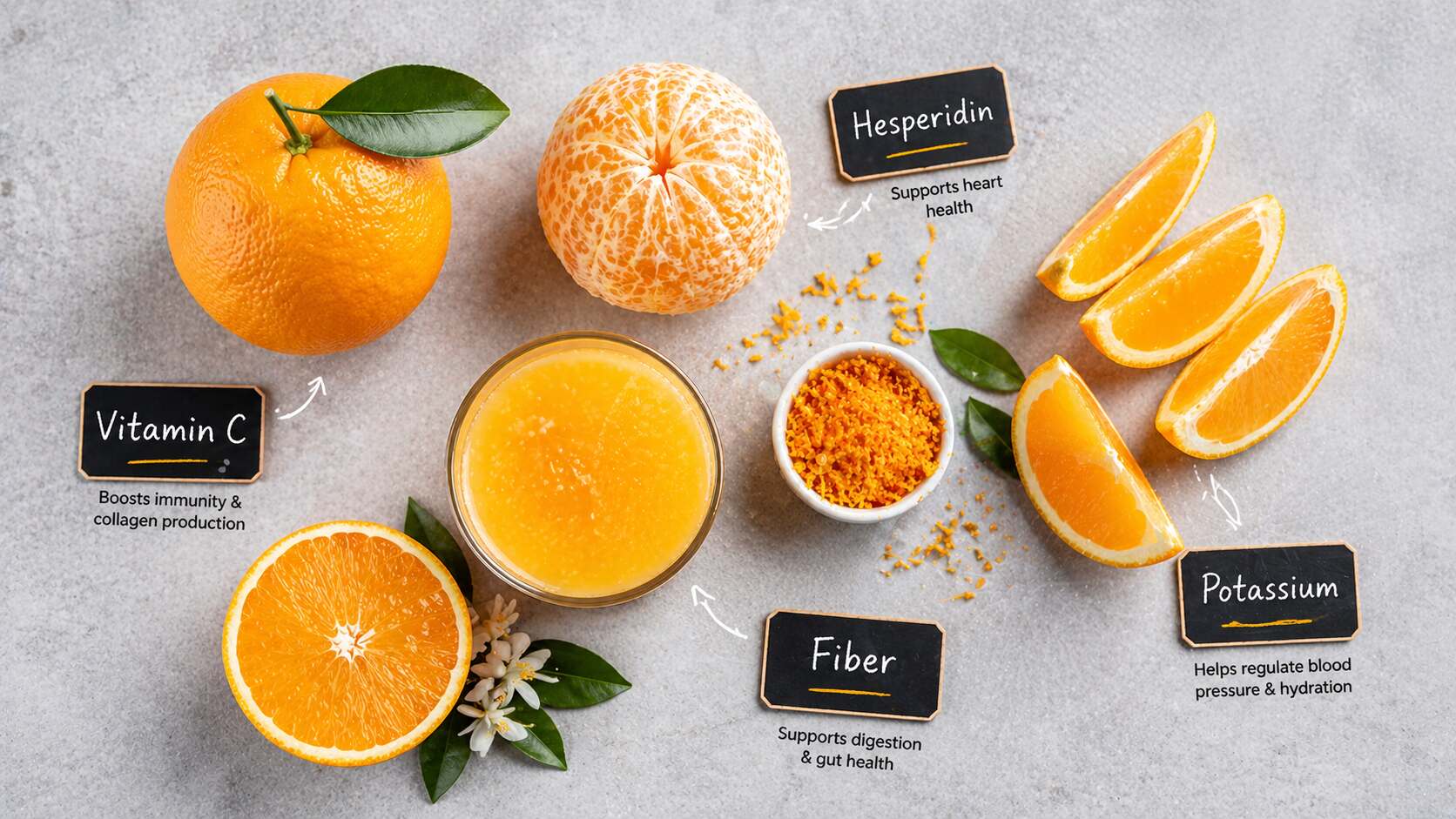
Oranges contain hesperidin, a potent flavonoid with well-documented vasodilatory and anti-inflammatory properties. Research published in the American Journal of Clinical Nutrition (2011) found that hesperidin supplementation significantly reduced diastolic blood pressure in overweight men. Combined with potassium — which relaxes arterial walls and supports healthy circulation — regular orange consumption contributes to the cardiovascular efficiency that endurance athletes depend on.
Immune Defense Under Training Load
Intense training suppresses immune function, increasing susceptibility to upper respiratory infections. Oranges deliver vitamins A, C, B-complex, and folate, all of which stimulate white blood cell production and strengthen immune barriers. A landmark meta-analysis in Nutrients (2017) confirmed that vitamin C supplementation reduces the duration and severity of exercise-induced infections in high-volume athletes.
Digestive Health and Gut Microbiota

Oranges are rich in soluble fibers — including pectin, cellulose, and hemicellulose — that support a healthy gut microbiome, regulate intestinal transit, and reduce bloating. For athletes, gut health directly influences nutrient absorption efficiency. Disrupted microbiota from poor dietary fiber intake can impair protein and carbohydrate uptake, undermining recovery. Research in Frontiers in Nutrition (2021) highlights dietary fiber’s role in sustaining gut-barrier integrity during periods of high physical stress.
Practical Recommendations
Optimal daily intake: One medium raw orange (approximately 130g) or 150 mL of freshly squeezed juice, consumed with the pulp to preserve full fiber content.
Timing guidance:
- Pre-workout (30–60 min before): The natural sugars provide fast-acting glycogen replenishment, while flavonoids prime vascular dilation.
- Post-workout: Pair with a protein source to support glycogen restoration and muscle repair simultaneously.
Preparation tips: Eat the whole fruit rather than processed juice — commercial juices often strip fiber and add sugar. Zesting the peel into smoothies or yogurt retains additional hesperidin content.

Cautions and Contraindications
Individuals prone to acid reflux or gastroesophageal reflux disease (GERD) should moderate intake, as citric and ascorbic acids in oranges can aggravate symptoms. Those on potassium-restricted diets (e.g., certain kidney conditions) should consult a healthcare provider before significantly increasing consumption.
The Bottom Line
Oranges are more than a vitamin C source — they’re a functional performance food with proven benefits for vascular health, immune resilience, and gastrointestinal function. For athletes seeking a whole-food strategy that supports training adaptations, one orange a day is a simple, evidence-based habit worth keeping.
Sources:
- Rizza, S. et al. (2011). American Journal of Clinical Nutrition — Hesperidin and blood pressure.
- Hemilä, H. & Chalker, E. (2017). Nutrients — Vitamin C and exercise-induced infections.
- Mailing, L.J. et al. (2021). Frontiers in Nutrition — Exercise, gut microbiota, and dietary fiber.
- USDA FoodData Central — Oranges, raw, all commercial varieties (FDC ID: 169097).
Disclaimer: This article is for informational purposes only and does not constitute medical or nutritional advice. Consult a qualified healthcare professional or registered dietitian before making significant changes to your diet, particularly if you have an underlying health condition.