

If you’re serious about building muscle and transforming your physique, you’ve probably wondered: what’s the most effective training frequency? After years of research and practical application, the 5-day workout split stands out as one of the most efficient approaches to hypertrophy. This isn’t just gym folklore—it’s a training method backed by exercise science and proven by decades of results.
The 5-day split allows you to train each major muscle group with optimal frequency and volume while ensuring adequate recovery. It’s the same approach that built the golden era physiques of bodybuilding and continues to produce results for everyone from competitive athletes to fitness enthusiasts today.
Understanding Split Training vs. Full-Body Training
Before diving into the specifics, let’s clarify what split training actually means. There are two primary resistance training systems: split training and full-body training.
Split training targets specific muscle groups on designated days, allowing you to focus intensely on particular areas while others recover. The major muscle groups include chest, back, shoulders, legs, arms, and core.
Full-body training works your entire body in each session, typically performed 2-3 times per week. While this approach is excellent for beginners and those with limited time, it has limitations for advanced hypertrophy goals.
According to the American College of Sports Medicine, muscles require approximately 48-72 hours of recovery between high-intensity training sessions. Split training cleverly works around this limitation by targeting different muscle groups each day, allowing you to train more frequently without overtraining.
Research published in the Journal of Strength and Conditioning Research suggests that training frequency of 2-3 times per week per muscle group optimizes muscle protein synthesis while allowing adequate recovery. The 5-day split achieves this balance perfectly through strategic exercise pairing.
Why the 5-Day Split Works for Muscle Growth
The 5-day split excels because it matches training volume and frequency to each muscle group’s recovery capacity. Larger muscle groups like the chest and back can handle longer recovery periods (5-7 days between direct training), while smaller muscles like biceps and triceps recover faster and benefit from more frequent stimulation.
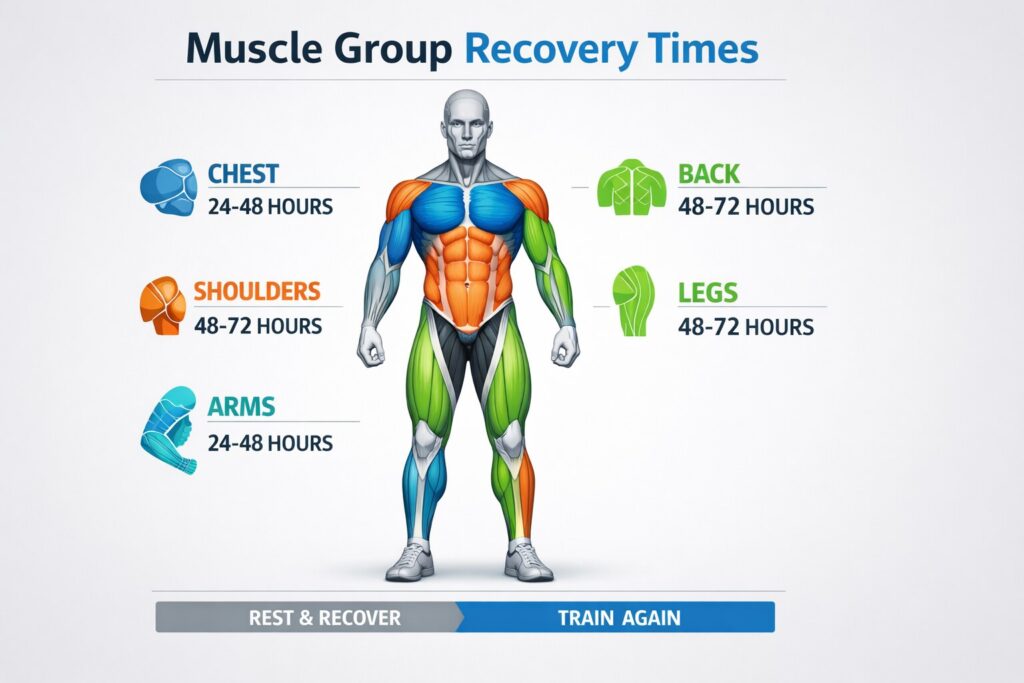
A study in Medicine & Science in Sports & Exercise found that training volume (total sets per muscle group per week) is a primary driver of hypertrophy. The 5-day split allows you to accumulate sufficient training volume for each muscle group—typically 12-20 sets per week—without excessively long individual workouts.
Here’s what makes this approach optimal:
Focused Intensity: Training one or two muscle groups per session allows you to maintain high intensity throughout your workout without mental or physical fatigue compromising performance.
Adequate Recovery: Strategic exercise pairing ensures muscles are fully recovered before being trained again, maximizing growth potential while minimizing injury risk.
Time Efficiency: Individual sessions last 60-75 minutes, making this sustainable for those with busy schedules who can commit to five weekly gym visits.
Progressive Overload: With consistent training frequency, you can systematically track and increase weights, sets, and reps—the foundation of continuous progress.
The Optimal 5-Day Split Structure
Not all 5-day splits are created equal. The key is strategic exercise pairing that considers muscle overlap and recovery needs. Here’s the scientifically optimized structure:
- Day 1: Chest + Light Triceps
- Day 2: Back + Light Biceps
- Day 3: Core + Calves + Forearms + Cardio
- Day 4: Shoulders + Heavy Triceps
- Day 5: Legs + Heavy Biceps
- Day 6: Rest (Optional Light Core)
- Day 7: Rest
This structure accounts for several important factors that many people overlook.
The Science Behind Exercise Pairing
Chest and Shoulder Separation: Any pressing movement for chest—like the bench press—significantly activates the anterior deltoids (front shoulders). Research in the Journal of Applied Biomechanics confirms that as the bench angle increases from decline to flat to incline, anterior deltoid activation increases proportionally. This is why chest and shoulders are separated by the maximum possible time in this split.
Strategic Arm Training: Unlike larger muscle groups, the biceps and triceps are involved in virtually all upper body movements. Triceps assist in all pressing movements (chest and shoulders), while biceps assist in all pulling movements (back). Rather than dedicating a full day to arms, this split incorporates them strategically: light arm work on compound movement days, with one heavy arm session per week. This provides the 2x per week frequency that smaller muscle groups respond best to, as noted in research published in Sports Medicine.
Back Position: Back day is strategically placed early in the week after chest. While chest work involves some tricep activation, it minimally impacts the back muscles and biceps. This ensures you’re fresh for heavy pulling movements like deadlifts and rows.

Your Complete 5-Day Workout Blueprint
Here’s the detailed workout structure with specific exercises, sets, and rep ranges:
Day 1: Chest + Light Triceps
Begin with compound presses, then transition to isolation work:
- Flat Bench Press: 4 sets of 8-10 reps
- Incline Dumbbell Press: 4 sets of 8-10 reps
- Decline Bench Press: 4 sets of 8-10 reps
- Decline Dumbbell Flyes: 4 sets of 8-12 reps
- Triceps Pushdown (V-Bar): 3 sets of 9-12 reps
- Skull Crushers: 3 sets of 9-12 reps
Day 2: Back + Light Biceps
Hit your back from multiple angles with reduced sets to avoid overtraining this large muscle group:
- Seated Cable Rows: 2 sets of 8-10 reps
- Front Lat Pulldown: 2 sets of 8-10 reps
- Bent Over Barbell Rows: 2 sets of 8-10 reps
- Deadlift: 2 sets of 8-10 reps
- Straight-Arm Pulldown: 2 sets of 8-10 reps
- Hammer Curls: 3 sets of 8-12 reps
- EZ-Bar Curl: 3 sets of 8-10 reps
- Concentration Curls: 3 sets of 8-12 reps
Day 3: Core + Calves + Forearms + Cardio
Give major muscle groups active recovery while training smaller, often-neglected areas:
- Crunches: 3 sets of 10-12 reps
- Hanging Leg Raise: 3 sets of 10-12 reps
- Seated Russian Twist: 12-15 reps per side
- Bicycle Crunches: 3 sets to failure
- Planks: 3 sets for maximum hold
- Palms-Up Barbell Wrist Curl: 3 sets to failure (progressive weight)
- Palm-Down Barbell Wrist Curl: 3 sets to failure (progressive weight)
- Seated Calf Raise: 3 sets of 8-15 reps
- Smith Machine Calf Raise: 3 sets of 8-15 reps
- 25 minutes steady-state cardio
Day 4: Shoulders + Heavy Triceps
Start with compound overhead presses, then alternate between deltoid work and triceps:
- Seated Dumbbell Press: 4 sets of 8-10 reps
- Military Press: 4 sets of 8-10 reps
- Side Lateral Raise: 4 sets of 8-12 reps
- Front Lateral Raise: 4 sets of 8-12 reps
- Reverse Flyes: 4 sets of 8-12 reps
- Shrugs: 3 sets of 8-10 reps
- Dips: 4 sets of 8-10 reps
- Standing Dumbbell Triceps Extension: 4 sets of 8-12 reps
- Triceps Pushdown (Rope): 4 sets of 8-12 reps
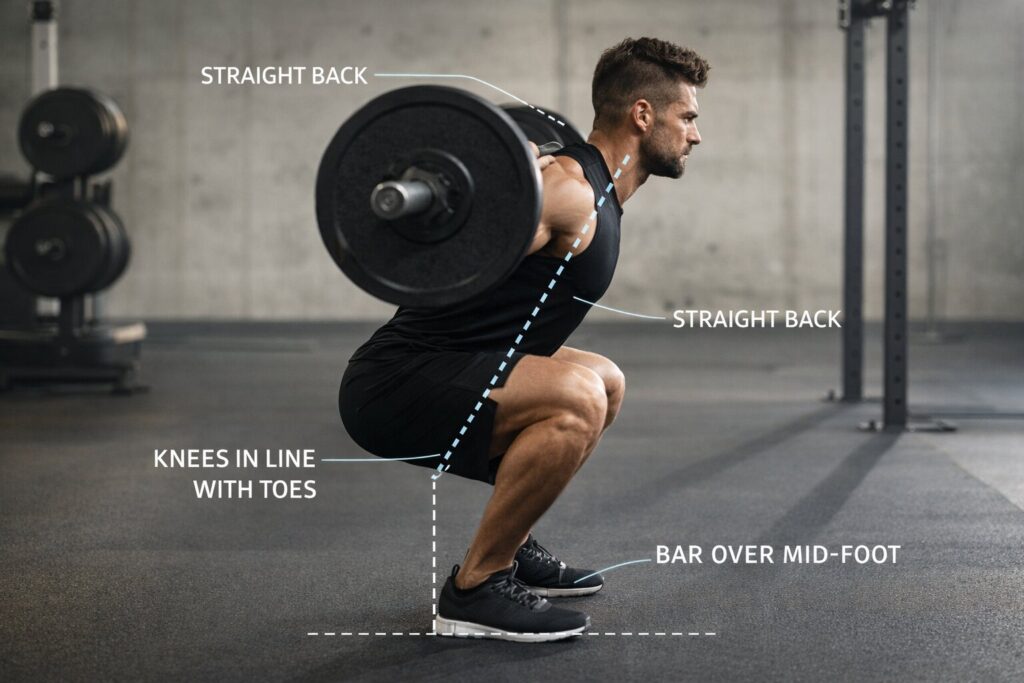
Day 5: Legs + Heavy Biceps
Finish your training week with lower body and arms:
- Squats: 4 sets of 6-8 reps
- Leg Press: 3 sets of 8-10 reps
- Leg Extensions: 3 sets of 8-12 reps (skip if you have knee issues)
- Lying Leg Curls: 3 sets of 8-12 reps
- Smith Machine Calf Raise: 4 sets of 8-12 reps
- Wide-Grip Standing Barbell Curl: 4 sets of 8-12 reps
- Spider Curl: 4 sets of 8-10 reps
- Machine Bicep Curl: 3 sets of 8-12 reps
Days 6-7: Recovery
Complete rest or optional light core work at home (7-12 minutes).
Pro Tips for Maximum Results

Invest in Proper Equipment: Quality weightlifting shoes with an elevated heel and stable base dramatically improve squat depth and overall lifting mechanics. This isn’t optional for serious lifters—it’s a game-changer for knee health and performance.
Prioritize Progressive Overload: Track your workouts meticulously. Aim to increase weight, reps, or sets every 2-3 weeks. According to research in Sports Medicine, progressive overload is the single most important factor in continued strength and muscle gains.
Nutrition Timing Matters: Consume 20-40g of protein within 2 hours post-workout to optimize muscle protein synthesis, as recommended by the International Society of Sports Nutrition. Pair this with adequate carbohydrates (1:1 to 2:1 carb-to-protein ratio) to replenish glycogen stores.
Sleep is Non-Negotiable: Muscle growth occurs during recovery, not training. Aim for 7-9 hours of quality sleep nightly. Research published in Physiological Reports demonstrates that sleep deprivation significantly impairs muscle recovery and strength gains.
Listen to Your Body: While this split provides optimal recovery for most people, individual needs vary based on age, training experience, nutrition, stress levels, and genetics. If you’re consistently fatigued or performance declines, consider adding an extra rest day or reducing volume.
Who Should Use This Split?
The 5-day split is ideal for:
- Intermediate to advanced lifters with at least 6-12 months of consistent training experience
- Those who can commit to five gym sessions weekly
- Anyone prioritizing muscle hypertrophy over general fitness
- Individuals who enjoy longer, focused workouts rather than brief, intense sessions
- Athletes in muscle-building phases rather than sport-specific training cycles
If you’re a complete beginner, consider starting with a full-body routine 3 times weekly to build foundational strength and neuromuscular coordination before transitioning to split training.
Final Thoughts
The 5-day workout split represents the sweet spot between training volume, frequency, and recovery. It’s demanding but sustainable, efficient yet comprehensive. By following this scientifically structured approach, you’re setting yourself up for consistent, measurable progress toward your physique goals.
Remember that no workout program works without consistency, proper nutrition, and adequate recovery. The 5-day split provides the roadmap—your dedication to following it determines your results.
Disclaimer: This article is for informational purposes only and should not replace professional medical advice. Consult with a qualified healthcare provider or certified personal trainer before beginning any new exercise program, especially if you have pre-existing health conditions or injuries. Always use proper form and appropriate weights to minimize injury risk.