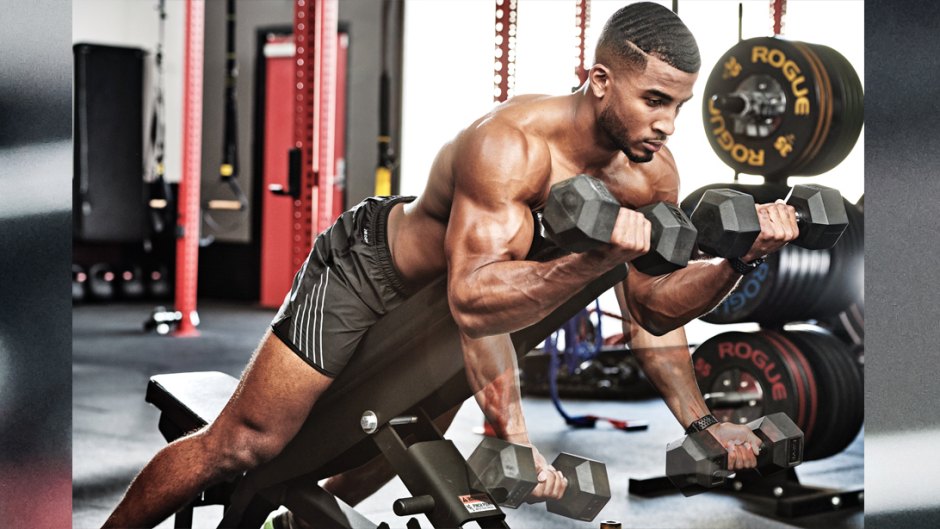
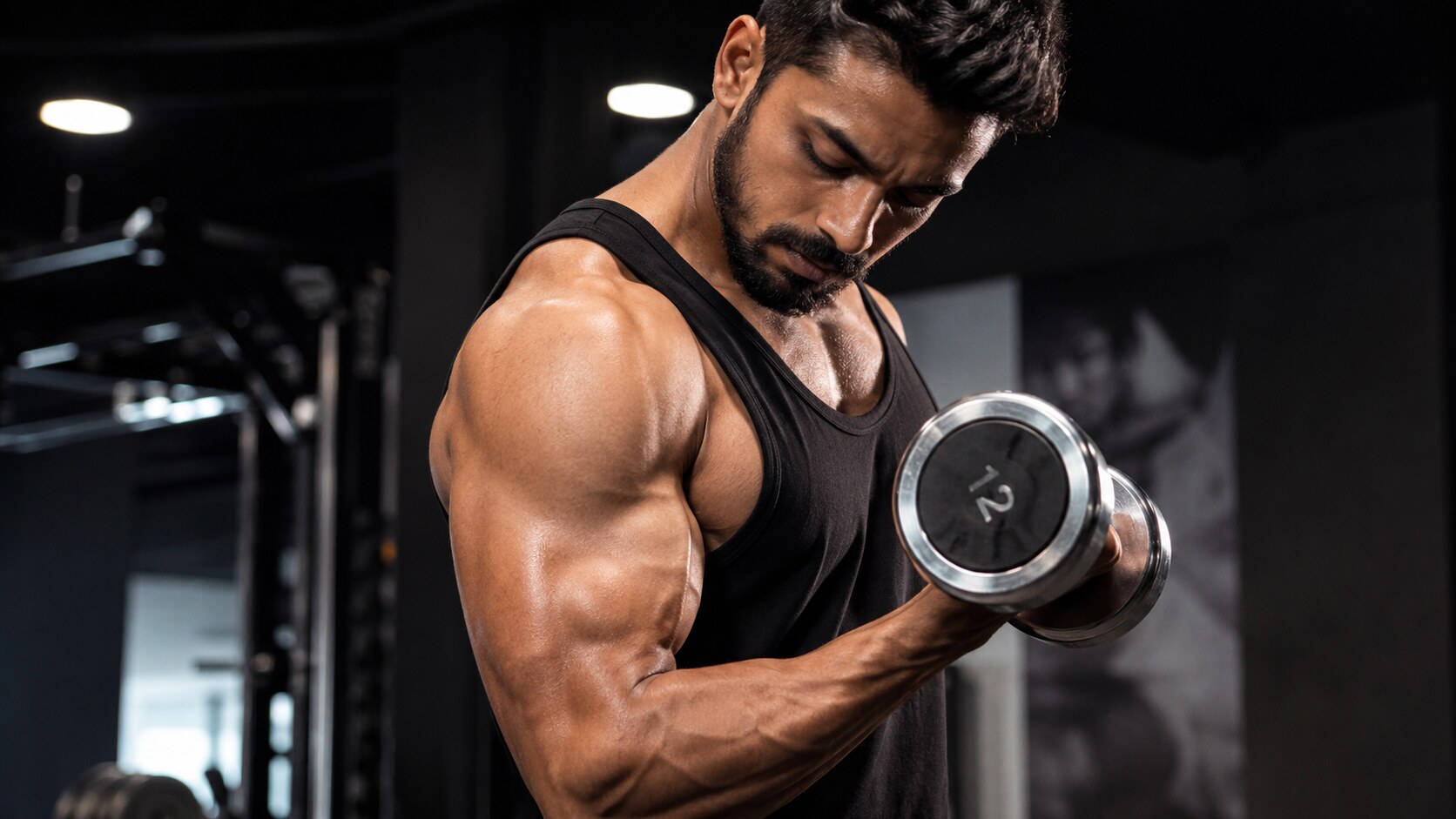
Strong, well-developed biceps are more than an aesthetic goal. They are critical for pulling mechanics, grip endurance, and overall upper-body functional strength. Whether you are stepping into the gym for the first time or building on a foundation, this six-exercise biceps routine gives you a structured, progressive path to measurable gains.
Workout Parameters
Before you begin, set your baseline:
- Sets: 3 per exercise
- Reps: 12 / 10 / 8 (progressive load)
- Rest: 30 to 60 seconds between sets
- Total Exercises: 6
Warm-Up: Complete 10 standard push-ups, 5 to 8 close-grip pull-ups, and one light warm-up set of curls at approximately 40 percent of your working weight. This activates the elbow flexors and prepares connective tissue before loading (American College of Sports Medicine, 2022).
Exercise 1: Dumbbell Curl
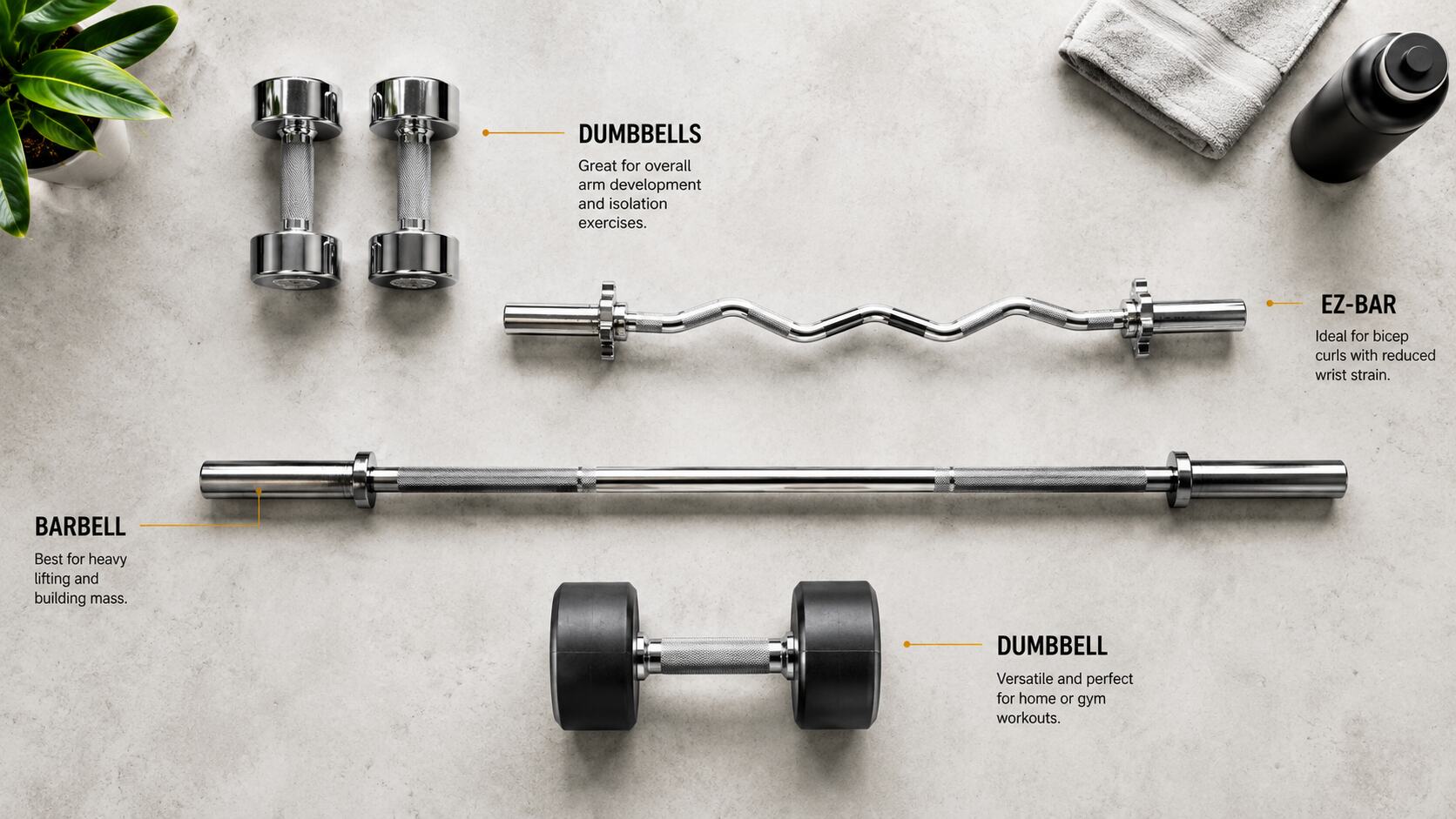
The dumbbell curl is your primary volume builder. Choose a weight that allows you to complete 12 clean reps on the first set without compensating through the shoulders. Supinate your wrist at the top of the movement and hold the contracted position for one to two seconds. Research published in the Journal of Strength and Conditioning Research (2019) confirms that time under tension during the concentric phase significantly increases hypertrophic stimulus in the elbow flexors.
Exercise 2: Barbell Biceps Curl
The barbell curl recruits both heads of the biceps brachii simultaneously, making it the primary strength-building movement in this session. Lock your elbows at your sides, eliminate shoulder swing, and achieve full supination at peak contraction. A study in the European Journal of Applied Physiology (2020) found that strict elbow positioning during barbell curls produces greater peak biceps activation compared to movements that allow shoulder compensation.
Exercise 3: Hammer Curl
Hammer curls target the brachialis and brachioradialis alongside the biceps brachii, producing a fuller and denser arm appearance. Keep your palms facing each other throughout the movement and maintain locked elbows. Pausing at the top for three to five seconds on each rep increases isometric tension across all three elbow flexor muscles. This exercise also builds grip and forearm endurance, which carries over directly to compound pulling movements.
Exercise 4: EZ-Bar Preacher Curl
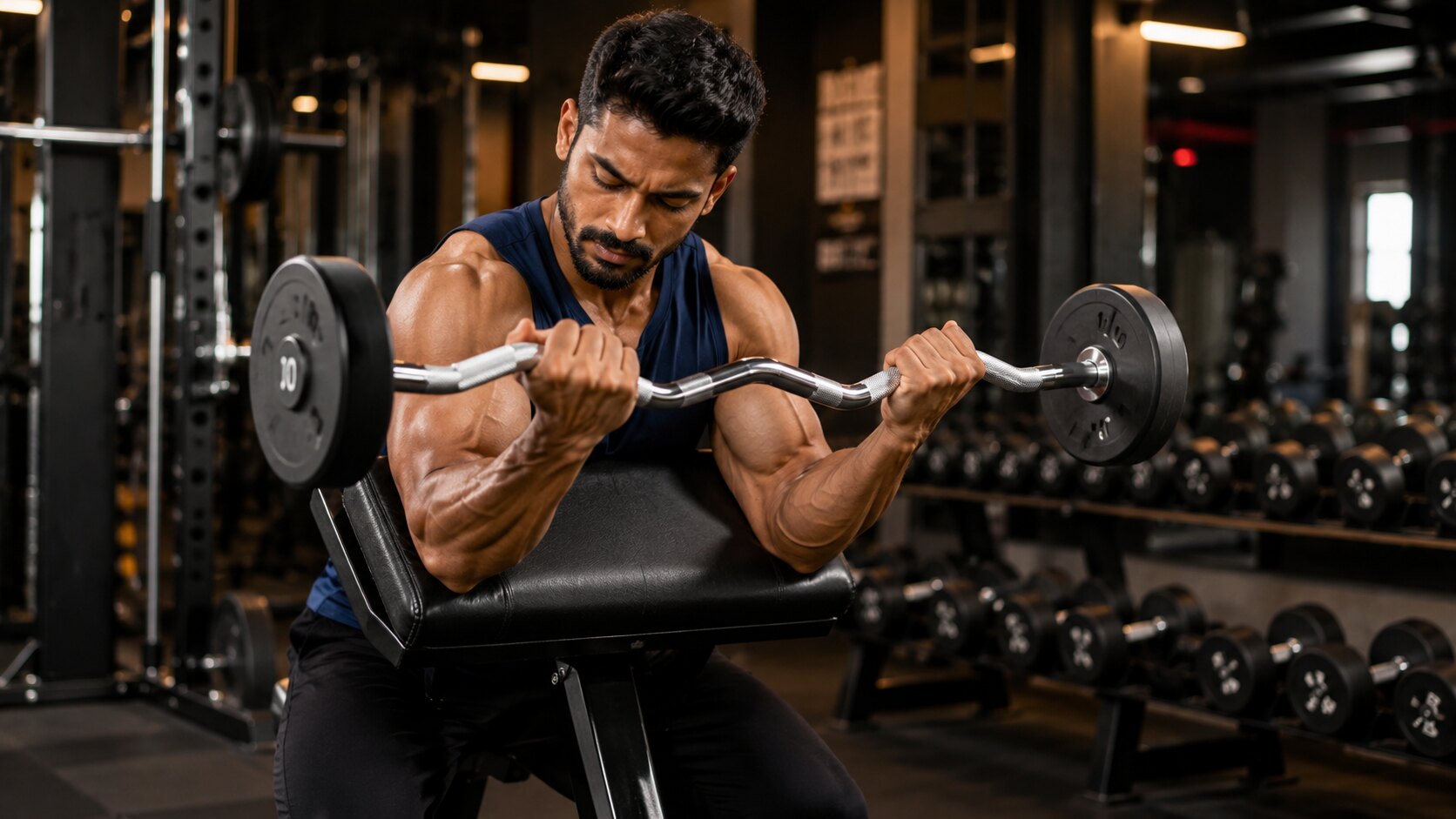
The preacher bench eliminates momentum and forces complete isolation of the biceps. Use a lighter load than your standard curl weight. The EZ-bar grip reduces wrist stress while maintaining effective biceps engagement. Lower the weight under control through the full range, pausing at the bottom without fully releasing tension. Research in the Journal of Human Kinetics (2018) identified the preacher curl as one of the highest EMG-activating exercises for the long head of the biceps brachii.
Exercise 5: Close-Grip Biceps Curl
A narrow grip shifts emphasis toward the long head of the biceps, improving peak shape and height over time. Slightly angle your elbows forward at the top of the rep to achieve maximum range of motion. Keep your tempo controlled at two seconds up and three seconds down. Aim for form quality over load here, as the movement demands precise elbow positioning to be effective.
Exercise 6: Concentration Curl
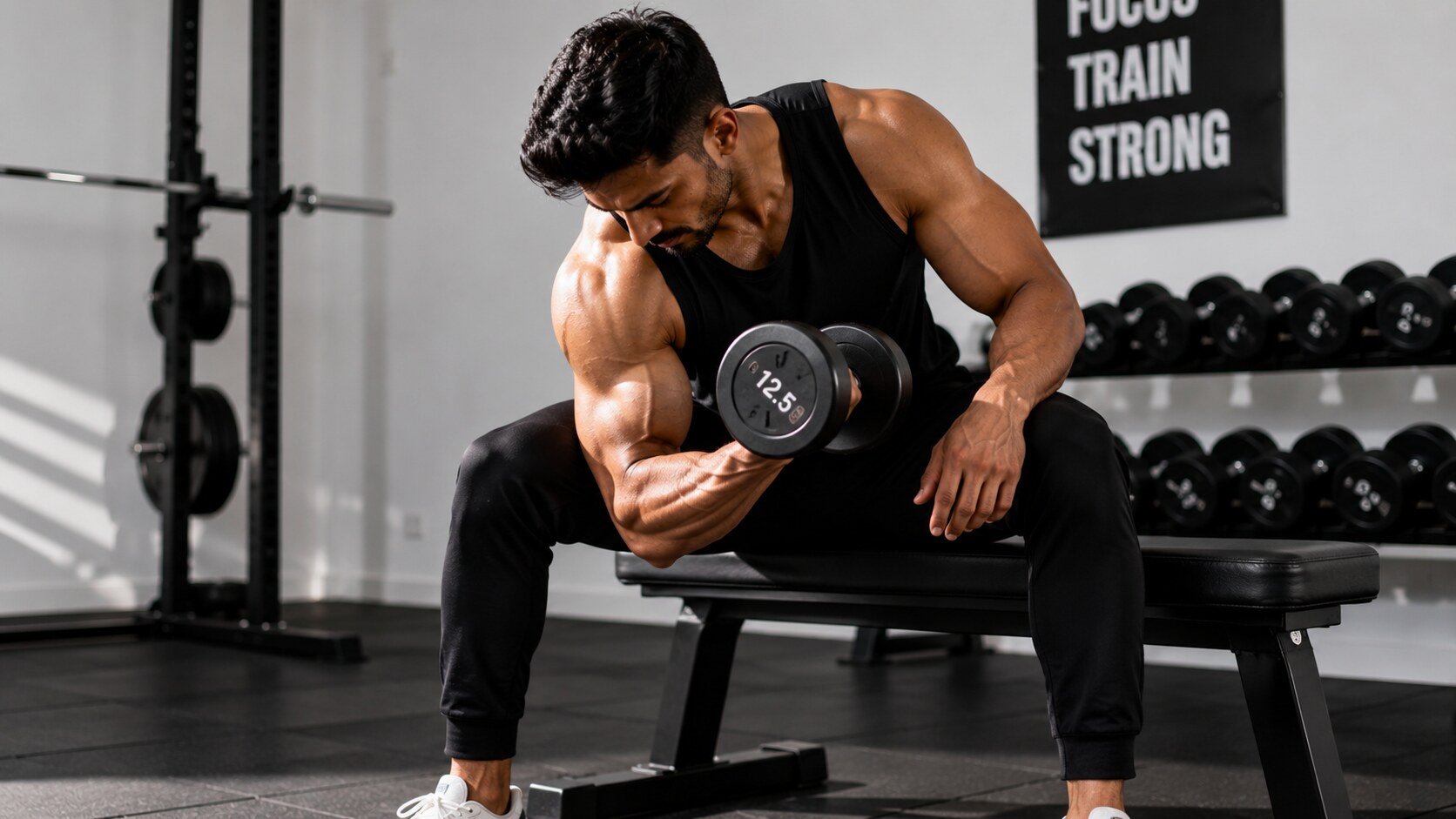
The concentration curl serves as the finisher for this session. Sit on a bench, brace your working elbow against the inside of your thigh, and perform the curl without any shoulder involvement. This isolates the upper portion of the biceps brachii and is one of the most effective movements for developing the peak contraction. An ACE-commissioned study (American Council on Exercise, 2014) ranked the concentration curl as the highest-activating exercise for overall biceps recruitment among eight commonly tested movements.
Training Notes
- Progress load by 1 to 2 kg every one to two weeks when you can complete all reps with clean form
- Train biceps directly one to two times per week, allowing 48 hours of recovery between sessions
- Adequate protein intake of 1.6 to 2.2 g per kg of body weight daily supports hypertrophy (Journal of the International Society of Sports Nutrition, 2017)
- Hydration, sleep quality, and caloric sufficiency are essential variables that determine recovery rate
Sources
- American College of Sports Medicine. (2022). ACSM’s Guidelines for Exercise Testing and Prescription (11th ed.).
- Schoenfeld, B. J., et al. (2019). Resistance training volume enhances muscle hypertrophy but not strength. Journal of Strength and Conditioning Research, 33(1), 188–198.
- Marcolin, G., et al. (2018). Selective activation of shoulder, trunk, and arm muscles. Journal of Human Kinetics, 61, 51–59.
- Morton, R. W., et al. (2017). A systematic review, meta-analysis and meta-regression of the effect of protein supplementation on resistance training–induced gains in muscle mass. British Journal of Sports Medicine, 52(6), 376–384.
- American Council on Exercise. (2014). ACE-Sponsored Research: Best Biceps Exercises. ACE Fitness.
Disclaimer: This article is intended for educational and informational purposes only. Consult a qualified fitness professional or physician before beginning any new exercise program, particularly if you have pre-existing injuries or medical conditions. Exercise selection, load, and volume should be adjusted based on individual ability and health status.