
Building a powerful, well-defined chest takes more than just showing up to the gym. It requires a strategic combination of consistent training, smart nutrition, and a targeted exercise selection that challenges your pectoral muscles from every angle. Whether you are just starting out or looking to break through a plateau, these nine proven chest exercises will help you build real strength and lasting definition.
Your chest is anchored by the pectoral muscles — one of the largest muscle groups in your upper body. But chest training does not happen in isolation. Your anterior deltoids, triceps, trapezius, and latissimus dorsi all contribute to pressing and fly movements, making chest day a true upper-body session when programmed correctly.
Why Chest Training Matters
Beyond aesthetics, a strong chest improves posture, upper-body pushing power, and shoulder joint stability. According to a 2017 review in the Journal of Human Kinetics, compound and isolation chest movements both contribute significantly to hypertrophy when volume and progressive overload are applied consistently.¹
9 Most Effective Chest Exercises
1. Straight Arm Plank
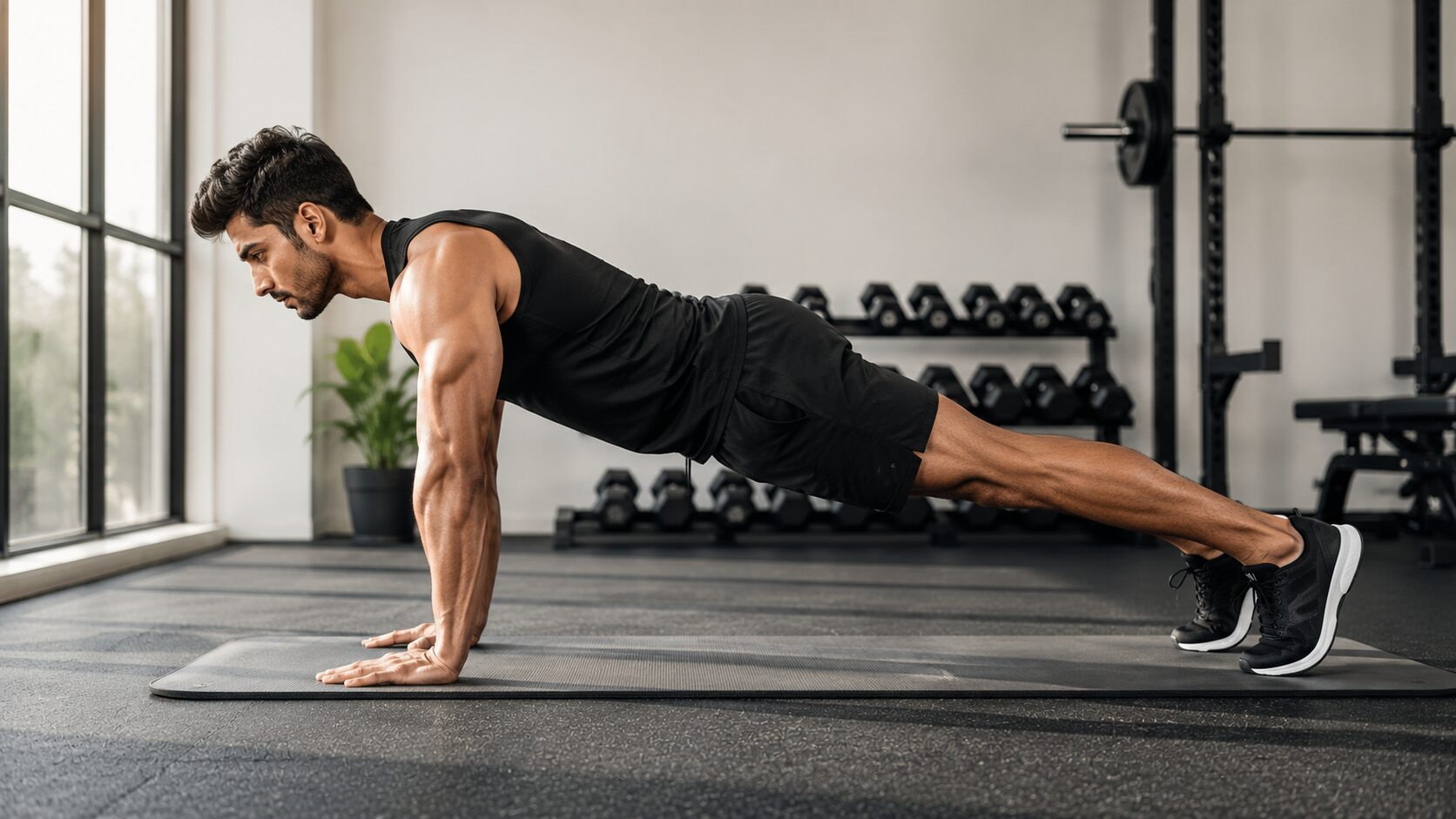
The straight arm plank is a foundational exercise that loads the chest isometrically while engaging your core, shoulders, and hips simultaneously.
How to perform:
- Start face-down with palms on the floor beside your chest
- Press up into a push-up position, arms fully extended
- Align shoulders directly over wrists; keep hips level
- Maintain a rigid line from head to heel — no sagging or arching
Sets and reps: Beginners: 2 sets of 10–15 seconds. Progress to 30–60 seconds as strength builds.
Benefits: Strengthens the chest, shoulders, and spinal stabilizers; improves postural endurance.
2. Chest Fly (Dumbbell)
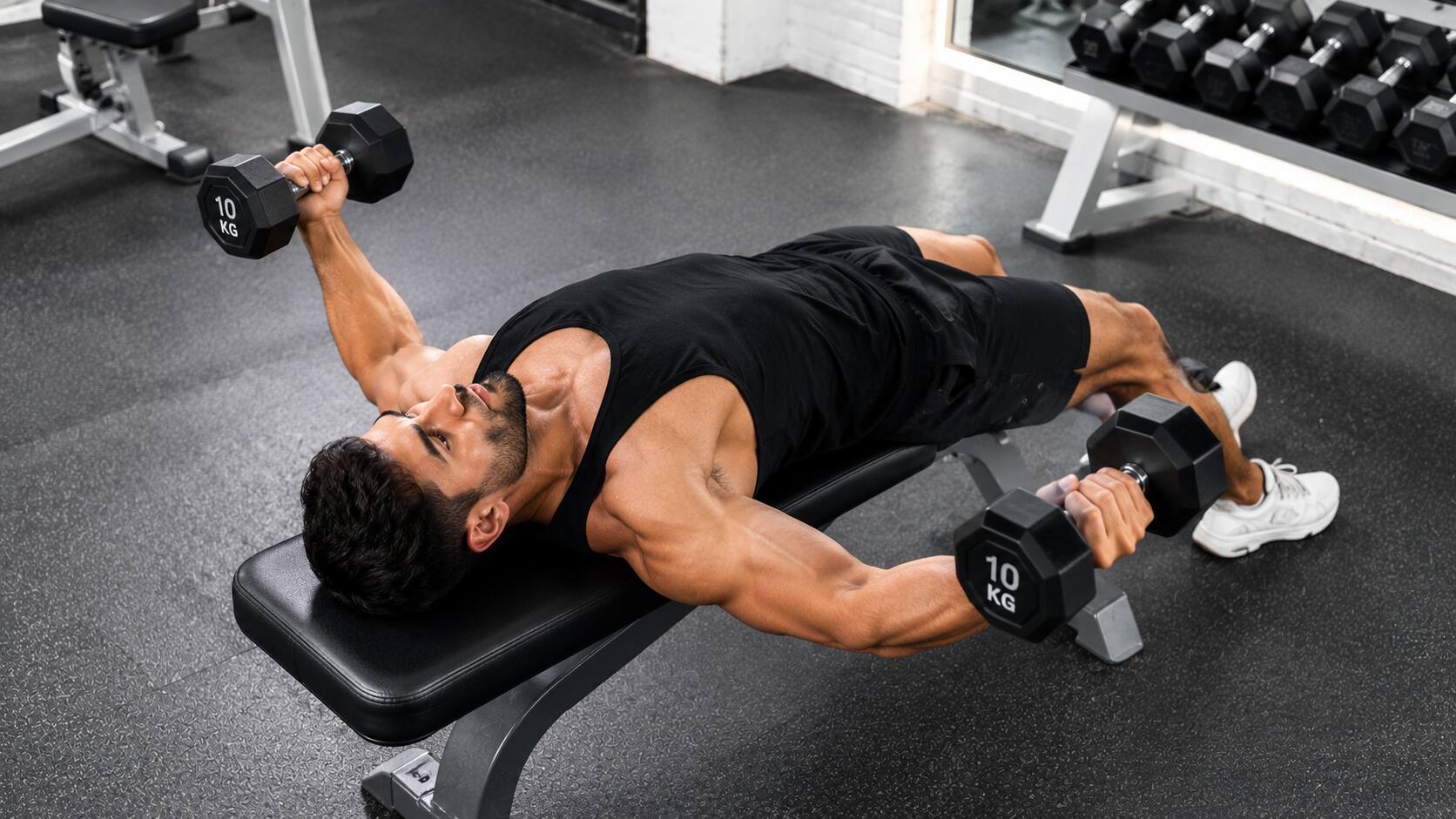
The dumbbell chest fly isolates the pectoral muscles under a wide arc of motion, creating significant time under tension for hypertrophy.
How to perform:
- Lie on a flat bench, dumbbell in each hand, palms facing inward
- Press dumbbells above the chest, then arc them wide and down with a soft elbow bend
- Stop when elbows reach shoulder height — do not overstretch
- Squeeze the chest as you return to the start position
Sets and reps: 3 sets of 12–15 reps. Begin with light dumbbells (5–15 lb) and increase as form allows.
Benefits: Builds pectoral width and strengthens the anterior deltoids.
3. Cable Fly
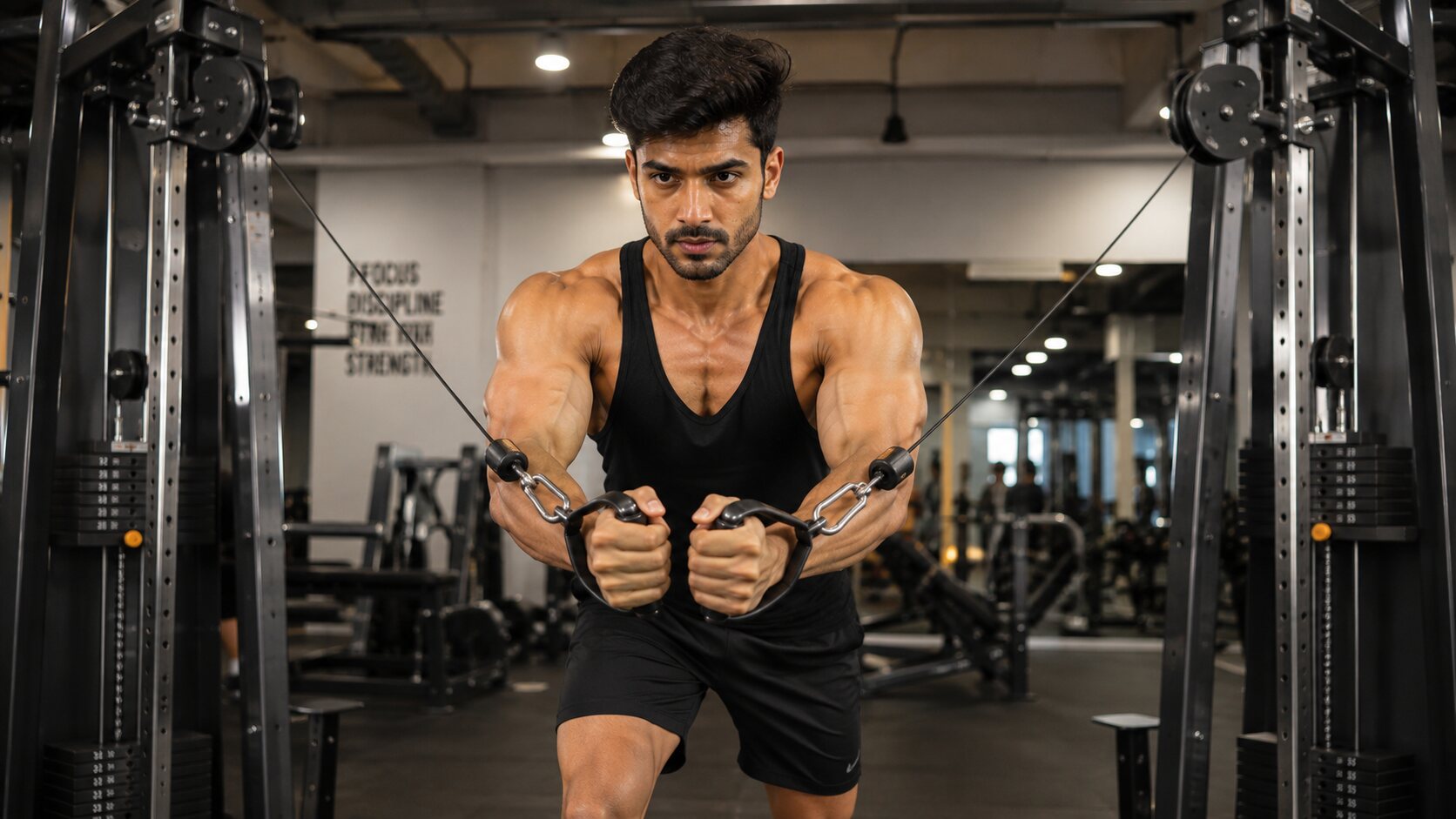
The cable fly maintains constant mechanical tension throughout the entire range of motion — something dumbbells cannot fully replicate.
How to perform:
- Attach stirrup handles to the high pulleys of a cable crossover station
- Stand centered, arms extended with a slight elbow bend
- Hinge slightly forward at the hips
- Bring both handles together in front of your chest in a controlled arc
- Slowly return to the start position under tension
Sets and reps: 3 sets of 12–15 reps. Use a weight that challenges you without compromising posture.
Benefits: Delivers consistent pectoral activation across the full arc; particularly effective for muscle definition.
4. Band Chest Fly
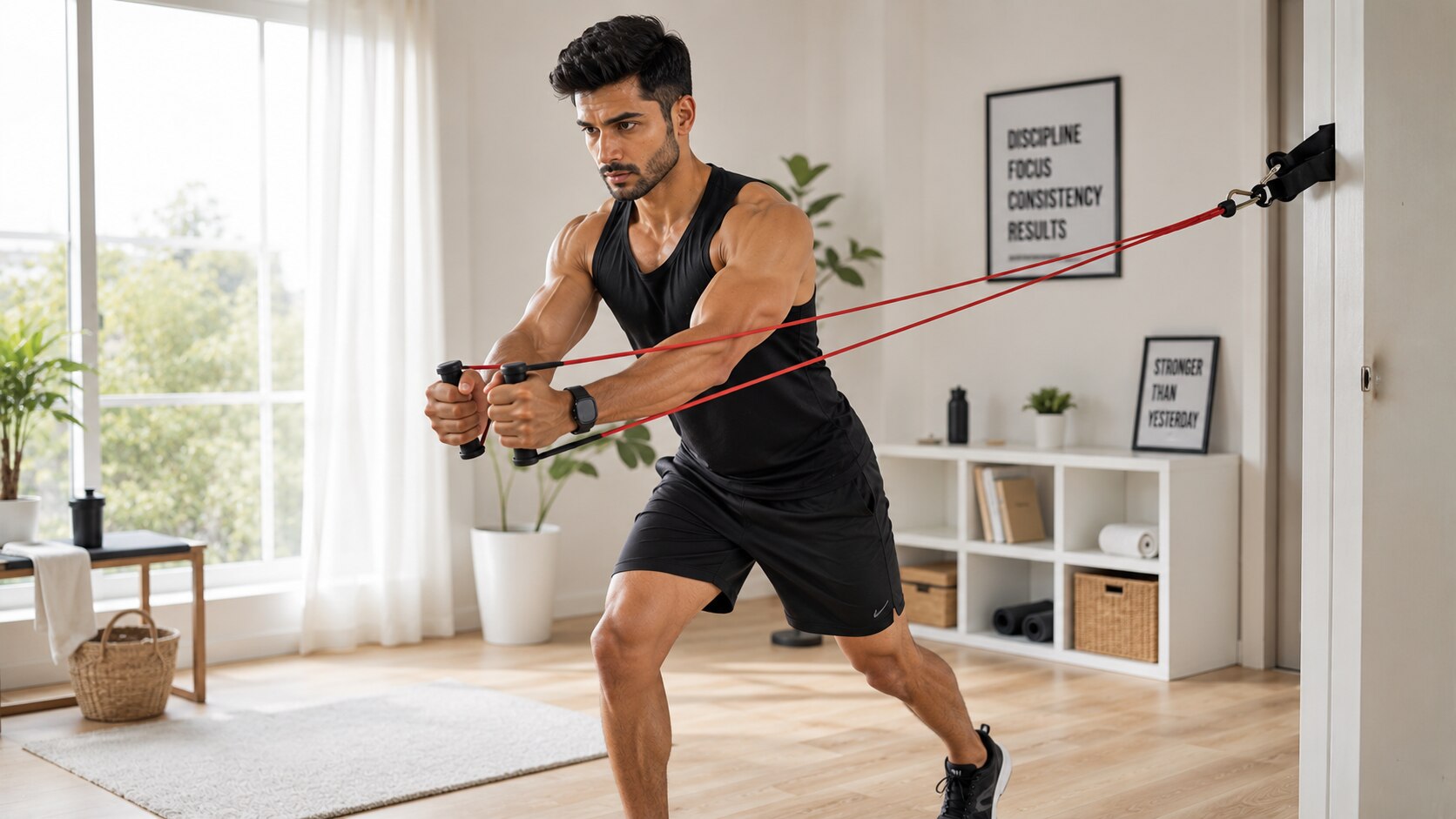
A resistance band variation of the cable fly, this exercise is ideal for home training with minimal equipment.
How to perform:
- Anchor two resistance bands to a stable post or door frame at shoulder height
- Grab one end in each hand, step forward to create tension
- With arms slightly bent, bring your hands together in front of your chest
- Slowly reverse and return to the start under control
Sets and reps: 3 sets of 12–15 reps. Choose a band resistance that allows full range of motion with effort.
Benefits: Effective pectoral activation without a cable machine; excellent for home or travel workouts.
5. Dumbbell Floor Press
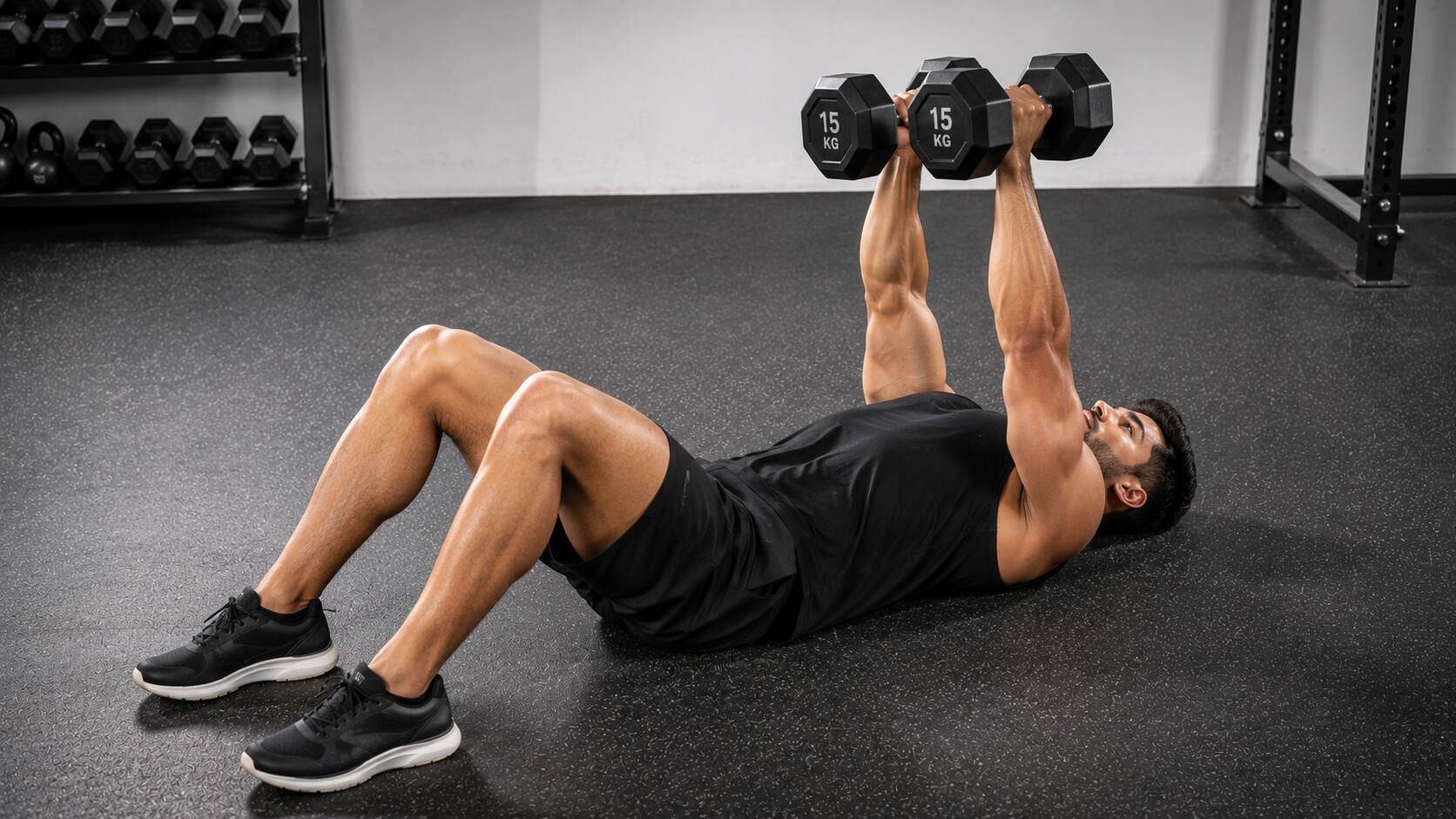
No bench? No problem. The dumbbell floor press is a joint-friendly pressing movement that limits shoulder strain by using the floor as a natural range-of-motion stop.
How to perform:
- Lie on your back on the floor, feet flat, knees bent
- Hold dumbbells at shoulder level with elbows at a 45-degree angle from your torso
- Press the dumbbells straight up, extending your arms fully
- Lower slowly until your elbows touch the floor, then press again
Sets and reps: Beginners: 3 sets of 15–20 reps with light dumbbells. Increase weight progressively.
Benefits: Builds chest and tricep mass while reducing rotator cuff stress compared to a full bench press.²
6. Plyometric Push-Up
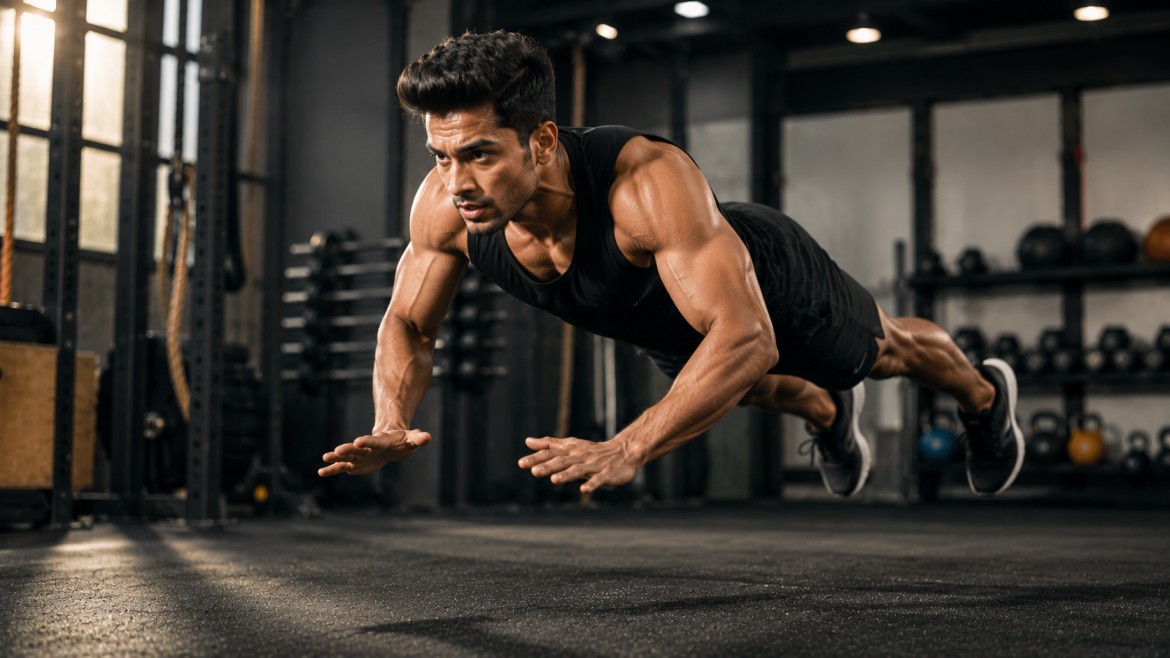
Also known as the explosive or power push-up, this advanced variation develops fast-twitch muscle fibers in the chest and arms — qualities critical for athletic performance.
How to perform:
- Start in a standard push-up position, body in a straight line
- Lower your chest toward the floor under control
- Drive up explosively so your hands leave the ground
- Land softly and immediately move into the next rep
Sets and reps: 3 sets of 5–6 reps. Prioritize quality and explosion over high volume.
Benefits: Increases upper-body power output and rate of force development; strengthens core stability under dynamic load.³
7. Suspension Push-Up (TRX)
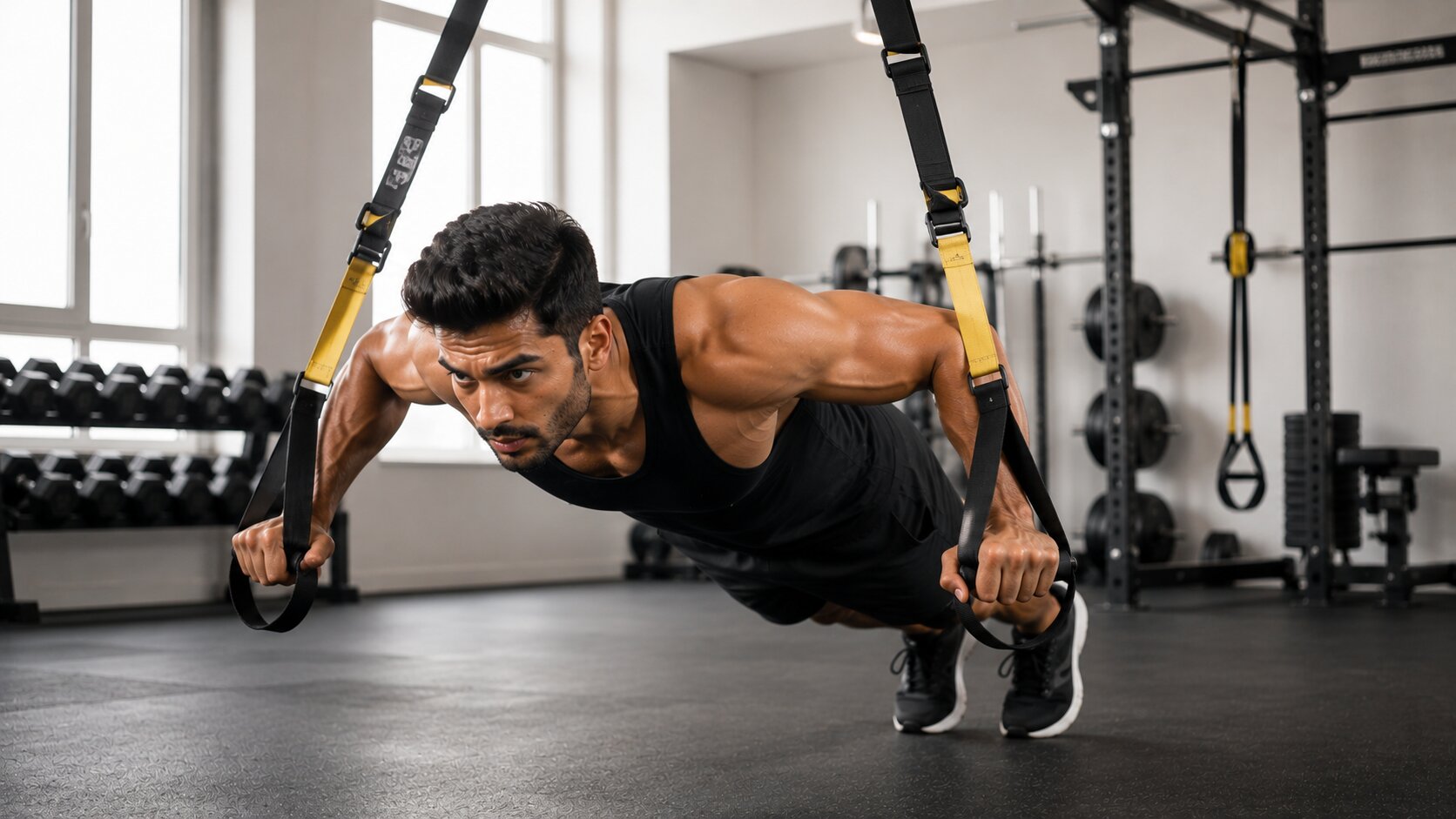
Performing push-ups on TRX straps creates instability that forces your chest, shoulders, and core to work harder than ground-based push-ups.
How to perform:
- Grip TRX handles with arms extended, body angled about 45 degrees from the floor
- Hands should be slightly wider than shoulder-width
- Brace your core and lower your chest toward the handles by bending your elbows
- Press back up to the start position
Sets and reps: 3 sets of 8–12 reps. Adjust your body angle to modify difficulty — more upright is easier.
Benefits: Challenges the chest, triceps, and anterior deltoids while demanding continuous core engagement throughout every rep.
8. Incline Dumbbell Bench Press
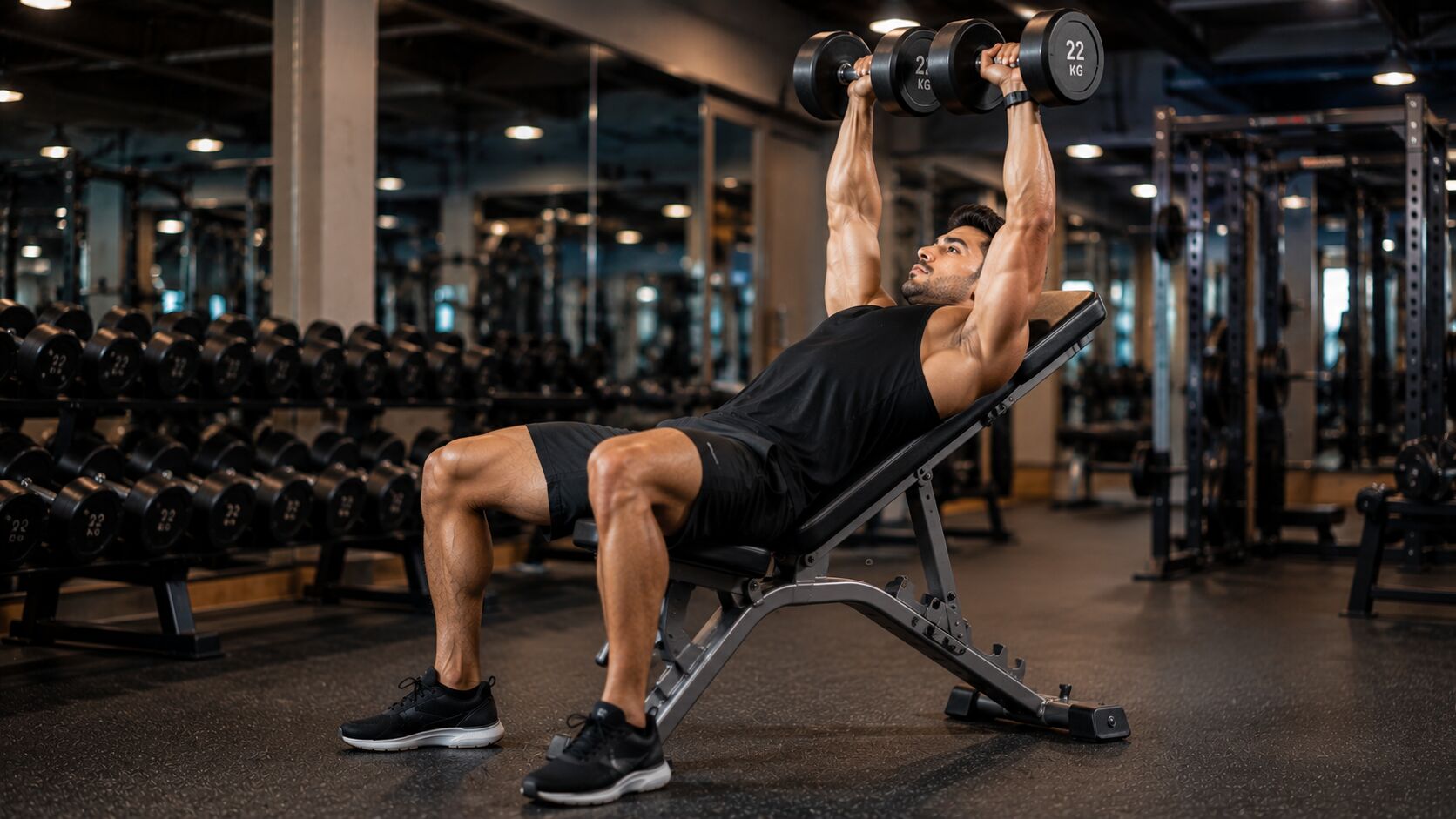
The incline press targets the upper portion of the pectoral muscles — an area often underdeveloped in athletes who rely exclusively on flat pressing.
How to perform:
- Set a bench to 30–45 degrees incline
- Lie back with feet flat on the floor, dumbbells held at shoulder level
- Keep the core braced and avoid arching the lower back
- Press the dumbbells up and together above your upper chest
- Lower slowly back to the start position
Sets and reps: 3 sets of 8–12 reps. Use a weight that allows full control at the bottom of each rep.
Benefits: Emphasizes the clavicular head of the pectoralis major; also recruits the anterior deltoids and triceps.⁴
9. Decline Dumbbell Bench Press
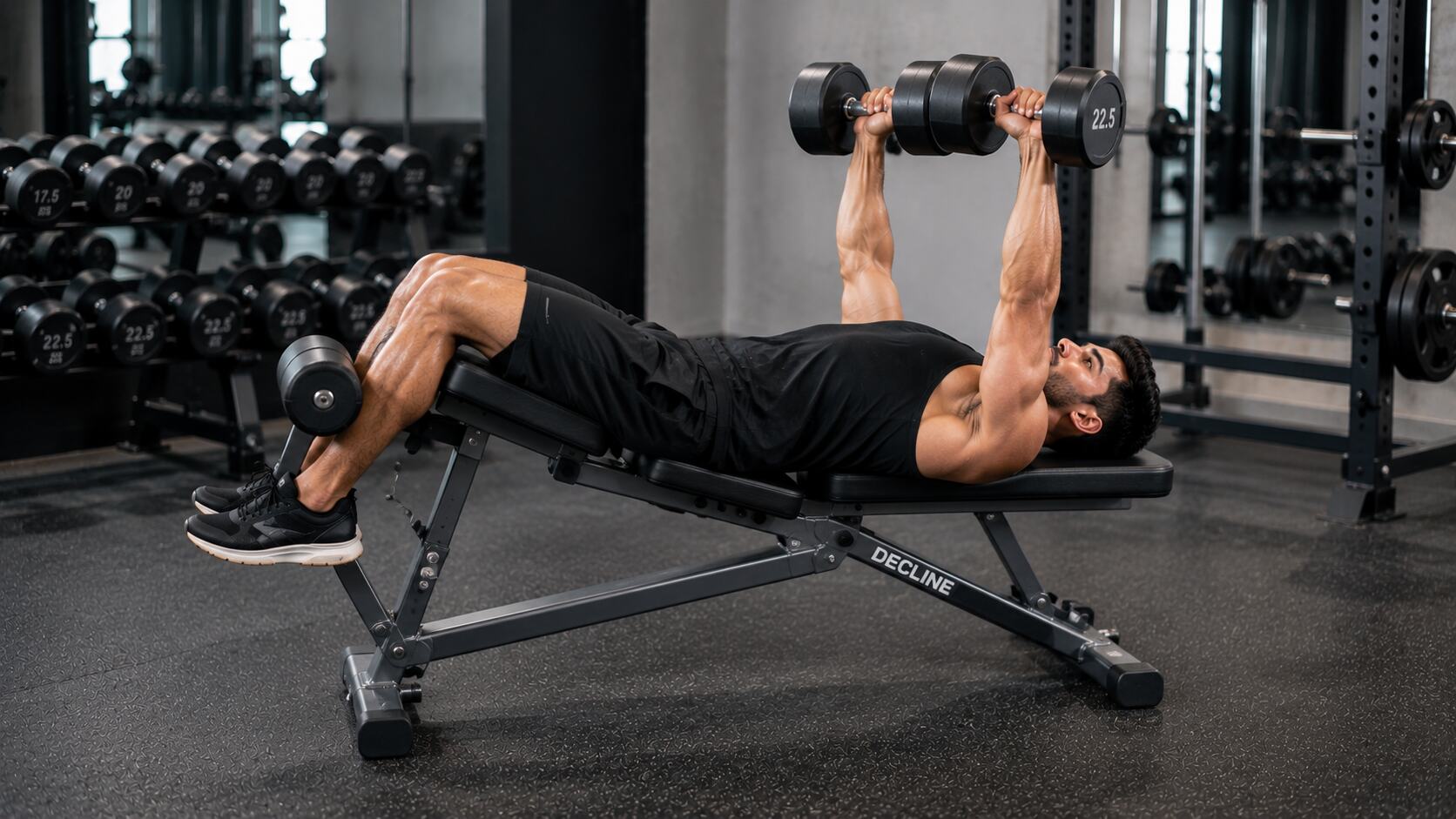
Where the incline press builds the upper chest, the decline press develops the often-neglected lower pectoral fibers, completing a fully balanced chest.
How to perform:
- Lock your feet under the leg support of a decline bench
- Hold dumbbells at the sides of your chest with a neutral grip
- Brace your core, avoid lower back arch
- Press the dumbbells up above your chest, then lower slowly to the start
Sets and reps: 3 sets of 8–12 reps. Control the descent — do not let gravity do the work.
Benefits: Targets the sternal head of the pectoralis major; supports anterior deltoid and tricep strength.
Programming These Exercises
You do not need to perform all nine exercises in a single session. For beginners, choose three to four movements per workout. Advanced athletes can structure push/pull splits that layer compound presses with isolation flies across the week. The American College of Sports Medicine recommends 2–4 sets of 8–12 reps per exercise for hypertrophy, with progressive overload applied over time.⁵
Key Takeaways
- Start light, prioritize form over load
- Combine pressing (floor press, bench press) with fly movements (cable fly, chest fly) for complete pectoral development
- Progress gradually — increase weight only when you can complete all reps with full control
- Consistency and recovery are as important as the exercises themselves
References
- Calatayud J, et al. Muscle Activation During Push-Up Variations: A Systematic Review. Journal of Human Kinetics. 2015;50:47–58.
- Fees M, et al. Upper body pressing strength comparisons across bench angles and grip widths. Journal of Strength and Conditioning Research. 1998;12(2):78–83.
- Newton RU, et al. Kinematics, kinetics, and muscle activation during explosive upper body movements. Journal of Applied Biomechanics. 1997;13:70–89.
- Lauver JD, et al. Influence of bench angle on upper extremity muscular activation during bench press exercise. European Journal of Sport Science. 2016;16(3):309–316.
- American College of Sports Medicine. ACSM’s Guidelines for Exercise Testing and Prescription, 10th ed. Philadelphia: Wolters Kluwer; 2018.
Disclaimer: This article is for informational purposes only and does not constitute medical or professional fitness advice. Consult a qualified healthcare provider or certified personal trainer before beginning any new exercise program, especially if you have a history of shoulder, chest, or joint injuries.