

If your schedule, energy levels, or body clock simply do not cooperate with 5 AM alarm bells, evening training is not a consolation prize. Research increasingly shows it can be a strategic performance advantage. Here is why shifting your sessions to later in the day might be one of the smartest moves you make for your fitness goals.
1. Your Body Is Physically Primed for Performance
Core body temperature, muscle strength, reaction time, and cardiovascular efficiency all peak during late afternoon and early evening hours. A 2019 meta-analysis published in the Journal of Strength and Conditioning Research found that evening exercisers demonstrated measurably superior anaerobic power output and muscular endurance compared to morning counterparts. If you want to lift heavier or run faster, your physiology is on your side after 4 PM.
2. Stress Relief With a Hormonal Basis
Cortisol, your primary stress hormone, naturally rises in the morning and tapers through the day. Evening exercise intercepts residual cortisol elevation and triggers a significant release of endorphins and serotonin. A study in Frontiers in Psychology (2021) confirmed that moderate-to-vigorous exercise reduces perceived stress and improves mood state within 20 minutes of activity. For athletes managing high training loads alongside demanding work schedules, this dual benefit — physical adaptation and neurological reset — matters.
3. Improved Sleep Quality (With Smart Timing)
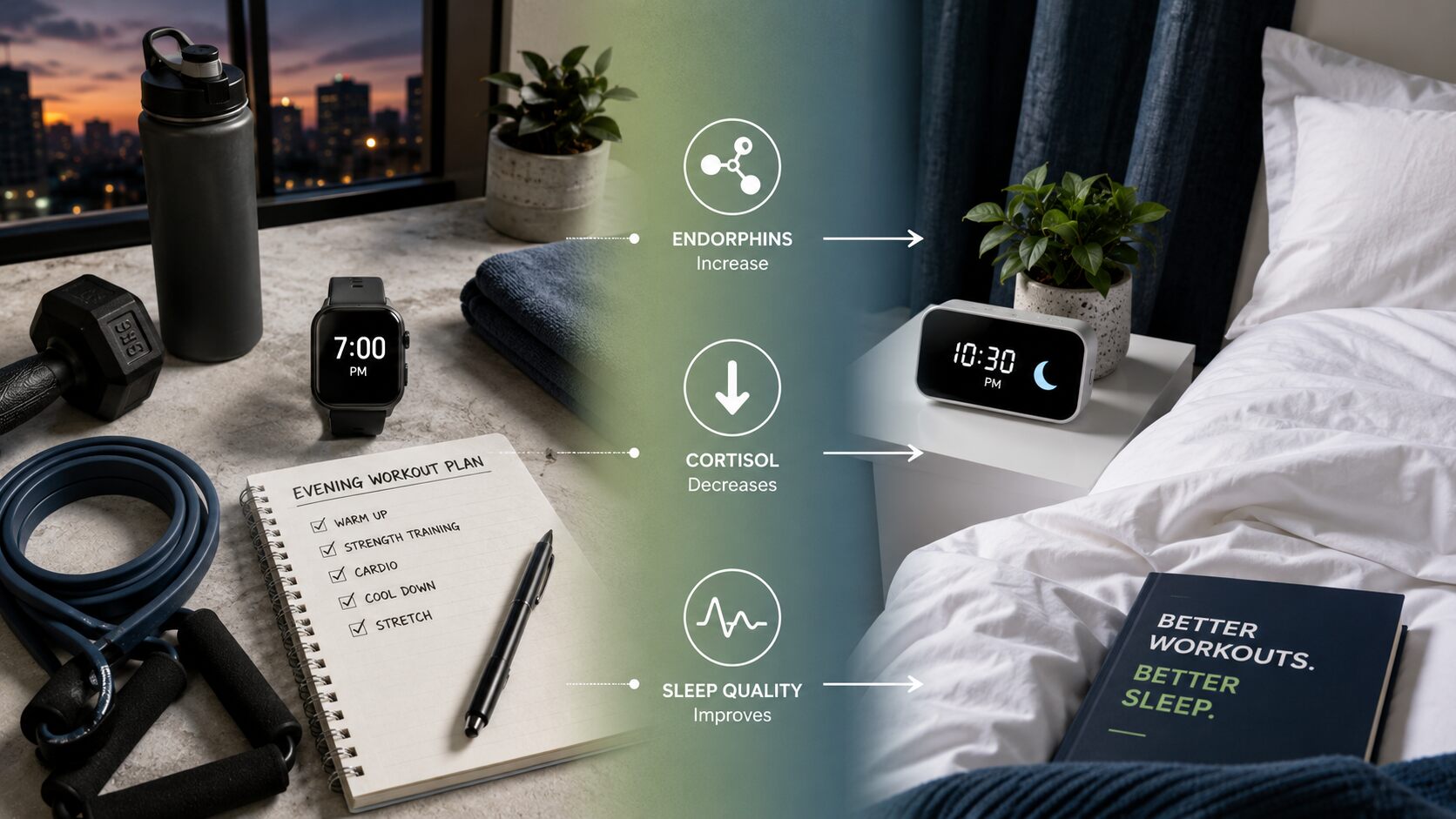
There is a persistent myth that evening exercise wrecks sleep. The evidence tells a more nuanced story. A 2019 systematic review in Sports Medicine found that vigorous exercise completed at least 90 minutes before bedtime had no negative impact on sleep quality and in many subjects improved slow-wave deep sleep, the recovery phase most critical for muscle repair and hormonal replenishment. The practical rule: finish your session by 8-8:30 PM and prioritize a wind-down routine afterward.
4. Greater Consistency and Fewer Skipped Sessions
Morning willpower is a finite resource. Evening workouts align naturally with the end of daily obligations, making it easier to establish a non-negotiable routine. According to the American College of Sports Medicine, long-term exercise adherence is the single greatest predictor of outcomes. Choosing the time slot you will actually show up for consistently beats optimizing for the “ideal” time and missing sessions regularly.
5. Longer, More Productive Sessions

Without a commute or morning meeting looming, evening workouts remove the time pressure that cuts sessions short. You can incorporate proper warm-up protocols, accessory work, and structured cool-downs. Research from the British Journal of Sports Medicine consistently links adequate warm-up and cool-down periods with reduced injury risk and improved long-term training volume, two variables that compound into significantly better results over months of consistent training.
6. Enhanced Recovery Through Post-Workout Nutrition
Evening training allows you to align your largest, most nutrient-dense meal with your post-workout window. Consuming 25-40 g of high-quality protein within 60 minutes of training maximizes muscle protein synthesis, as demonstrated in research published in the Journal of the International Society of Sports Nutrition (2017). A well-planned dinner of lean protein, complex carbohydrates, and vegetables becomes both your recovery fuel and your final meal, simplifying your nutrition strategy.
7. Tension Release and Joint Mobility

Hours of sitting accumulate tension in the neck, shoulders, hip flexors, and lumbar spine. Evening mobility work and dynamic stretching actively counteract this. A structured 10-15 minute flexibility protocol post-session can reduce next-day muscle soreness by up to 20%, according to research in the Journal of Athletic Training. Yoga, foam rolling, and targeted stretching as your evening cooldown serve a dual purpose: accelerating recovery and preparing the body for quality sleep.
How to Structure Your Evening Session
- 6:00-6:30 PM: Pre-workout meal (mixed carbohydrate and protein, ~400 kcal)
- 7:00-8:00 PM: Training session (strength, conditioning, or sport-specific work)
- 8:00-8:15 PM: Cool-down, static stretching, foam rolling
- 8:30-9:00 PM: Post-workout meal (25-40 g protein, complex carbs)
- 10:00-10:30 PM: Lights out, targeting 7-9 hours of sleep
The Bottom Line
Morning workouts are not inherently superior. The best training time is the one that matches your physiology, schedule, and recovery needs. If your performance, consistency, and recovery are thriving in the evenings, the science supports your approach. Commit to a consistent evening schedule and optimize the details — timing, nutrition, and sleep hygiene — to extract every advantage.
References:
- Chtourou, H., & Souissi, N. (2012). The Effect of Training at a Specific Time of Day. Journal of Strength and Conditioning Research, 26(7), 1984-2005.
- Stutz, J., et al. (2019). Effects of Evening Exercise on Sleep in Healthy Participants. Sports Medicine, 49(2), 269-287.
- Schoenfeld, B.J., et al. (2017). Pre- versus post-exercise protein intake on muscle mass and strength. Journal of the International Society of Sports Nutrition, 14, 33.
- American College of Sports Medicine. (2018). ACSM’s Guidelines for Exercise Testing and Prescription. 10th ed.
- Kline, C.E., et al. (2021). The effect of exercise timing on sleep architecture. Frontiers in Psychology, 12, 664296.
Disclaimer: This article is intended for informational purposes only and does not constitute medical advice. Consult a qualified healthcare professional before beginning any new exercise program, especially if you have pre-existing health conditions or concerns.