

Most athletes obsess over what happens inside the gym — the sets, the reps, the PRs. But elite performance is built before you ever touch a barbell. As the late Bobby Knight put it, most people have the will to win; far fewer have the will to prepare to win. These six pre-workout fundamentals apply to virtually every training style, from powerlifting to endurance sport, and are consistently supported by exercise science research.
1. Fuel With the Right Pre-Workout Meal
Before a demanding session, your body needs a combination of complex carbohydrates and quality protein. Complex carb sources like bananas, oats, or whole-grain toast digest gradually, providing a sustained glucose supply rather than a spike-and-crash. Pairing these with a moderate protein source — almond butter, Greek yogurt, or a lean protein — supports muscle protein synthesis from the outset.
Timing: Research published in the Journal of the International Society of Sports Nutrition (JISSN) recommends consuming a mixed macronutrient meal 1–3 hours before training, depending on your individual gastric tolerance. Experiment to find your optimal window.
2. Hydrate Strategically
The American College of Sports Medicine (ACSM) recommends consuming approximately 500–600 ml (17–20 oz) of water 2–3 hours before exercise, followed by 200–300 ml (7–10 oz) roughly 20 minutes before your session begins. Even mild dehydration — as little as 2% body weight loss — measurably impairs strength output, cognitive focus, and endurance, according to research in the Journal of Athletic Training.
Sip consistently throughout the day rather than flooding your system pre-session. Rapid large-volume intake can dilute electrolytes and trigger gastrointestinal distress.
3. Mobilize and Stretch
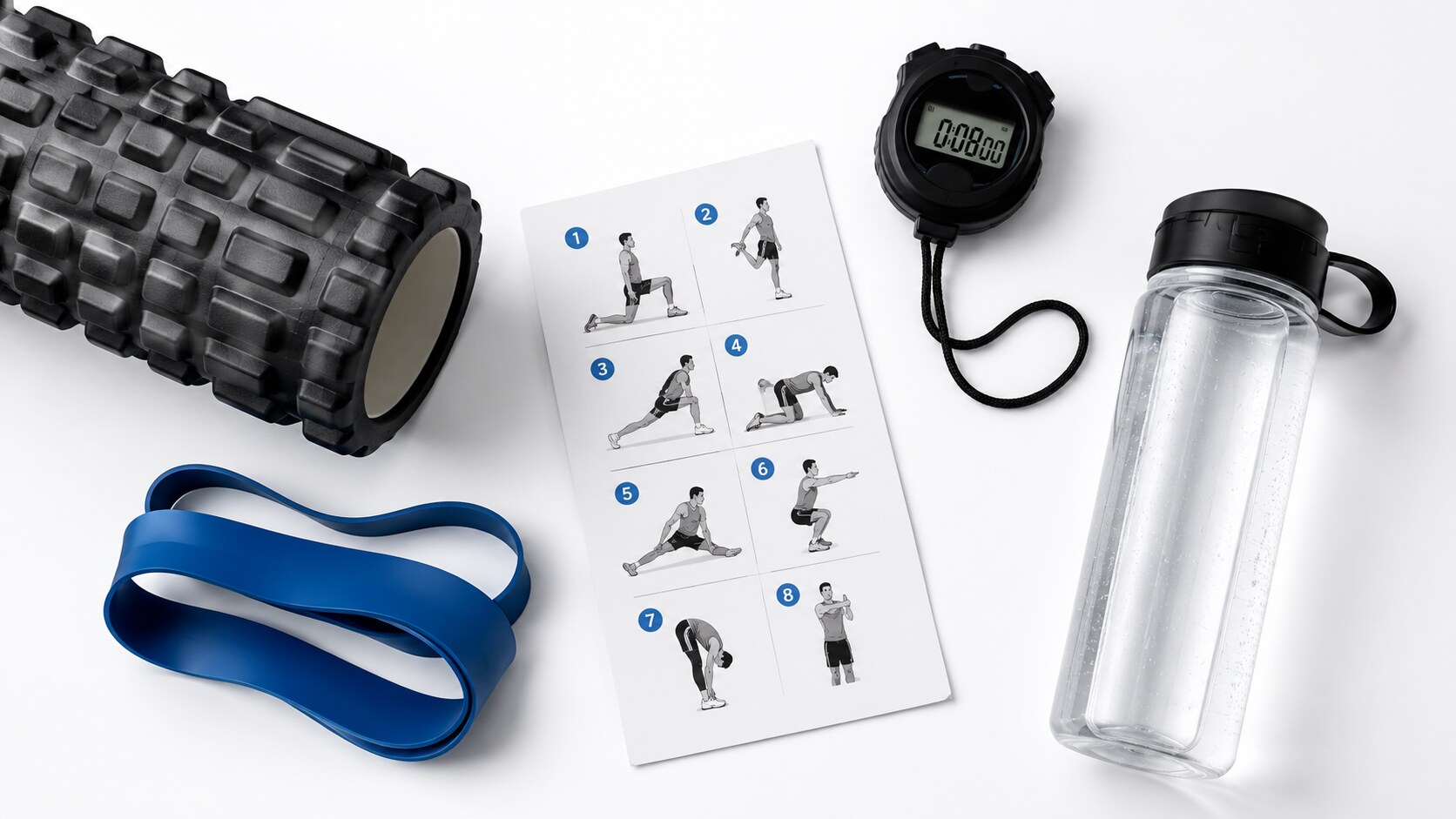
Skipping this step is one of the most common ways recreational athletes limit their own progress. A focused mobility routine — particularly using a foam roller — reduces muscle knot density, improves tissue extensibility, and can lower injury risk. A 2019 meta-analysis in the Journal of Strength and Conditioning Research found that pre-exercise foam rolling significantly reduced perceived muscle soreness and improved subsequent range of motion.
Spend 5–8 minutes targeting the muscle groups you plan to train. Yes, it may be uncomfortable at first — that’s tissue work doing its job.
4. Review Your Session Plan

Mental preparation is a documented performance variable. Writing out — or reviewing — your sets, reps, and loading parameters before training reduces in-session cognitive load, allowing you to dedicate full attention to execution. Research in Psychology of Sport and Exercise links pre-performance routines to improved focus and reduced performance anxiety.
Know your numbers before you walk in. Eliminate decision fatigue mid-session.
5. Perform an Aerobic Warm-Up
A 5–10 minute low-to-moderate intensity aerobic bout — rowing machine, cycling, or light jogging — raises core body temperature, increases blood flow to working muscles, and primes tendon elasticity. A study in the Scandinavian Journal of Medicine and Science in Sports confirmed that active warm-up protocols reduce soft-tissue injury rates and improve subsequent power output. Keep intensity moderate; this is preparation, not a conditioning workout.
6. Run Movement Drills

Bodyweight or lightly loaded movement drills — think goblet squats before a leg session or banded pull-aparts before upper body work — rehearse the exact neuromuscular patterns you’re about to load. This bridges the gap between your aerobic warm-up and your working sets, activating the correct motor units and improving mind-muscle connection before intensity ramps up.
The Bottom Line
Pre-workout preparation is not optional — it is the foundation your training is built on. Nail your nutrition timing, hydration, mobility work, mental focus, aerobic priming, and movement-specific drills, and your working sets will reflect it. Adjust each element based on your training style, body, and recovery status. The protocol is a framework, not a rigid script.
Disclaimer: This article is intended for educational and informational purposes only. Consult a qualified healthcare provider or certified sports nutritionist before making significant changes to your training or nutrition practices, particularly if you have an underlying medical condition.
References
- Kerksick, C.M. et al. (2017). International Society of Sports Nutrition Position Stand: Nutrient timing. Journal of the International Society of Sports Nutrition, 14(1), 33.
- Casa, D.J. et al. (2000). National Athletic Trainers’ Association Position Statement: Fluid replacement for athletes. Journal of Athletic Training, 35(2), 212–224.
- Wiewelhove, T. et al. (2019). A meta-analysis of the effects of foam rolling on performance and recovery. Journal of Strength and Conditioning Research, 33(9), 2571–2581.
- Moran, A. (2012). Concentration, attention and performance. Psychology of Sport and Exercise, 13(4), 473–486.
- Fradkin, A.J., Zazryn, T.R., & Smoliga, J.M. (2010). Effects of warming-up on physical performance. Journal of Strength and Conditioning Research, 24(1), 140–148.