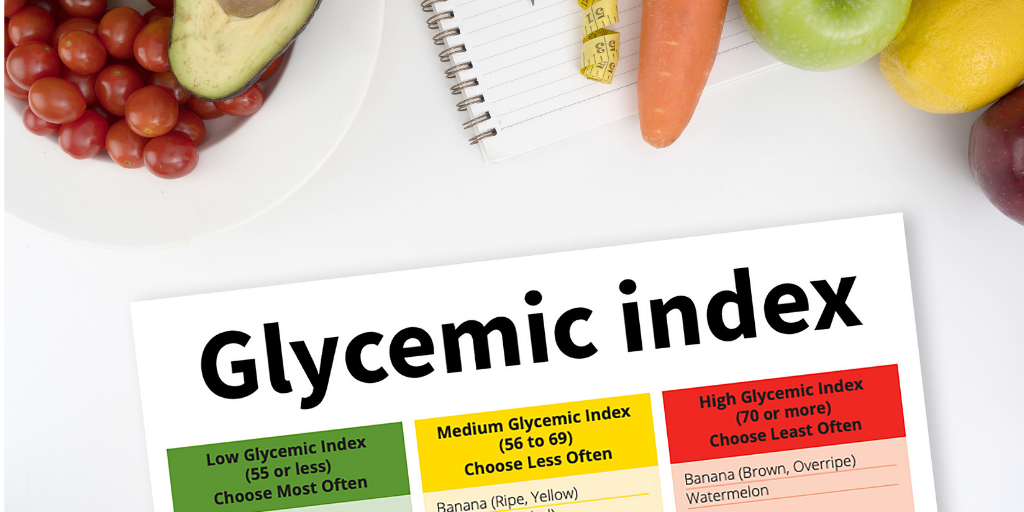

If you track protein religiously but barely think about fiber, you’re leaving performance on the table. Fiber doesn’t just support digestion and long-term disease prevention — it directly affects your appetite control, energy stability, and how efficiently your body absorbs the nutrients fueling your training. For anyone chasing fat loss or muscle gain, it’s one of the most overlooked levers in the diet.
The numbers make the gap obvious. The USDA’s Adequate Intake recommendation sits at 25 grams per day for women and 38 grams per day for men, yet the average American adult takes in only about 15 grams. Closing that gap can meaningfully change how you feel and perform, in and out of the gym.
Soluble vs. Insoluble: Know the Difference
Fiber isn’t one thing — it’s a category with two functional types, and you need both.
Soluble Fiber
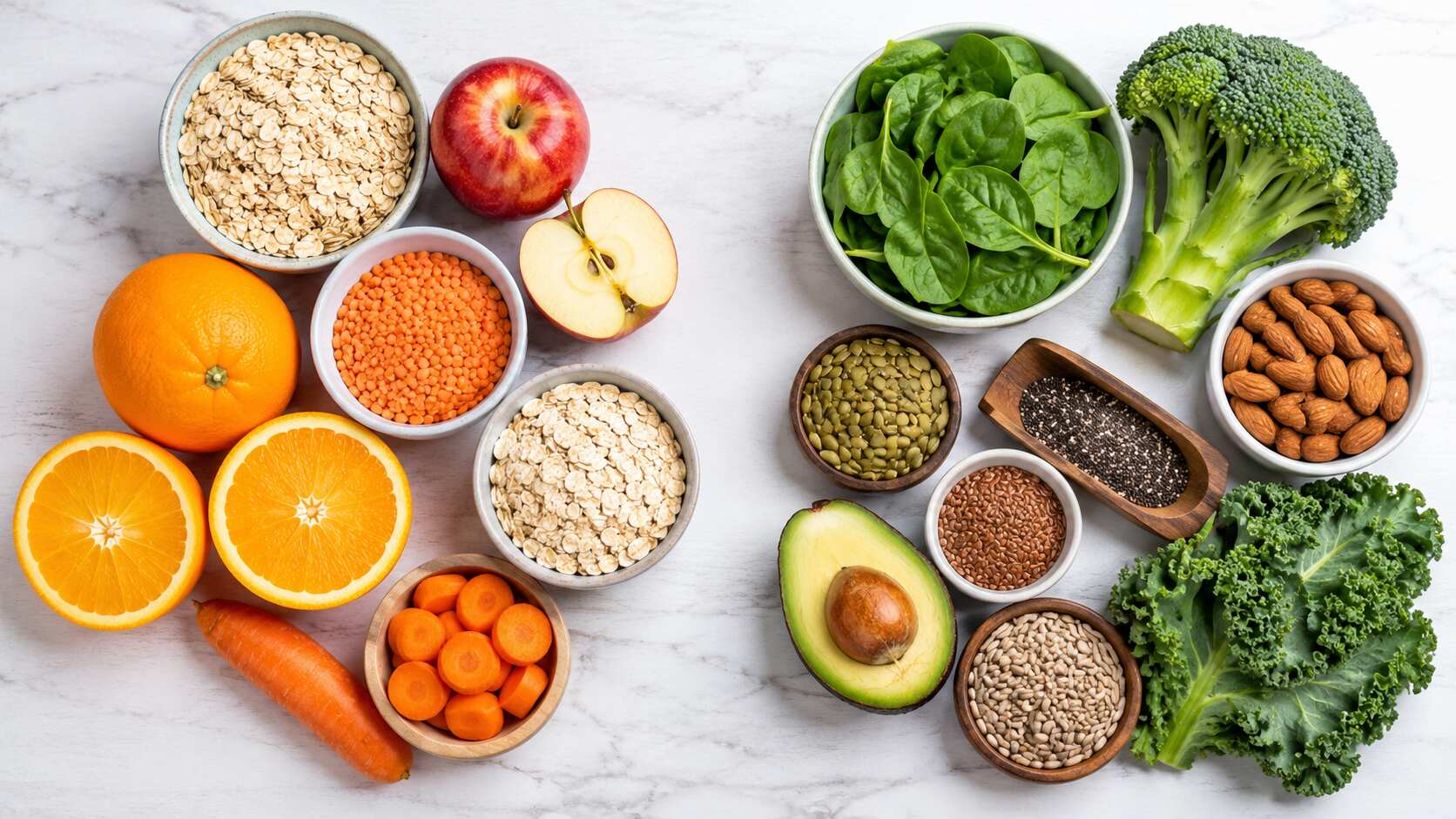
This type absorbs water during digestion, forming a gel-like substance that slows stomach emptying and helps stabilize blood sugar. That slower digestion is what keeps you feeling full longer. Good sources include oats, lentils, apples, citrus fruit, and carrots.
Insoluble Fiber
This type doesn’t dissolve and instead adds bulk to stool, supporting regular intestinal motility. You’ll find it in leafy greens, nuts, seeds, and avocados.
How Fiber Supports Your Training Goals
Appetite control for fat loss. High-fiber foods are typically lower in calorie density and take longer to digest, which extends satiety and reduces the urge to overeat. Research published in Critical Reviews in Food Science and Nutrition shows that fiber fermentation triggers gut hormones like GLP-1 and peptide YY, both of which signal fullness to the brain. In practice, prioritizing fiber-rich foods often does the work of calorie counting without the constant tracking.
Steadier energy levels. Because fiber slows carbohydrate absorption, it helps prevent the blood sugar spikes and crashes that leave you sluggish between workouts. More stable energy translates into more consistent training intensity and better adherence to your program.
Better nutrient absorption — with one caveat on timing. The slow digestion that makes fiber so useful for appetite control works against you immediately post-workout. In the 30–45 minute window after training, your body needs fast-digesting carbs and protein for recovery — not fiber slowing that delivery down. Save your high-fiber meals for earlier in the day and keep your post-workout meal or shake fiber-light.

Practical Ways to Close the Gap
- Swap refined grains for oats, quinoa, or whole-grain bread.
- Add a serving of legumes (lentils, chickpeas, black beans) to one meal a day.
- Keep fruit with the skin on — most of the fiber lives there.
- Build a fiber-forward smoothie for breakfast or a midday snack.
Try this combination, which pairs well with a morning workout window when eaten 1–2 hours beforehand:
- 2 cups spinach
- ½ avocado
- ½ banana
- ½ cup almond milk
- 1 tsp vanilla extract
If you’re well under your fiber target, increase intake gradually over a couple of weeks — a sudden jump can cause bloating or digestive discomfort. Pair any increase with extra water, since soluble fiber needs fluid to do its job.

The Bottom Line
Fiber is rarely the headline nutrient in fitness conversations, but it quietly influences appetite, energy, and recovery every day. Aim for 25–38 grams daily depending on your sex and size, spread across meals, and save your lighter, faster-digesting foods for right after training.
This article is for informational purposes only and is not a substitute for professional medical or nutritional advice. Consult a registered dietitian or physician before making significant changes to your diet, especially if you have a digestive condition.
References
- U.S. Department of Agriculture & U.S. Department of Health and Human Services. Dietary Guidelines for Americans, 2020–2025.
- Harvard T.H. Chan School of Public Health / Harvard Health Publishing. “Should I be eating more fiber?”
- Lattimer, J.M., & Haub, M.D. “Effects of Dietary Fiber and Its Components on Metabolic Health.” Nutrients, 2010.
- Critical Reviews in Food Science and Nutrition. “The role of dietary fibers in regulating appetite: an overview of mechanisms and weight consequences,” 2022.
- Slavin, J. “Dietary fiber and body weight.” Nutrition, 2005.
- USDA FoodData Central — fiber content reference values.