You can train hard every single day — but without the right fuel, you’re leaving serious gains on the table. Research consistently shows that what you eat before, during, and after exercise has a direct impact on performance, recovery, and long-term body composition. A 2017 review published in the Journal of the International Society of Sports Nutrition confirmed that strategic nutrient timing and intake significantly influences athletic outcomes beyond training volume alone.
Here’s what your body actually needs — and why it matters for your goals.
Protein: Your Muscle’s Building Block
Protein is the foundation of muscle repair and growth. Every time you train, microscopic tears form in muscle fibers — and protein is what rebuilds them stronger. The Journal of Applied Physiology recommends that active individuals consume 1.4–2.0 g of protein per kilogram of body weight daily, significantly higher than the standard sedentary RDA of 0.8 g/kg.
Best sources include:
- Lean meats (chicken, turkey, beef)
- Fish and seafood
- Eggs and dairy
- Legumes, tofu, tempeh, and edamame
Pro Tip: Aim for 20–40 g of protein within 30–60 minutes post-workout to maximise muscle protein synthesis, as supported by research in Nutrients (2017).
Carbohydrates: Your Primary Performance Fuel
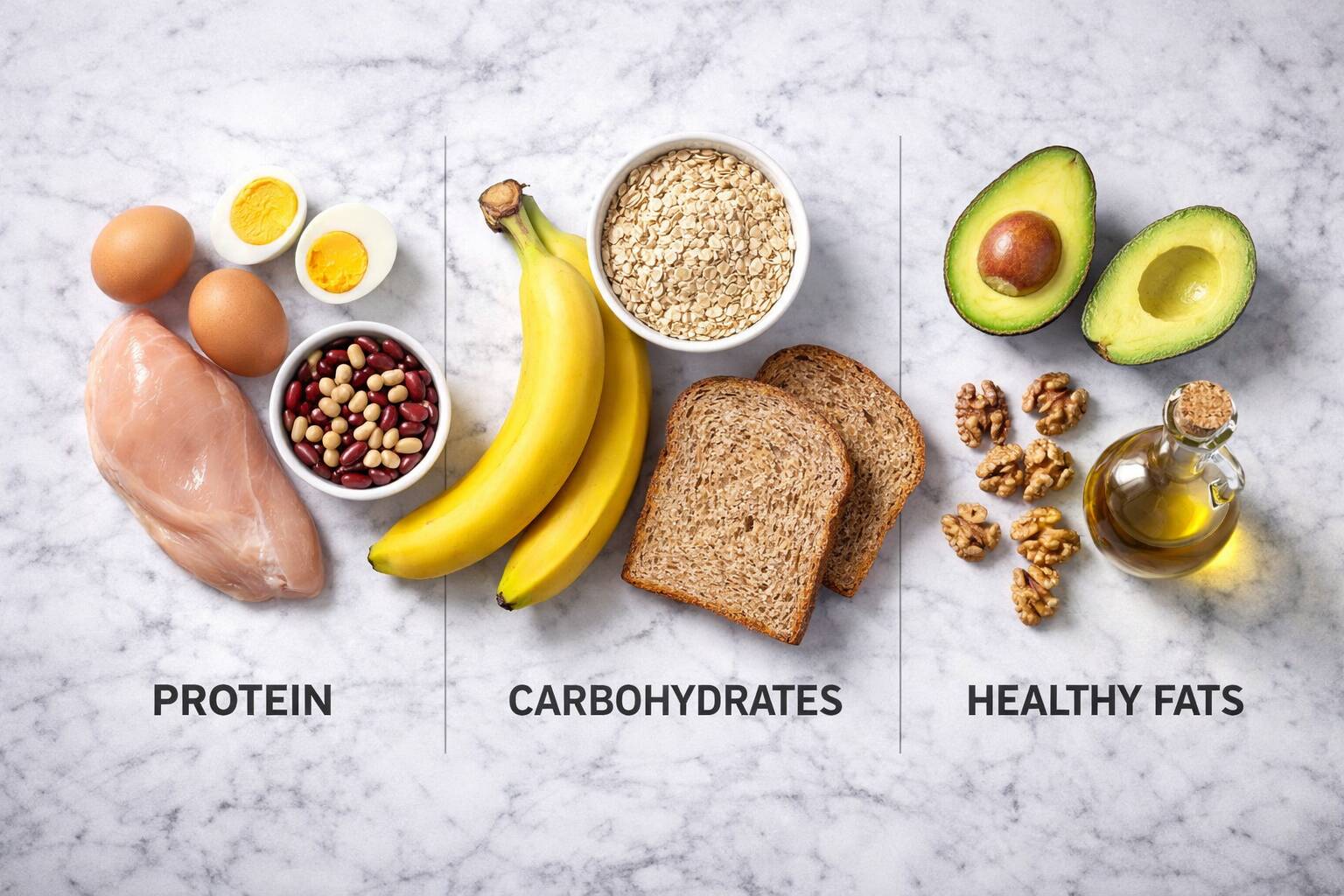
During high-intensity training, carbohydrates are your body’s go-to energy source. They’re converted into glucose, stored as glycogen in muscles and the liver, and rapidly mobilised when you push hard. According to the American College of Sports Medicine, endurance athletes should target 6–10 g of carbohydrates per kilogram of body weight daily.
Depleted glycogen stores mean early fatigue, sluggish performance, and poor recovery. Choosing quality carbohydrates — whole grains, fruits, vegetables, and legumes — also delivers fibre, vitamins, and antioxidants that support overall cellular health (USDA Dietary Guidelines, 2020).
Timing matters: Consume complex carbohydrates 2–3 hours before training, and fast-digesting sources (such as a banana or rice cakes) 30–45 minutes prior for an immediate energy boost.
Healthy Fats: Sustained Energy and Hormonal Health
Fats often get an undeserved bad reputation in fitness circles. In reality, dietary fats — particularly unsaturated fats — are critical for hormone production, joint lubrication, fat-soluble vitamin absorption (A, D, E, K), and sustained energy during low-to-moderate intensity training.
The WHO recommends that fats account for 20–35% of total daily caloric intake, with a focus on unsaturated sources. Include avocados, olive oil, nuts, seeds, and fatty fish like salmon in your regular rotation.
Hydration: The Overlooked Performance Variable

Even mild dehydration — as little as 2% of body weight — can impair strength, endurance, and cognitive focus during training, according to the British Journal of Sports Medicine. Sweat loss during exercise varies widely, but a practical baseline is consuming 500 ml of water 2 hours before exercise, sipping regularly during sessions, and rehydrating with 1.5× the fluid lost post-workout.
For sessions lasting over 60 minutes, consider electrolyte replenishment (sodium, potassium, magnesium) to prevent cramping and support muscle function.
Putting It All Together

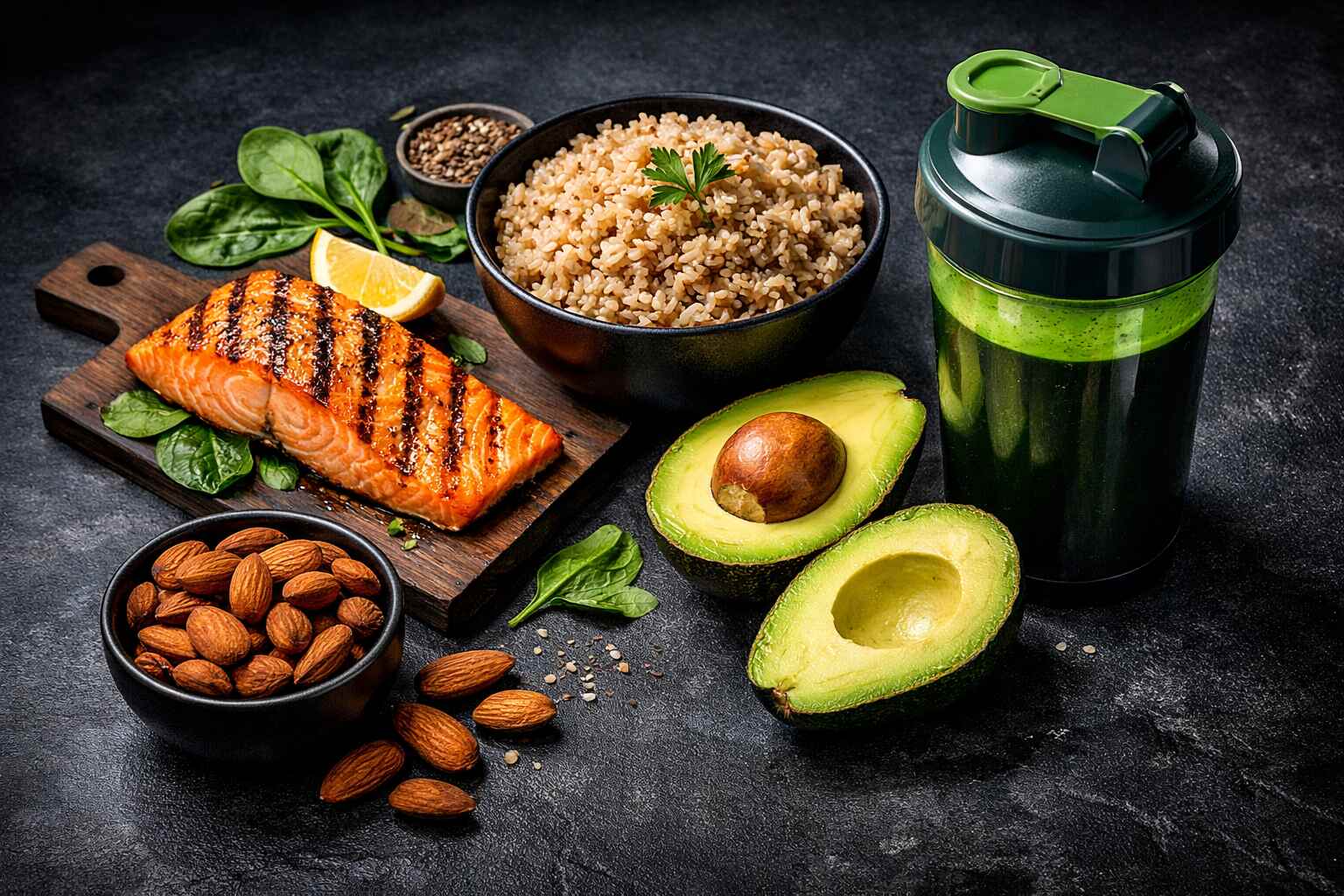
A simple, evidence-based pre-workout meal might look like: grilled chicken with brown rice and roasted vegetables, consumed 2–3 hours before training. Post-workout: a protein shake blended with a banana and oats to cover both protein and glycogen replenishment simultaneously.
The bottom line — your nutrition strategy should be as intentional as your training plan. Consistently fuelling with the right balance of protein, carbohydrates, fats, and fluids won’t just support your workouts; it will accelerate your results.
Sources:
- Kerksick, C.M. et al. (2017). Journal of the International Society of Sports Nutrition, 14(33).
- Phillips, S.M. & Van Loon, L.J.C. (2011). Journal of Applied Physiology, 16(S1), S58–S67.
- Stoppani, J. et al. (2017). Nutrients, 9(9).
- USDA Dietary Guidelines for Americans (2020–2025).
- Sawka, M.N. et al. (2007). British Journal of Sports Medicine, 41(8).
Disclaimer: This article is for informational purposes only and does not constitute medical or dietary advice. Consult a registered dietitian or healthcare professional before making significant changes to your nutrition plan, especially if you have an existing health condition.