
More Than a Morning Ritual
Your pre-workout routine might already include the most researched ergogenic aid in sports nutrition — and it’s sitting in your kitchen. Coffee delivers far more than a caffeine kick. From supporting cardiovascular health to accelerating muscle recovery, your daily brew carries a compelling body of science behind it. Here’s what the research actually says.
The Caffeine Advantage for Athletes
Caffeine is one of the most extensively studied performance supplements in sports science. A landmark meta-analysis published in the British Journal of Sports Medicine (2019) confirmed that caffeine supplementation significantly improves endurance performance, muscular strength, and anaerobic power output. The mechanism is straightforward: caffeine blocks adenosine receptors in the brain, reducing perceived effort and delaying fatigue.
For practical application, research published in the Journal of the International Society of Sports Nutrition (JISSN) suggests an effective dose of 3–6 mg of caffeine per kilogram of body weight, consumed 45–60 minutes before exercise. For a 70 kg (154 lb) athlete, that equates to roughly 210–420 mg — the equivalent of two to four 8-ounce cups of brewed coffee.
Disease Risk Reduction and Longevity
Coffee’s benefits extend well beyond the gym floor. Moderate consumption — defined as three to five 8-ounce cups per day — has been consistently associated with reduced risk of several chronic conditions:
- Type 2 Diabetes: A review in Diabetologia (2014) found that each additional cup of coffee per day was associated with a 6% lower risk of Type 2 diabetes.
- Cardiovascular Disease: Data from large cohort studies suggest moderate coffee intake is linked to reduced cardiovascular mortality, with the lowest risk observed at approximately three to five cups daily (European Journal of Preventive Cardiology, 2022).
- Parkinson’s Disease: A review published in Frontiers in Neuroscience identified an inverse association between habitual coffee consumption and Parkinson’s disease incidence.
Researchers attribute these effects in part to coffee’s rich polyphenol and antioxidant content, which may reduce systemic inflammation — a key contributor to chronic disease and impaired recovery.
Micronutrients Worth Noting
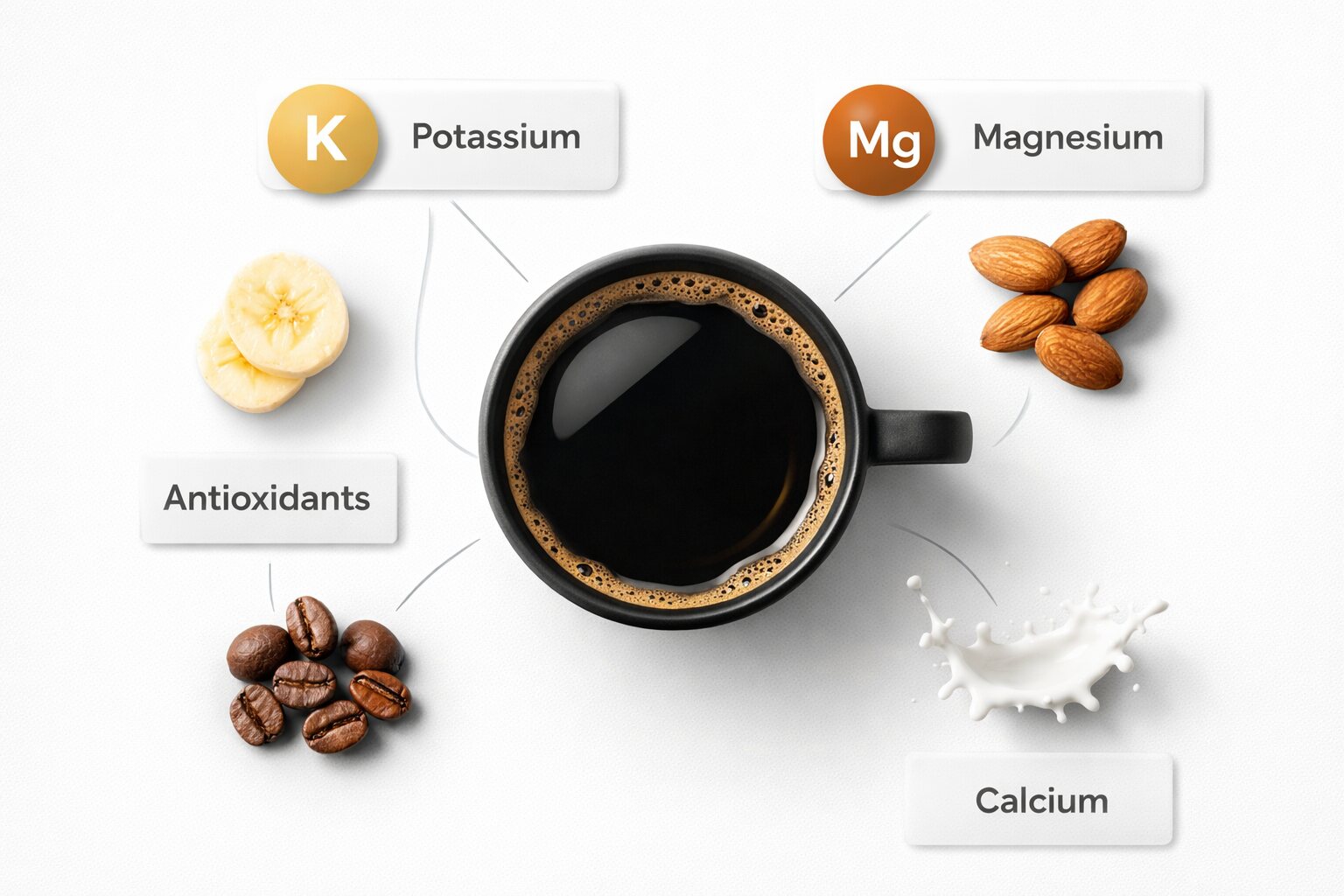
Coffee contains modest amounts of performance-relevant micronutrients. Per 8-ounce serving, brewed coffee provides approximately 116 mg of potassium, 7 mg of magnesium, and traces of niacin (Vitamin B3), according to USDA FoodData Central data. While these amounts are minor, they contribute to your overall daily intake, particularly if you’re drinking multiple cups.

Smart Add-Ins for Fitness Goals
How you drink your coffee can meaningfully affect its nutritional value:
- Add low-fat or fat-free milk to boost calcium and vitamin D intake — both critical for bone density and muscle function.
- Use fortified soy or oat milk if you’re dairy-free, for comparable calcium content.
- Limit added sugars. Blended coffee drinks can contain upward of 40–60 g of added sugar per serving, which undermines body composition goals.
Dosage, Timing, and Cautions
The FDA and current dietary guidelines recommend no more than 400 mg of caffeine per day for healthy adults — roughly three to five cups of standard brewed coffee. Stay within this range to avoid side effects like elevated heart rate, disrupted sleep, or increased blood pressure.
Certain populations should exercise extra caution:
- Individuals with hypertension: Caffeine can transiently raise blood pressure; consult your healthcare provider about appropriate limits.
- Pregnant and breastfeeding women: Current guidelines recommend limiting caffeine to under 200 mg/day; always confirm with your OB-GYN or midwife.
- Older adults: Sensitivity to caffeine may increase with age; monitor tolerance closely.
- Children and adolescents: Coffee is not recommended due to caffeine’s stimulant effects on the developing nervous system.
The Bottom Line
Coffee is one of the few everyday beverages backed by robust evidence for both performance and health benefits. Used strategically — black or with minimal additions, at the right dose and timing — it can serve as a natural, effective complement to your training and recovery routine.
Sources:
- Grgic, J. et al. (2019). British Journal of Sports Medicine. “Wake up and smell the coffee: caffeine supplementation and exercise performance.”
- Ding, M. et al. (2014). Diabetologia. “Caffeinated and decaffeinated coffee consumption and risk of type 2 diabetes.”
- Poole, R. et al. (2022). European Journal of Preventive Cardiology. “Coffee consumption and health: umbrella review of meta-analyses.”
- Qi, H. & Li, S. (2014). Frontiers in Neuroscience. “Dose-response meta-analysis on coffee, tea, and caffeine consumption with risk of Parkinson’s disease.”
- USDA FoodData Central. “Coffee, brewed from grounds, prepared with tap water.” fdc.nal.usda.gov
- Goldstein, E.R. et al. (2010). Journal of the International Society of Sports Nutrition. “International Society of Sports Nutrition Position Stand: Caffeine and performance.”
Disclaimer: This article is intended for informational purposes only and does not constitute medical or nutritional advice. Consult a qualified healthcare professional before making significant changes to your diet or supplement routine, especially if you have a pre-existing health condition.