

Work smarter — not longer. Research confirms that shorter, high-intensity sessions outperform hour-long moderate workouts for strength and fat loss.
⏱ Keep It Short: 30–40 Minutes Max
Research in the Journal of Strength and Conditioning Research shows diminishing hormonal returns after 45–60 minutes of continuous training. Keep your sessions tight and focused — 30 to 40 minutes of high-intensity work beats 90 minutes of moderate effort every time.
⚡ Train at High Intensity
High-intensity interval training (HIIT) significantly improves VO₂ max and metabolic efficiency, according to a landmark study in Medicine & Science in Sports & Exercise (Gibala et al., 2006). Build an aerobic base first — at least 4 weeks — then escalate. If you can hold a full conversation mid-set, you’re not pushing hard enough.

🥤 Fuel Strategically: Protein + Carbs
Muscle protein synthesis requires a consistent amino acid supply. The Journal of the International Society of Sports Nutrition recommends 1.6–2.2g of protein per kg of body weight daily for active individuals (Morton et al., 2018).
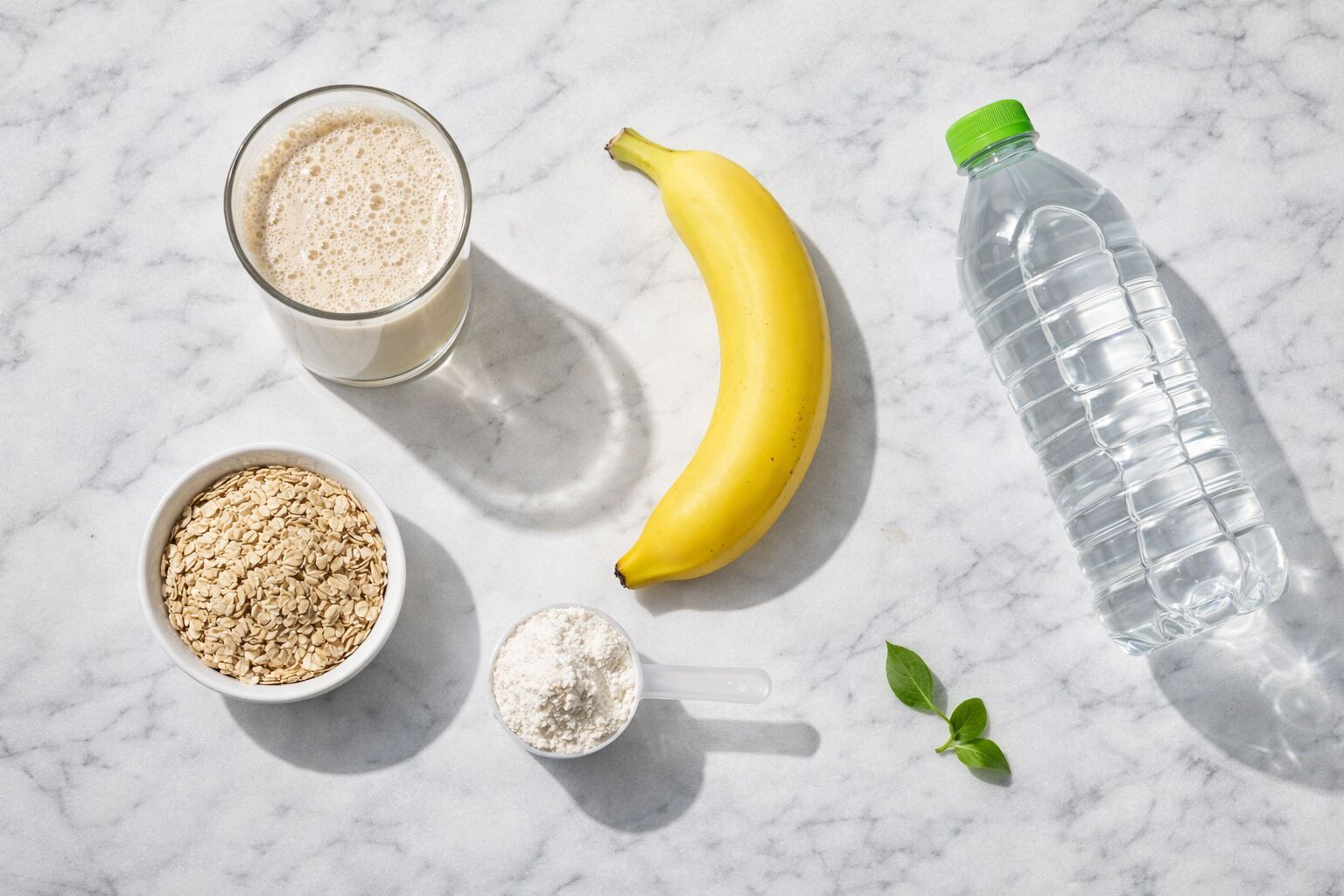
Timing matters: Consume a protein–carb shake before and after each session. Pre-workout nutrition elevates amino acid delivery to working muscles; post-workout nutrition activates mTOR signaling and accelerates repair.
Don’t fear carbohydrates. The USDA and WHO both recognize carbohydrates as the body’s primary fuel source. For intense training, a banana or fast-digesting carb (high glycemic index) 30 minutes pre-session improves performance and reduces fatigue.
🏋️ Lift Heavier, Slower, Smarter
Slow tempo lifting — 5 seconds concentric, 5 seconds eccentric — maximizes time under tension, a key driver of hypertrophy (Burd et al., Journal of Physiology, 2012).
One set to failure is as effective as three sets for muscle growth when performed with proper form and sufficient load, per meta-analysis in Sports Medicine (Ralston et al., 2017). Stop when form breaks down — not before, not after.
Compound exercises — squats, deadlifts, pull-ups, bench press, rows, lunges — recruit multiple muscle groups simultaneously, maximizing output per minute spent training.
🔄 Use Circuits, Add Instability
Circuit training maintains elevated heart rate while allowing individual muscle groups to recover. Move from exercise to exercise with minimal rest — this doubles as cardiovascular conditioning.
Training unilaterally (one leg, one arm) or on a Swiss ball engages core stabilizers that traditional machines ignore. Studies in the Journal of Human Kinetics confirm improved core activation and functional strength gains from unstable surface training.
🗓 Your Ideal Weekly Structure
Alternate across 4–5 days:
- 2–3 days: 30–40 min circuit-based strength training (compound moves, heavy load, slow tempo, one set to failure)
- 2 days: High-intensity cardio intervals — running, cycling, rowing, or any activity you enjoy
- Hills: Incorporate incline work 1–2× per week once your base is established
Rotate your routine every 3–4 weeks to prevent adaptation and maintain progressive overload.
Disclaimer: This content is for informational purposes only. It is not a substitute for professional medical or certified fitness advice. Consult a physician before beginning any new high-intensity exercise program, particularly if you have a cardiovascular condition, joint issues, or other health concerns. Begin all new programs gradually and prioritize proper form over intensity.