
Whether you’re chasing a personal record or simply trying to feel stronger day to day, protein is the nutrient your body can’t afford to overlook. It’s the foundational building block of muscle, hormone production, immune defense, and cellular repair — yet misconceptions around how much to eat, and what happens when you eat too much, remain widespread.
Here’s what the science actually says.
Why Protein Matters for Active People
Protein is composed of amino acids, which the body uses to synthesize muscle tissue, enzymes, and hormones. For anyone training consistently, dietary protein does far more than build muscle — it accelerates recovery, reduces muscle soreness, and helps preserve lean mass during caloric deficits.
According to a position stand by the International Society of Sports Nutrition (2017), athletes and regularly active individuals require significantly more protein than sedentary populations to support performance and recovery outcomes.
How Much Protein Do You Actually Need?
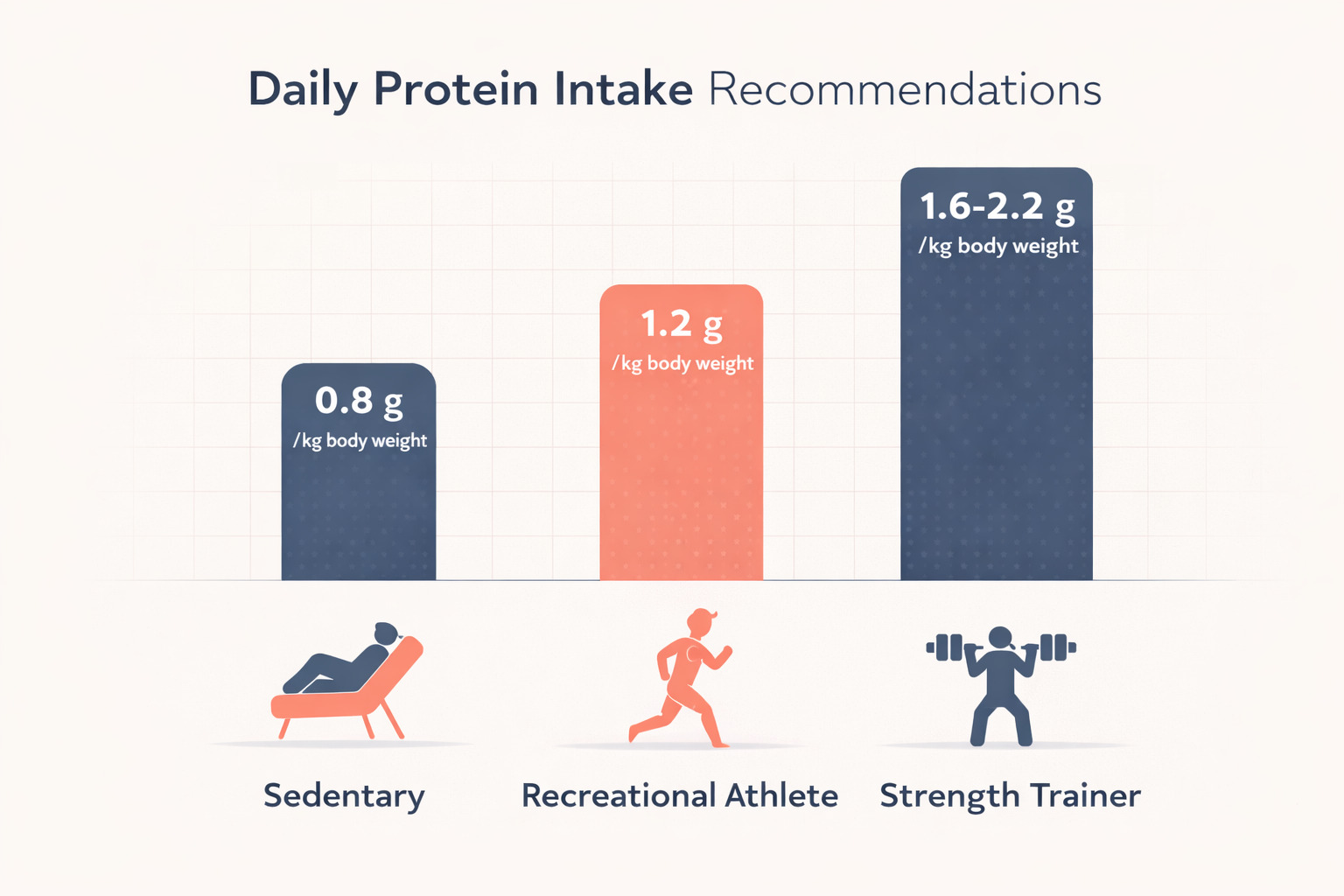
Protein needs vary based on age, sex, body weight, and training intensity:
- General population: 0.8 g per kg of body weight/day (USDA Dietary Guidelines, 2020–2025)
- Recreational exercisers: 1.2–1.4 g per kg/day
- Strength and endurance athletes: 1.4–1.7 g per kg/day (Phillips & Van Loon, Journal of Sports Sciences, 2011)
- During muscle-building phases: Up to 2.2 g per kg/day may be beneficial (Morton et al., British Journal of Sports Medicine, 2018)
Timing also matters. Research published in the Journal of the International Society of Sports Nutrition suggests consuming 20–40 g of high-quality protein within 2 hours post-workout to maximize muscle protein synthesis.
The Key Benefits of Adequate Protein Intake

Muscle Growth and Recovery Protein directly stimulates muscle protein synthesis. A meta-analysis of 49 studies (Morton et al., 2018) confirmed that protein supplementation significantly increases muscle mass and strength gains in individuals performing resistance training.
Appetite and Body Composition Protein is the most satiating macronutrient. Studies show it reduces levels of ghrelin (the hunger hormone) while increasing peptide YY, which promotes fullness — supporting fat loss without sacrificing muscle.
Bone Density Contrary to outdated beliefs, higher protein intake is associated with improved bone mineral density, particularly in older adults. (Shams-White et al., American Journal of Clinical Nutrition, 2017)
Blood Sugar Regulation Protein slows glucose absorption and can reduce post-meal blood sugar spikes, which is especially relevant for individuals managing insulin sensitivity.
Immune Support Antibodies and immune-signaling proteins are synthesized from dietary amino acids. Inadequate protein intake can compromise immune response, particularly during periods of intense training.
Potential Risks to Be Aware Of

Protein is safe for healthy individuals at recommended intakes, but there are real considerations at excessive levels:
- Kidney stress: Individuals with pre-existing chronic kidney disease (CKD) should limit protein intake. However, current evidence does not support kidney damage from high protein intake in healthy people. (Martin et al., Journal of the American Dietetic Association, 2005)
- Hydration demands: High protein metabolism increases urinary nitrogen excretion. Ensure adequate water intake — aim for at least 2–3 liters daily on high-protein diets.
- Nutrient displacement: Overemphasis on protein can crowd out fiber, healthy fats, and micronutrients. Balance matters.
- Digestive discomfort: Some people experience bloating or irregularity when increasing protein rapidly. Gradual adjustments and varied protein sources help.
Practical Takeaways
- Calculate your target: Multiply your body weight in kg by 1.4–1.7 g (for active individuals)
- Distribute protein across 3–5 meals for optimal muscle protein synthesis
- Prioritize whole food sources: chicken, fish, eggs, legumes, Greek yogurt, and tofu
- Supplement strategically if whole food intake falls short — whey, casein, and plant-based blends are all evidence-supported options
- Consult a registered dietitian if you have a health condition affecting kidney or liver function
Conclusion
Protein isn’t just a gym supplement — it’s a cornerstone of recovery, performance, metabolic health, and longevity. When consumed within appropriate ranges and paired with balanced nutrition, the benefits are well-documented and substantial. The key is finding your individual sweet spot based on your goals, activity level, and overall health.
Disclaimer: This article is for informational purposes only and does not constitute medical or nutritional advice. Consult a licensed healthcare provider or registered dietitian before making significant changes to your diet, especially if you have an existing health condition.