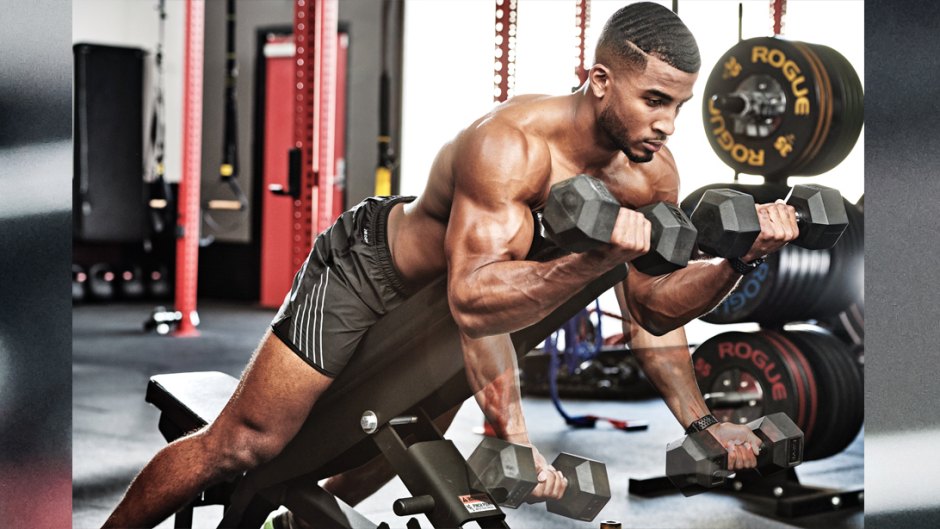

If bicep development is at the top of your fitness goals, you’re not alone. The biceps brachii is one of the most visible muscle groups, symbolizing strength and athletic prowess. But achieving significant bicep growth requires more than endless barbell curls. Research in exercise physiology shows that strategic variation in grip width, range of motion, and resistance type can dramatically enhance muscle hypertrophy and strength gains.
This guide presents five evidence-based techniques to optimize your bicep training. Whether you’re looking to increase arm circumference, improve peak definition, or enhance overall upper body performance, these methods will help you break through plateaus and achieve measurable results.
1. Manipulate Grip Width for Complete Bicep Development
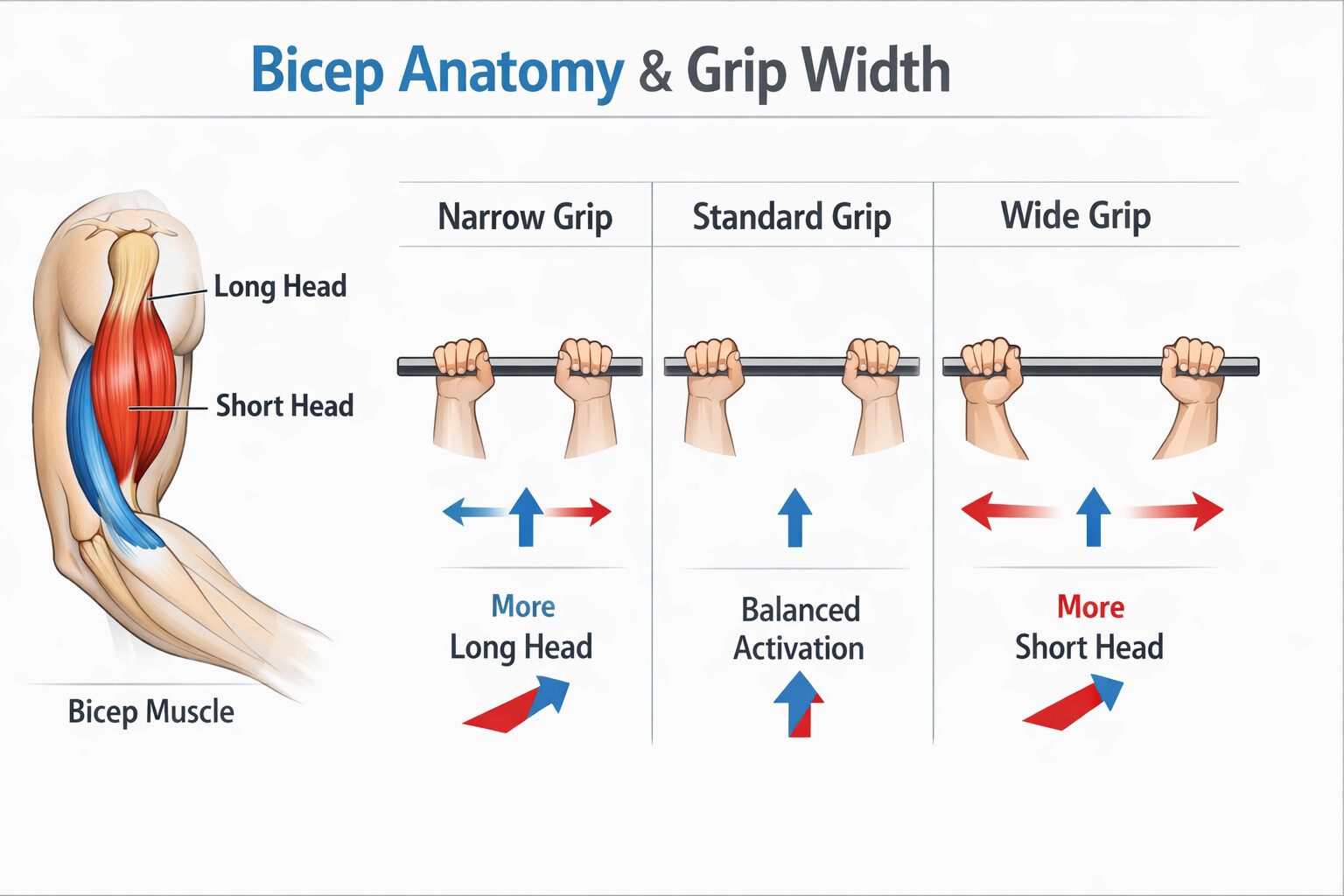
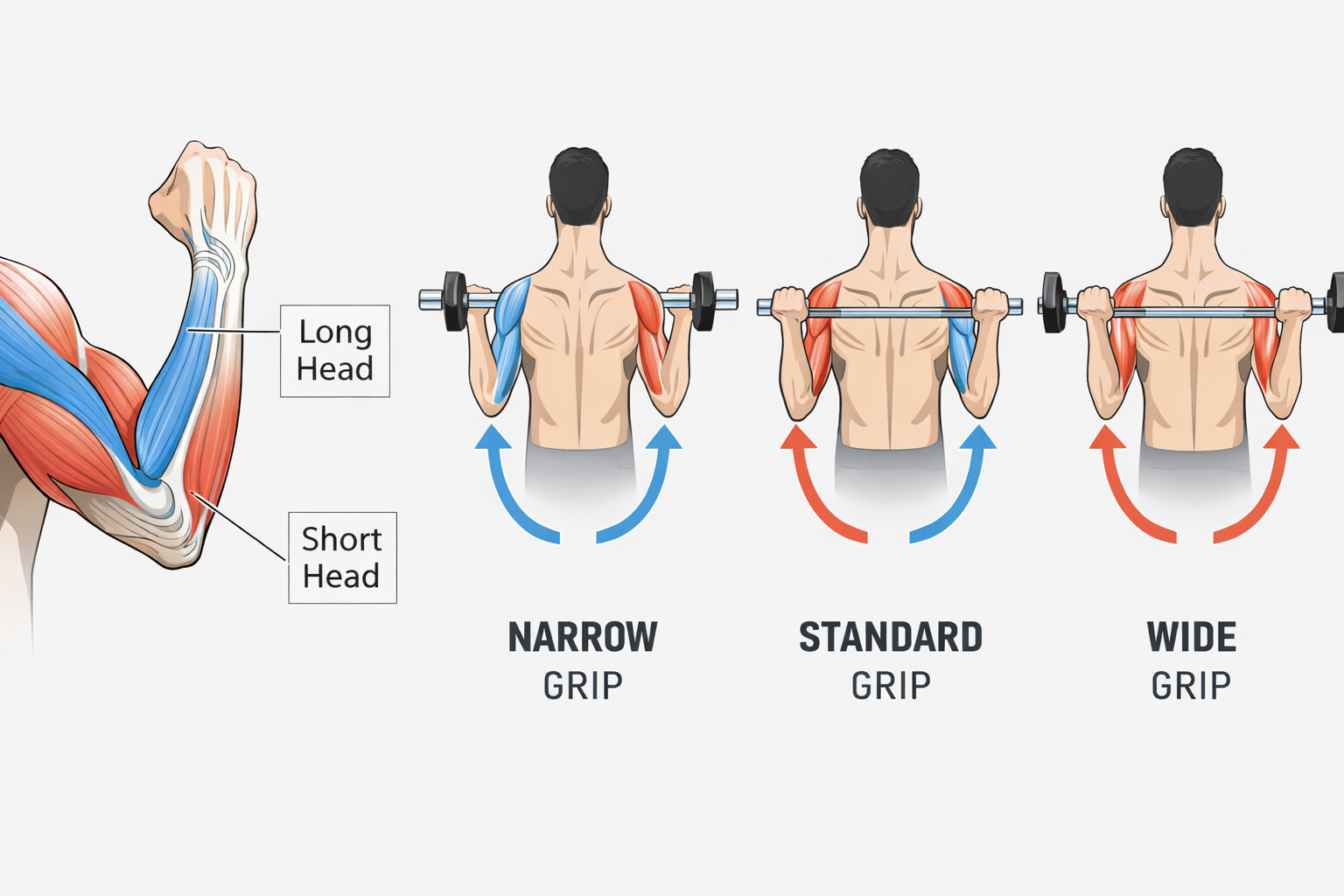
The biceps brachii consists of two heads: the long head (outer) and short head (inner). According to research published in the Journal of Strength and Conditioning Research, grip width significantly affects which head receives greater activation during curling movements.
How it works: A shoulder-width grip recruits both heads relatively evenly. Widening your grip (beyond shoulder-width) increases short head emphasis, while narrowing your grip targets the long head more intensely.
Application: Start your bicep workout with 4 sets of barbell curls, varying your grip with each set:
- Set 1: Close grip (approximately 8 inches apart)
- Set 2: Hip-width grip
- Set 3: Shoulder-width grip
- Set 4: Wide grip (6 inches wider than shoulder-width)
Perform 8-12 reps per set with controlled form. This systematic approach ensures balanced development across both bicep heads, creating fuller, more proportionate arms.
2. Leverage Partial Range Training with Seated Barbell Curls
Partial range of motion (ROM) exercises allow you to overload muscles with heavier weights than full ROM movements. A study in the European Journal of Applied Physiology found that training in specific ROM segments can produce significant strength gains in those ranges.
The advantage: Seated barbell curls eliminate the bottom portion of the movement (the bar rests on your thighs), allowing you to focus maximum tension on the muscle’s strongest position. Most individuals can curl 20-30% more weight seated versus standing.
Protocol: Begin your workout with 3 sets of heavy seated barbell curls (6-8 reps), then follow with 2-3 sets of full ROM standing barbell curls (10-12 reps). This combination provides both overload stimulus and complete muscle development.
Pro tip: Use a weight you can control with proper form. Heavier doesn’t mean better if you’re compensating with momentum or poor technique.
3. Emphasize the Long Head with Incline Dumbbell Curls
The long head of the biceps creates the coveted “peak” when flexed and contributes to arm thickness when viewed from the side. Incline dumbbell curls are uniquely effective for targeting this muscle head.
The science: When seated on an incline bench, your arms extend behind your torso, placing the long head under stretch. Research in muscle physiology shows that training muscles in a stretched position can enhance hypertrophy through increased mechanical tension.
Advanced technique – Drop Sets:
- Set the incline to 30 degrees and perform to failure
- Immediately adjust to 45 degrees (minimal rest) and repeat
- Finally, raise to 60 degrees and complete your final set
Choose a weight that allows approximately 10 reps at the initial 30-degree angle. Complete 3 total drop sets using this protocol. The progressive angle change maintains intensity while challenging the muscle through varied positions.
4. Prioritize Hammer Curls for Long Head Development
Traditionally considered an accessory exercise for forearms and brachialis, recent electromyography (EMG) studies have revealed that hammer curls produce substantial long head activation—potentially more than previously understood.
Optimal variation – Cross-Body Hammer Curls: Instead of curling the dumbbell straight up, bring it across your body at a 45-degree angle toward the opposite shoulder. This diagonal movement pattern increases long head recruitment while also engaging the brachialis and brachioradialis.
Dosage: Incorporate 3 sets of 10-12 reps of cross-body hammer curls into each bicep workout. This exercise pairs well after your primary barbell movements when you need a unilateral exercise that allows focus on form and mind-muscle connection.
5. Integrate Resistance Bands for Variable Tension
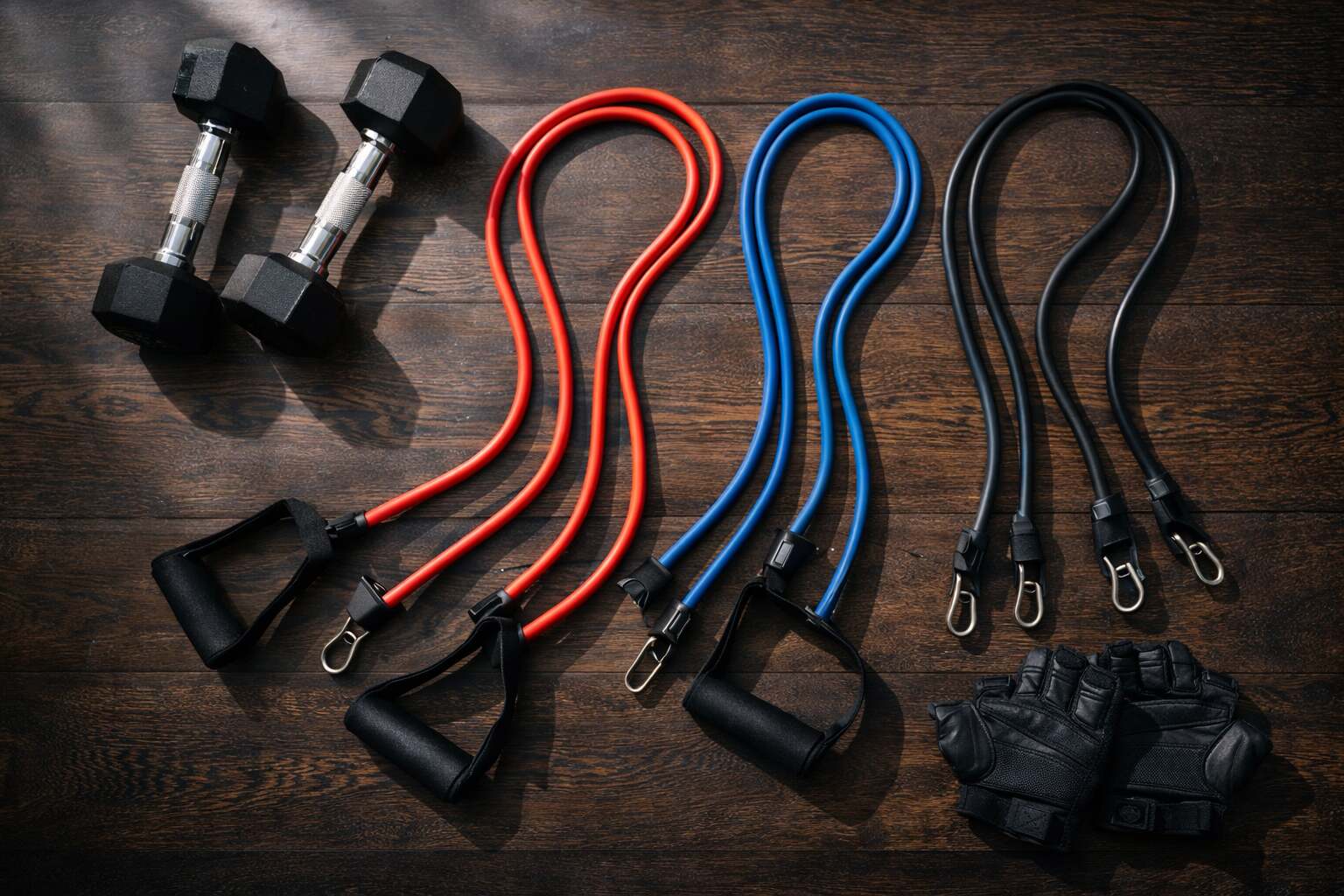
Resistance bands provide Linear Variable Resistance (LVR), meaning tension increases progressively throughout the range of motion. This addresses a fundamental limitation of free weights in bicep training.
The biomechanics: During a barbell curl, the biceps are minimally engaged in the bottom position (arm fully extended). The brachialis and brachioradialis handle most of the initial load until the elbow reaches approximately 90 degrees. Only in the latter half of the curl do the biceps become maximally involved.
Traditional weights force you to select a load the weaker muscles can handle in the first half, leaving the biceps under-challenged in their strongest position. Bands solve this by starting light and progressively increasing resistance exactly when the biceps take over.
Research support: A study in the Journal of Human Kinetics demonstrated that variable resistance training can enhance both muscle strength and power beyond traditional constant-load training.
Implementation: Finish your bicep workout with 3 sets of 10-15 reps using resistance band curls. Select a band tension that challenges you significantly in the top half of the movement. The burn you feel indicates maximum muscle fiber recruitment.
Key Takeaways for Bicep Growth
Building impressive biceps requires strategic training that addresses muscle anatomy, biomechanics, and progressive overload principles. By incorporating grip width variation, partial ROM training, incline stretching, hammer curl variations, and resistance band work, you’ll stimulate both bicep heads through multiple mechanisms.
Recovery matters: Remember that muscles grow during recovery, not during workouts. Allow at least 48 hours between dedicated bicep sessions, ensure adequate protein intake (1.6-2.2g per kg of bodyweight according to the International Society of Sports Nutrition), and prioritize sleep for optimal results.
Consistency and progressive overload remain the foundation of any successful training program. Track your weights, reps, and sets to ensure you’re continuously challenging your muscles with increased demands over time.
Disclaimer: This article is for informational purposes only and does not constitute medical advice. Consult with a qualified fitness professional or healthcare provider before beginning any new exercise program, especially if you have pre-existing conditions or injuries. Proper form and technique are essential to prevent injury.