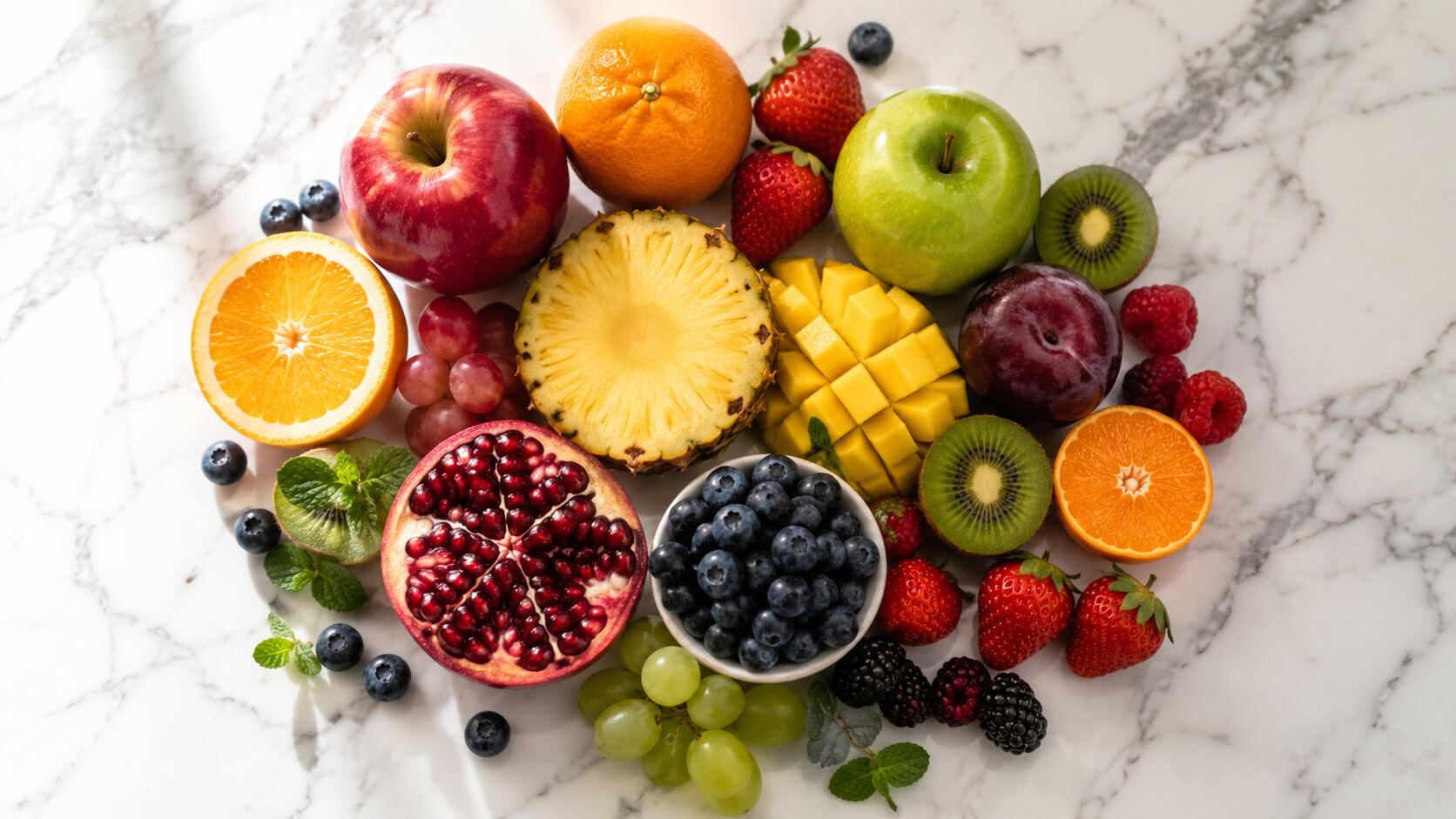
If weight loss is on your goal list, what you snack on matters as much as what you cut out. Fruit is one of the few foods that works in your favor on every front: low energy density, high water and fiber content, and enough natural sweetness to keep cravings in check. Here are nine fruits worth building into your routine, and why they earn a spot in an active lifestyle.
Apple
Apples are roughly 85% water and contain about 4 grams of fiber per medium fruit, a combination that supports satiety and can help reduce overall calorie intake. They’re also rich in polyphenols, plant compounds linked to better metabolic and cardiovascular health in long-term cohort studies (Nutrients, 2019).
Tip: Eat the skin on — that’s where most of the fiber and polyphenols are concentrated.
Pineapple
Pineapple contains bromelain, an enzyme that supports protein digestion and has anti-inflammatory properties. Early animal and cell-based research suggests bromelain may influence fat metabolism, though this hasn’t been confirmed in human trials yet. At roughly 50 calories per 100 grams, it’s a sensible way to satisfy a sweet craving.
Tip: Pair pineapple with a protein source post-workout to support recovery.
Kiwi
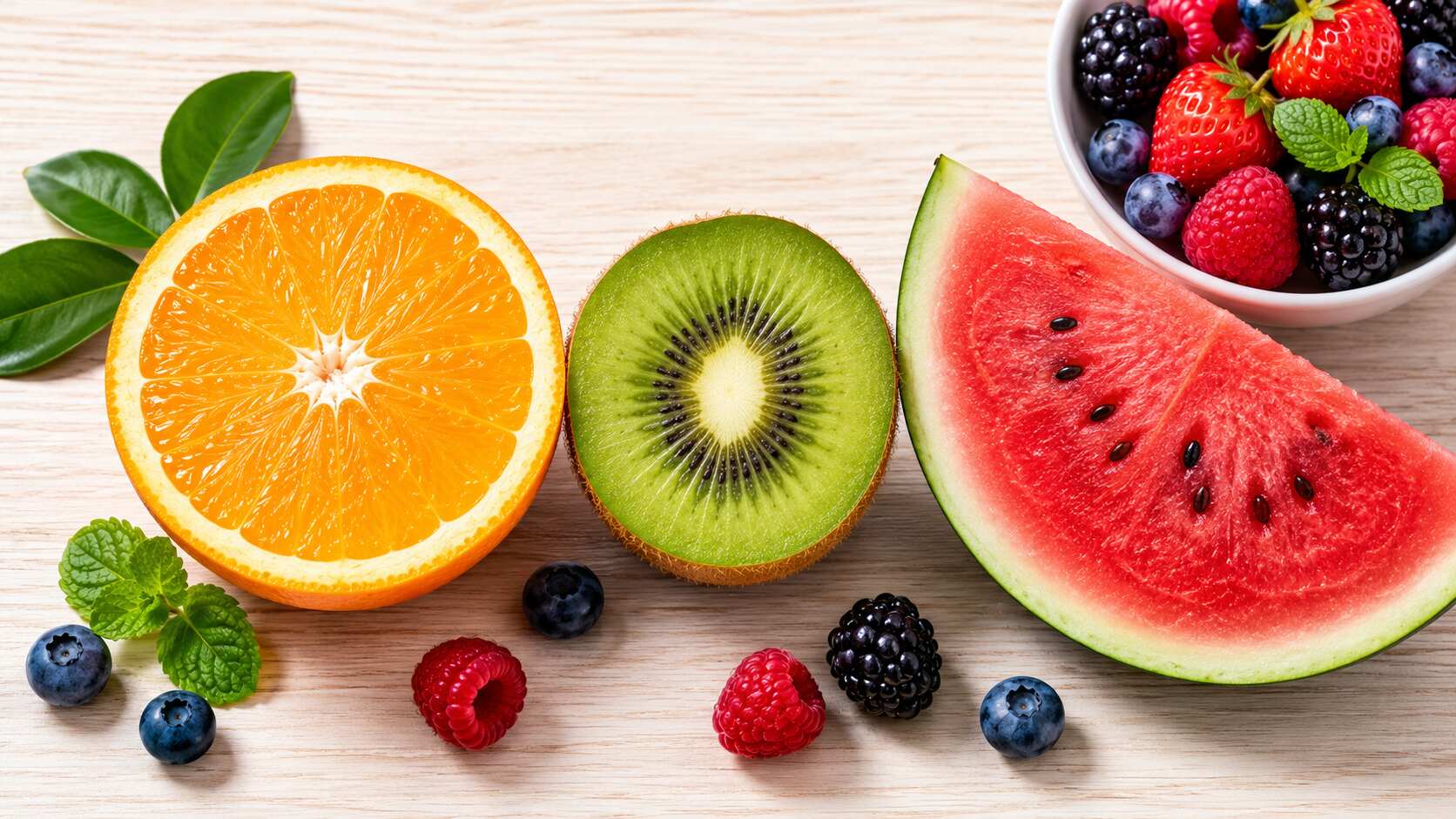
Kiwi is dense in fiber, including the seeds, which contribute insoluble fiber for digestive regularity. A 2018 study in Nutrients found kiwi consumption improved bowel function and gut comfort in adults with mild constipation.
Tip: Use kiwi as a swap for processed snacks rather than an addition on top of your usual diet — substitution, not stacking, is what drives results.
Guava
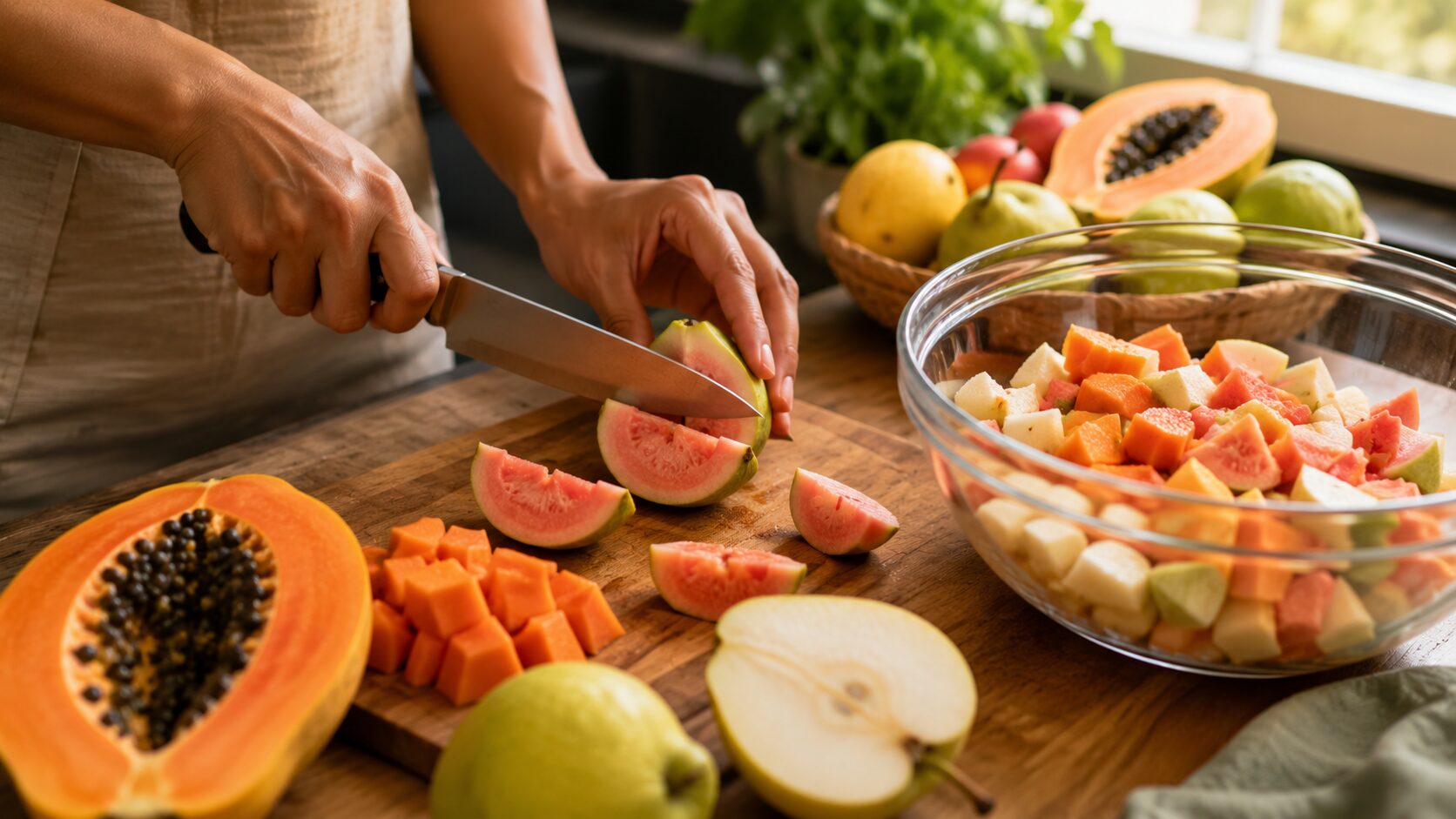
One guava delivers about 5 grams of protein and 9 grams of fiber, an unusually high combination for fruit. That fiber-protein pairing slows digestion and extends fullness, which can support portion control through the day.
Tip: Guava also has notably less sugar per serving than apples or grapes.
Watermelon
At only 30 calories per 100 grams, watermelon is over 90% water — useful for hydration and appetite regulation. It also contains citrulline, an amino acid the body converts to arginine, which research published in the American Journal of Clinical Nutrition links to improved fat metabolism markers.
Orange
Oranges provide about 47 calories per 100 grams and a full day’s vitamin C in one medium fruit. Research in Nutrients (2017) associates adequate vitamin C status with healthier body composition and more efficient fat oxidation during exercise — an evidence-based reason to favor whole oranges over juice, which lacks the fiber.
Pear
Roughly 84% water and 6 grams of fiber per medium pear, this fruit digests slowly and supports a healthy gut microbiome, a factor increasingly tied to weight regulation in clinical nutrition research.
Berries
Strawberries, raspberries, and blueberries are among the lowest-sugar, highest-fiber fruit choices available. A 2019 study in the Journal of Nutrition found that regular blueberry intake was associated with reduced abdominal fat and improved cholesterol markers over an 8-week period.

Papaya
Papaya contains papain, an enzyme that aids protein digestion, along with meaningful fiber and antioxidant content. Its anti-inflammatory properties may be particularly useful for active individuals managing exercise-related inflammation.
Practical Takeaways
- Aim for 2–4 servings of whole fruit daily, prioritizing fiber-dense options like berries, pears, and guava.
- Eat fruit whole rather than juiced to retain fiber and slow sugar absorption.
- Pair fruit with a protein or healthy fat source around workouts for better satiety and recovery support.
- Limit dried fruit and fruit juice, which concentrate sugar and calories.
A Note on Balance
Fruit can support weight management, but it works as part of a complete diet, not a standalone solution. Total calorie balance, protein intake, and activity level remain the primary drivers of weight loss.
This article is for informational purposes only and is not a substitute for personalized advice from a doctor or registered dietitian, particularly if you have diabetes or other conditions affected by sugar intake.