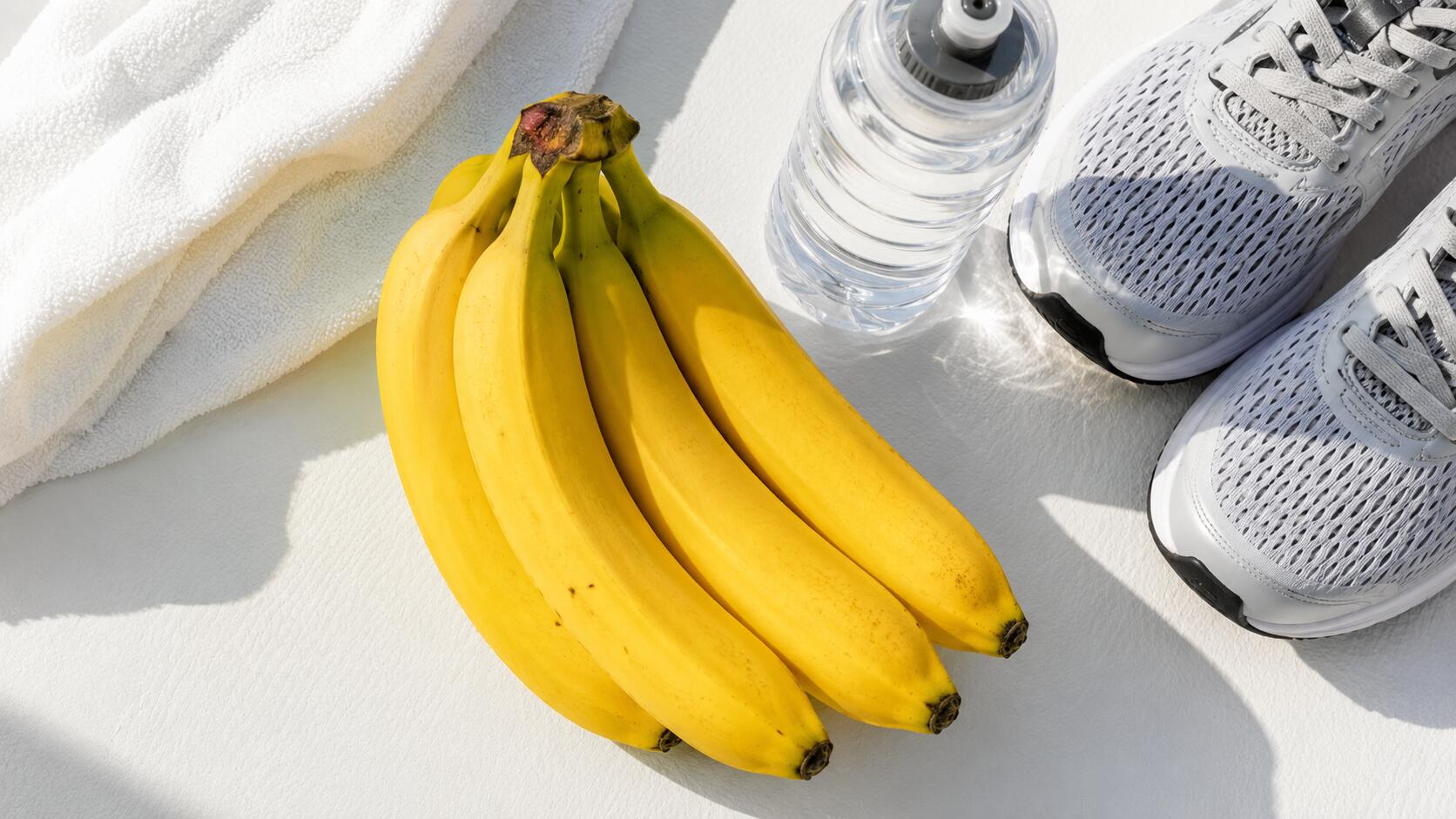
Whether you peel one before a morning run or toss one into your post-workout smoothie, bananas have earned their place as a staple in every active person’s diet. Backed by decades of nutritional research, this portable fruit delivers a powerful combination of carbohydrates, micronutrients, and antioxidants that directly support training performance and recovery.
What One Banana Actually Gives You
A medium banana (118 g) contains approximately 105 calories and provides a meaningful micronutrient profile per USDA FoodData Central data:
- Potassium: 422 mg (9% DV)
- Vitamin B6: 33% DV
- Vitamin C: 11% DV
- Magnesium: 8% DV
- Manganese: 14% DV
- Total carbohydrates: ~27 g | Fiber: 3.1 g | Protein: 1.3 g | Fat: 0.4 g
The carbohydrate profile shifts with ripeness: green bananas are high in resistant starch, while ripe yellow bananas contain more rapidly available sugars (glucose, fructose, sucrose) — a meaningful distinction depending on your training goals.
Performance and Recovery Benefits
Fuel Before, During, and After Exercise
Bananas provide fast-digesting carbohydrates that are easy on the gut — ideal before a workout or during endurance events. A study published in PLOS ONE (Nieman et al., 2012) found that banana consumption during cycling performed comparably to a 6% carbohydrate sports drink for sustaining energy and supporting recovery markers.
Recommended timing:
- Pre-workout (30–60 min before): One ripe banana for quick glycogen support
- During endurance exercise (60+ min): Half a banana every 45 minutes
- Post-workout: Pair with a protein source for glycogen replenishment
Electrolyte Support and Muscle Function
Potassium is critical for muscle contraction and fluid regulation. Active individuals who sweat heavily are especially vulnerable to potassium depletion. Research published in Hypertension (Whelton et al., 1997) demonstrated that higher potassium intake is associated with lower blood pressure — relevant for cardiovascular endurance. Combined with magnesium, bananas offer meaningful electrolyte support without the added sugar found in many sports drinks.
Digestive Health and Gut Integrity
The 3.1 g of fiber per banana supports gut motility and feeds beneficial microbiota. Resistant starch in unripe bananas functions as a prebiotic, fermenting in the colon to produce short-chain fatty acids. A review in Nutrients (Slavin, 2013) confirms that dietary fiber from whole fruits improves gastrointestinal health and satiety — both valuable for athletes managing body composition.

Ripeness Matters: Choosing the Right Banana for Your Goal
| Goal | Best Choice |
|---|---|
| Pre-workout energy | Ripe yellow banana |
| Blood sugar management | Green or slightly unripe |
| Gut health and satiety | Unripe (higher resistant starch) |
| Post-workout recovery | Ripe banana + protein source |
The glycemic index (GI) of bananas ranges from approximately 30 (green) to 60 (ripe), placing them in the low-to-medium range — meaning they provide sustained energy without dramatic blood sugar spikes in healthy individuals (Foster-Powell et al., American Journal of Clinical Nutrition, 2002).
Easy Ways to Add Bananas to Your Routine
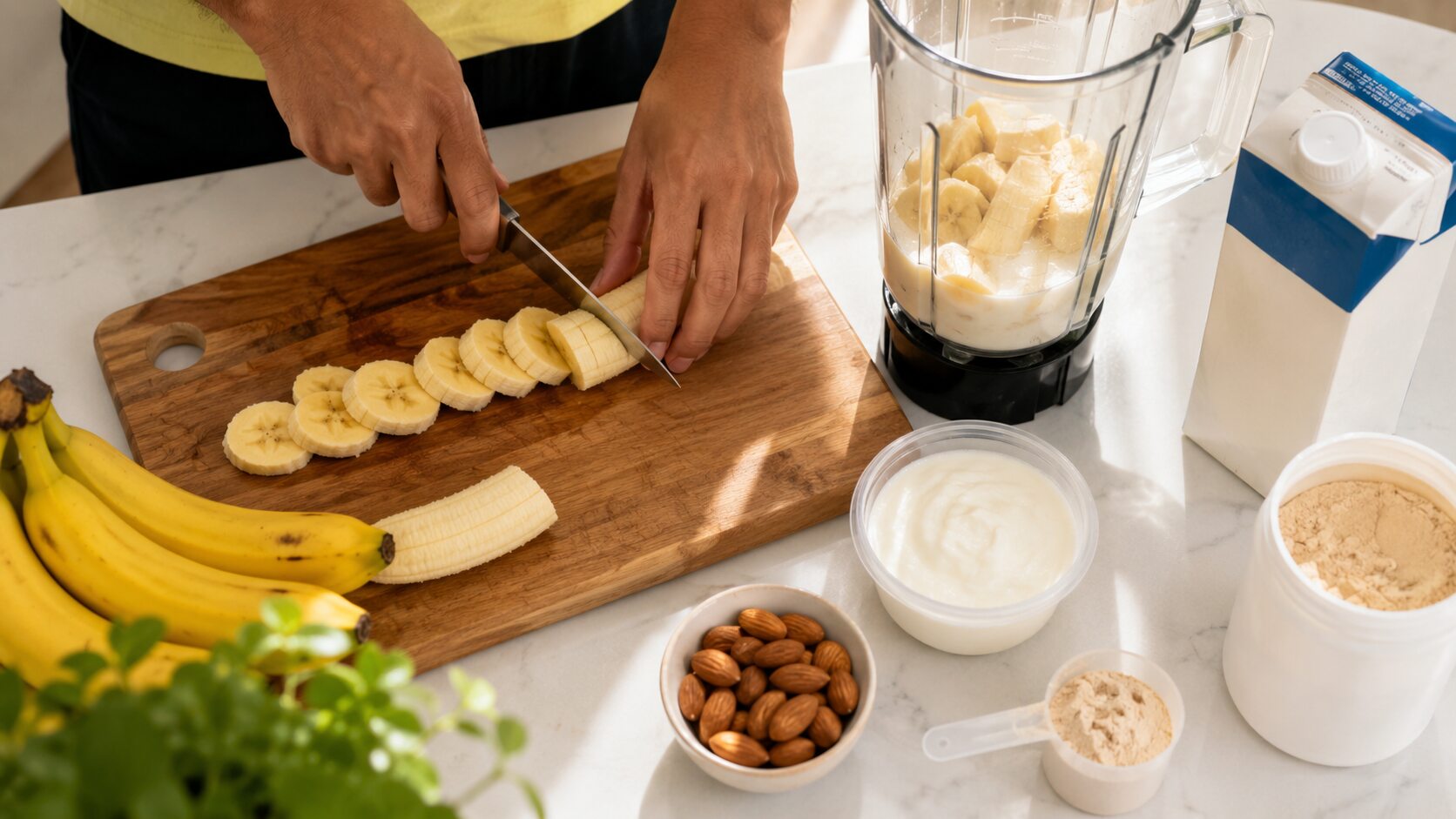
- Recovery smoothie: Blend one ripe banana with Greek yogurt, almond milk, and a scoop of protein powder
- Pre-run fuel: Eat with a tablespoon of nut butter for combined carbs and fat
- Frozen treat: Freeze sliced bananas and blend for a one-ingredient post-workout dessert
- Overnight oats: Slice into oats with chia seeds for a slow-release breakfast
Key Takeaways
Bananas are one of the most practical performance foods available — affordable, portable, and nutritionally dense. Their potassium and magnesium content supports heart and muscle function, their carbohydrates fuel both short and long training sessions, and their fiber promotes gut health and satiety. Whether your goal is endurance, body composition, or general wellness, a daily banana fits nearly every nutrition strategy.
Sources:
- USDA FoodData Central. Bananas, raw. FDC ID: 173944.
- Nieman DC, et al. Bananas as an energy source during exercise: A metabolomics approach. PLOS ONE. 2012;7(5):e37479.
- Whelton PK, et al. Effects of oral potassium on blood pressure. JAMA. 1997;277(20):1624–1632.
- Slavin J. Fiber and prebiotics: mechanisms and health benefits. Nutrients. 2013;5(4):1417–1435.
- Foster-Powell K, Holt SH, Brand-Miller JC. International table of glycemic index and glycemic load values. Am J Clin Nutr. 2002;76(1):5–56.
Disclaimer: This article is for informational purposes only and does not constitute medical or dietary advice. Individuals with diabetes, kidney disease, or other conditions affecting potassium or carbohydrate metabolism should consult a registered dietitian or physician before making dietary changes.