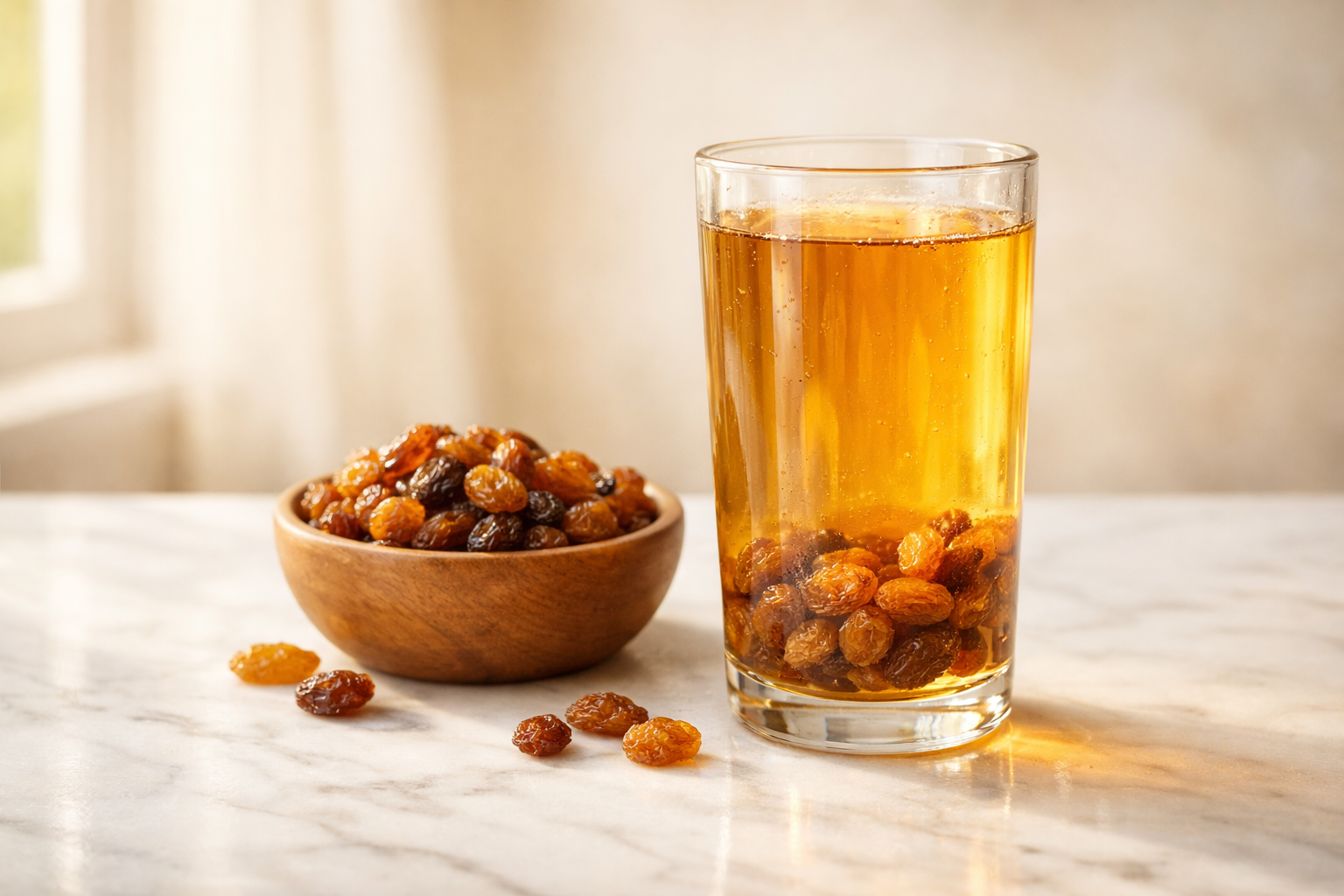
If you’re already dialing in your pre-workout nutrition and post-workout recovery, raisin water is one simple, evidence-backed addition that could sharpen your results. Made from soaking raisins overnight, this traditional remedy delivers a concentrated dose of micronutrients — potassium, iron, boron, and antioxidants — in a low-calorie, easy-to-absorb form that pairs well with an active lifestyle.
How to Prepare Raisin Water
The preparation is straightforward:
- Add 150 g of raisins to 2 cups (500 ml) of water
- Bring to a brief boil, then let the raisins soak overnight (8–12 hours)
- Strain the liquid in the morning and warm it gently over low heat
- Drink on an empty stomach, and wait at least 30 minutes before eating
Consistency matters — aim for daily use over several weeks to observe measurable effects.
Key Benefits for Active Individuals
Electrolyte & Blood Pressure Support
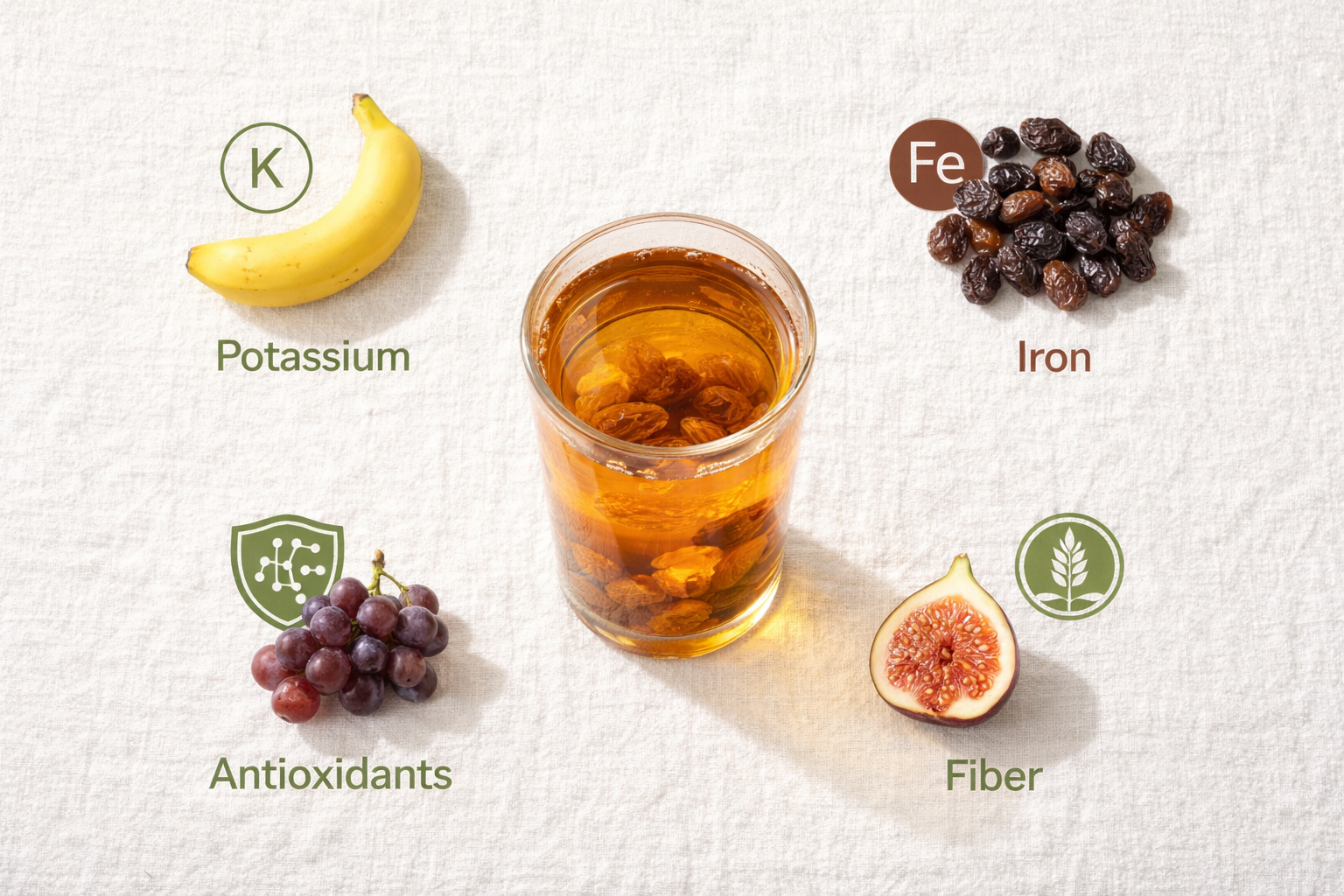
Raisins are a notable source of potassium — approximately 749 mg per 100 g, according to the USDA FoodData Central. Potassium plays a critical role in regulating blood pressure and supporting muscle contraction during exercise. A 2019 review published in Hypertension confirmed that adequate dietary potassium intake is associated with reduced systolic blood pressure, particularly relevant for high-intensity athletes.
Iron Replenishment
Iron deficiency is one of the most common nutritional shortfalls in endurance athletes, particularly female runners. Raisins contain approximately 1.9 mg of iron per 100 g (USDA). Drinking raisin water in a fasted state may enhance non-heme iron absorption, helping to prevent fatigue and support oxygen transport during sustained effort.
Antioxidant Defense & Recovery
Raisins are rich in polyphenols, including flavonoids and phenolic acids, which contribute to their antioxidant capacity. A study in the Journal of Agricultural and Food Chemistry found that raisin phenolics demonstrate significant free radical scavenging activity. For athletes, this matters post-workout — antioxidants help neutralize exercise-induced oxidative stress, potentially reducing muscle soreness and accelerating recovery.
Digestive Health & Regularity
The fiber in raisins — about 3.7 g per 100 g — supports bowel regularity and promotes a healthy gut microbiome. Good digestive function is foundational to nutrient absorption and overall performance. Raisin water provides a gentler, soluble fiber effect compared to eating raisins whole, making it easier on sensitive stomachs.

Sustained Energy Without Spikes
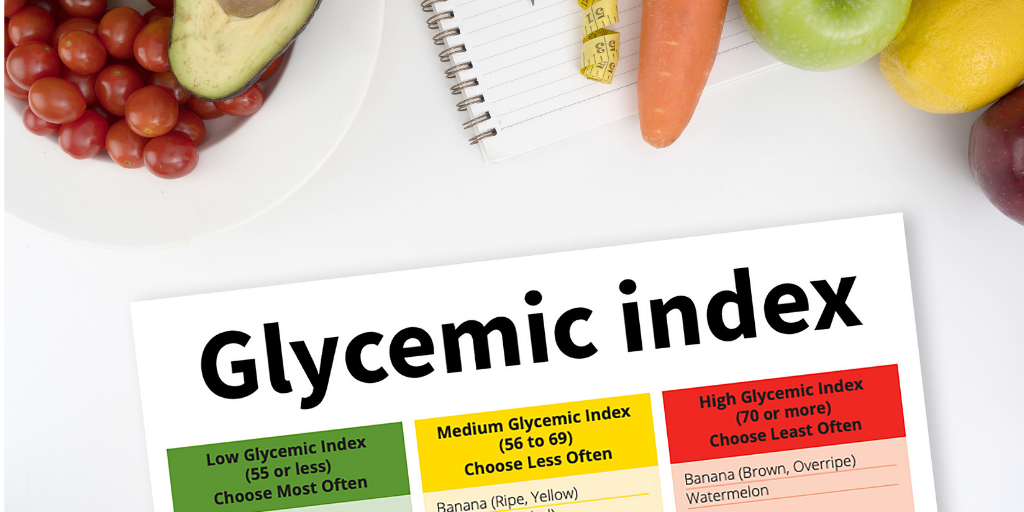
Raisins contain natural sugars (fructose and glucose), but their fiber content helps moderate glycemic response. This makes raisin water a reasonable early-morning energy source before light training — delivering quick fuel without the crash associated with processed sugars.
Liver & Detox Support
Traditional Ayurvedic and functional medicine practices have long used raisin water as a liver tonic. While robust clinical trials are limited, early research suggests raisins may support hepatic antioxidant pathways. For athletes who supplement heavily, liver function optimization is worth considering.
Practical Considerations

- Portion: Stick to 150 g of raisins per preparation — raisins are calorie-dense (~299 kcal per 100 g), and the goal is the infused water, not excess sugar intake
- Timing: Morning, fasted consumption appears to offer the best absorption window
- Bone support: Raisins provide boron, a trace mineral linked to calcium metabolism and bone formation, relevant for impact athletes (Journal of Trace Elements in Medicine and Biology, 2015)
- Caution: Those with diabetes or fructose sensitivity should monitor their response; raisin water does contain natural sugars. Consult a physician if you are managing blood sugar conditions
The Bottom Line
Raisin water is not a supplement that replaces a well-structured diet, but it is a practical, low-cost, and scientifically supported addition to a morning wellness routine. Its combination of potassium, iron, antioxidants, and fiber makes it particularly relevant for athletes who train hard and need micronutrient support to match.
Try it for three to four weeks consistently and track changes in energy, digestion, and recovery before drawing conclusions.
Sources:
- USDA FoodData Central — Raisins, seeded (FDC ID: 168165)
- Hypertension (2019) — Dietary potassium and blood pressure regulation
- Journal of Agricultural and Food Chemistry (2009) — Polyphenol antioxidant activity of raisins
- Journal of Trace Elements in Medicine and Biology (2015) — Boron and bone metabolism
Disclaimer: This article is for informational purposes only and does not constitute medical advice. Consult a qualified healthcare professional before making significant changes to your diet, especially if you have underlying health conditions or are taking medication.