

You train hard, eat well, and hit your macros — but if you spend the majority of your day parked in a chair, you may be quietly undermining all that effort. Research published in the Annals of Internal Medicine confirms that prolonged sitting is independently linked to poor health outcomes, even among people who exercise regularly. The body simply wasn’t built for extended inactivity, and the consequences go far deeper than a stiff back.
What Happens to Your Body When You Sit Too Long
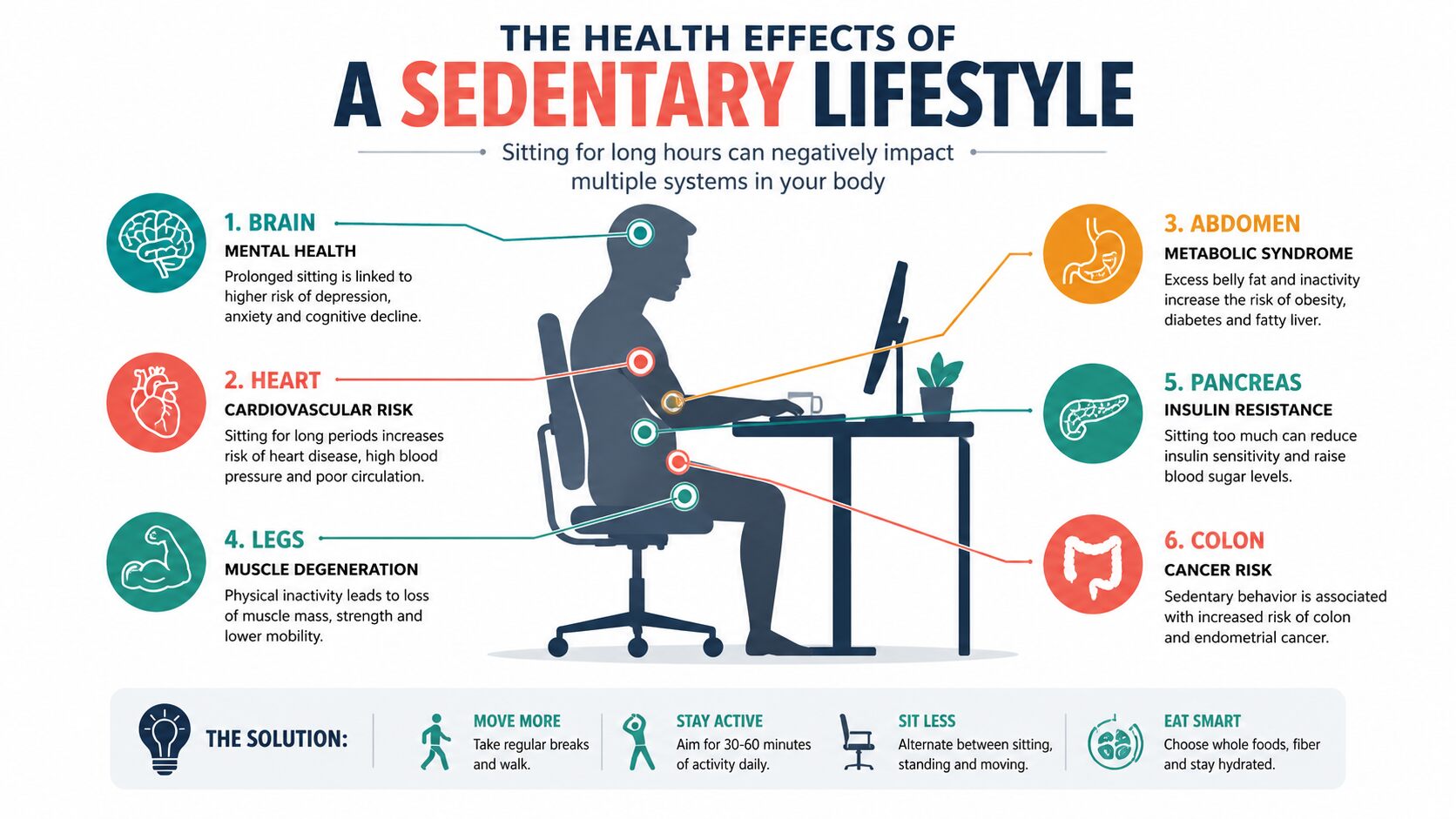
The risks associated with a sedentary lifestyle stack up fast. According to the Mayo Clinic and multiple peer-reviewed sources, extended sitting is associated with:
- Metabolic syndrome: A cluster of conditions including elevated blood pressure, high blood sugar, excess abdominal fat, and abnormal cholesterol — each a risk factor for cardiovascular disease and type 2 diabetes.
- Cardiovascular disease: Reduced blood flow during prolonged inactivity raises blood pressure and disrupts lipid metabolism. A meta-analysis in the British Journal of Sports Medicine found that sedentary time significantly increases cardiovascular mortality risk.
- Insulin resistance: Extended sitting blunts glucose uptake in muscle tissue. Research in Diabetologia shows that interrupting sitting with short activity breaks meaningfully improves insulin sensitivity.
- Muscle degeneration: Staying still for hours reduces the neuromuscular stimulus needed to maintain muscle tone, accelerating the atrophy that undermines your strength goals.
- Cancer risk: The Journal of the National Cancer Institute has published evidence linking high sedentary time to increased risk of colon, breast, and endometrial cancers, independent of leisure-time physical activity.
- Mental health decline: Physical inactivity correlates with elevated rates of depression and anxiety. Movement triggers endorphin release and regulates cortisol — both critical for psychological resilience.
The Athlete’s Paradox
Here’s the uncomfortable truth: one hour of gym work does not offset eight hours of sitting. A landmark study in The Lancet involving over one million participants found that 60–75 minutes of moderate-intensity activity per day was needed to eliminate the elevated mortality risk associated with prolonged sitting. Most people fall well short of that threshold.
How to Break the Sitting Cycle

The fix doesn’t require a gym. It requires frequency. The goal is to interrupt sedentary periods every 30 minutes with at least 2–3 minutes of movement. Evidence from Medicine and Science in Sports and Exercise shows that these short interruptions improve glucose regulation, lower blood pressure, and reduce fatigue.
Practical strategies:
- Set a timer to stand and move for 2–3 minutes every 30 minutes during your workday.
- Take calls on your feet — walking or standing.
- Switch to a standing desk or elevate your workstation temporarily with books or a counter.
- Replace seated meetings with walking meetings.
- Position a treadmill under an adjustable workstation for low-intensity movement throughout the day.
Performance Takeaway

Think of movement breaks as micro-training sessions. Each one primes your cardiovascular system, keeps insulin sensitivity sharp, and maintains the muscle activation patterns you work to build in the gym. Good posture during seated periods matters too — support your lumbar spine, keep your feet flat on the floor, and avoid forward head posture that stresses the cervical spine and restricts breathing.
Less sitting and more movement — even low-intensity movement — is a genuine performance enhancer, not just a health recommendation. Stack it with your training, not against it.
Sources:
- Biswas A, et al. Annals of Internal Medicine, 2015.
- Ekelund U, et al. The Lancet, 2016.
- Dunstan DW, et al. Diabetologia, 2012.
- Wilmot EG, et al. Diabetologia, 2012.
- Matthews CE, et al. Journal of the National Cancer Institute, 2009.
- Biswas A, et al. British Journal of Sports Medicine, 2015.
Disclaimer: This article is for informational purposes only and does not constitute medical advice. Consult a qualified healthcare professional before making significant changes to your activity levels, particularly if you have pre-existing health conditions.