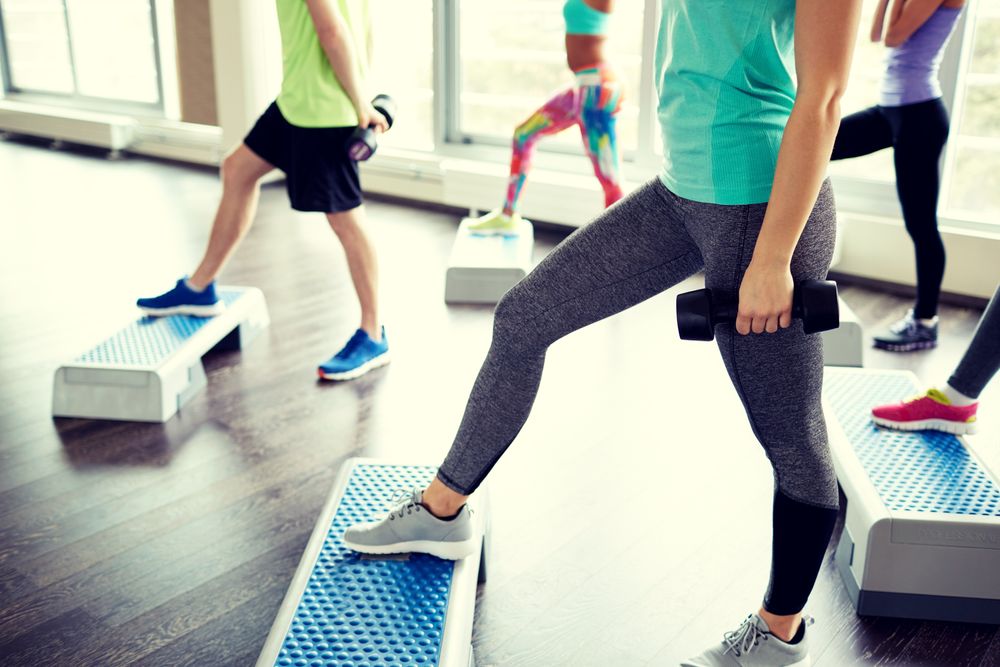
Height is largely determined by genetics, but research confirms that consistent exercise, quality sleep, and targeted nutrition during adolescence can meaningfully support your body’s natural growth potential. If you are in your teenage years or still developing, these evidence-based strategies give you every advantage.
Why Exercise Matters for Growth
Physical activity stimulates the release of human growth hormone (HGH), which drives bone elongation and muscle development during puberty. A 2003 review published in Sports Medicine found that regular aerobic and resistance exercise significantly elevates HGH secretion, particularly during the growth-sensitive years of adolescence. Exercises that decompress the spine and engage the full kinetic chain are especially beneficial.
Best Exercises to Support Height Development
Hanging and Bar Exercises
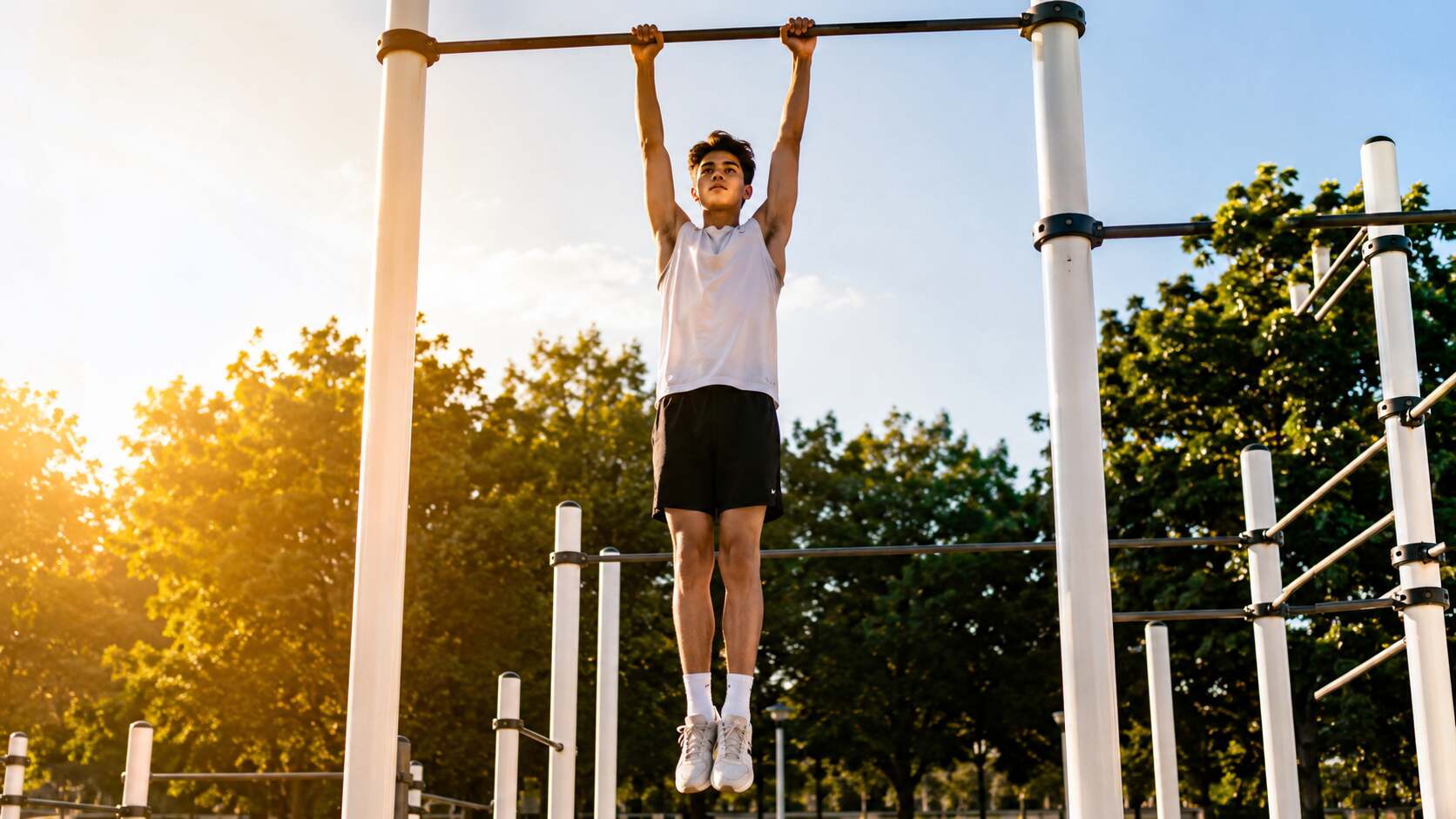
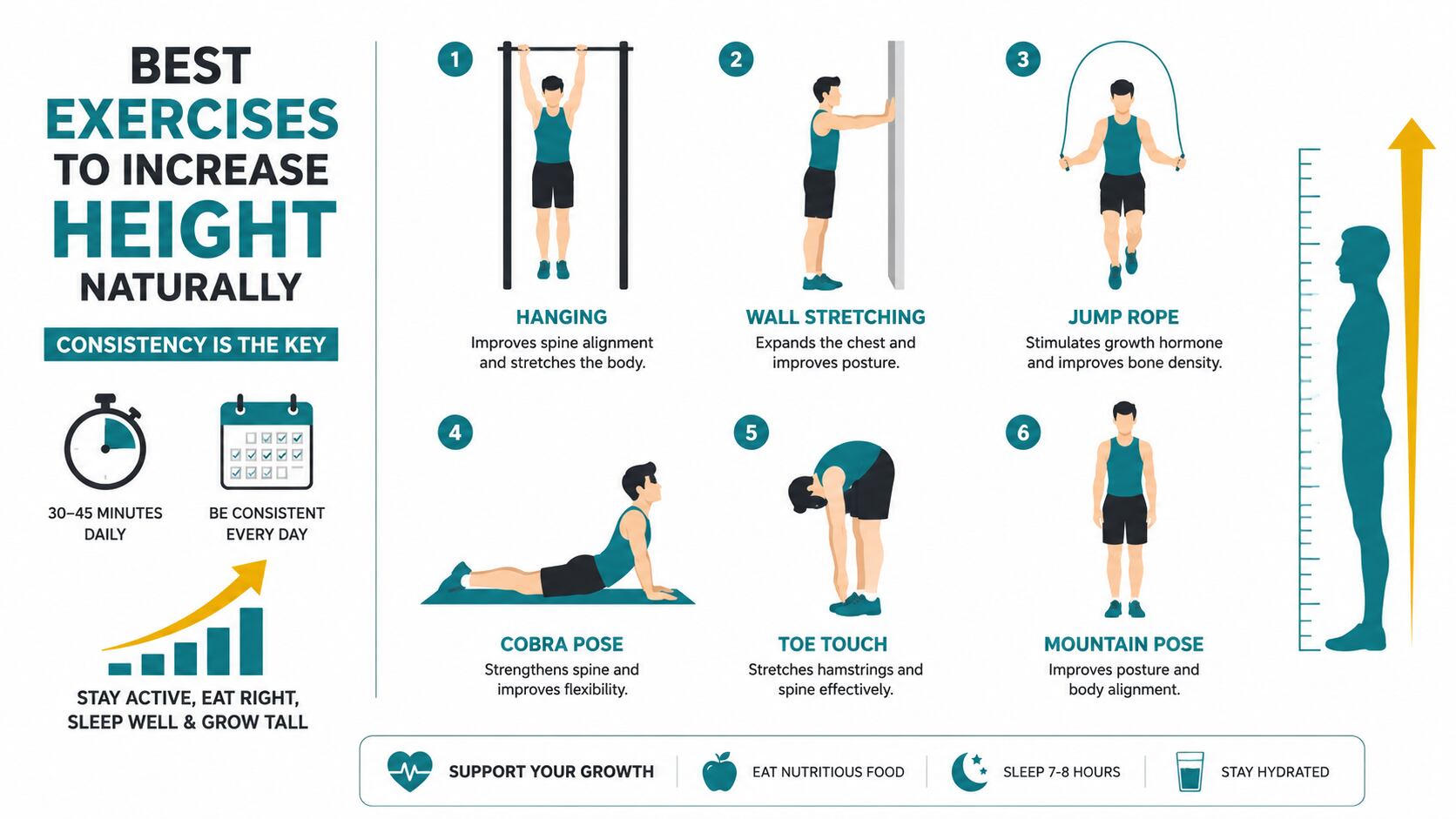
Dead hangs from a fixed bar decompress the vertebral discs, temporarily elongating the spine and improving posture. Aim for 3–5 sets of 20–30 second holds, 4–5 times per week. Consistent spinal decompression over months can contribute to a measurable improvement in standing height.
Stretching and Wall Extensions
Lean against a wall, extend both arms overhead, and rise onto your toes. Hold for 20–30 seconds, repeat 5 times. This movement lengthens the thoracic and lumbar spine while activating the posterior chain. Incorporate standing forward folds to build hamstring flexibility alongside spinal length.
Jump Rope (Skipping)
Skipping trains ankle dorsiflexion, activates the calves and quadriceps, and repeatedly compresses and decompresses the lower limbs in a rhythmic pattern that supports bone density and leg strength. Target 10–15 minutes per session, 3–4 times per week.
Yoga Asanas for Spinal Health
Three asanas stand out for height and posture: Bhujangasana (Cobra Pose) opens the thoracic spine; Trikonasana (Triangle Pose) stretches the lateral chain and hips; Tadasana (Mountain Pose) promotes optimal spinal alignment. A 2019 study in the International Journal of Yoga confirmed that regular yoga practice improves spinal flexibility and postural alignment in adolescents.
Toe Touches
Seated or standing, reaching for your toes without bending the knees lengthens the hamstrings and stretches the lumbar fascia. Perform 3 sets of 10 slow repetitions daily.
Sports That Actively Promote Height

- Swimming — Full-body muscle elongation, spinal decompression, and cardiovascular conditioning. Children who begin swimming before puberty tend to develop longer muscle bellies.
- Basketball — Repeated vertical jumping and overhead reaching create axial loading followed by decompression, a stimulus linked to bone remodeling.
- Cycling — Both stationary and road cycling engage all major lower-body muscle groups through a full range of motion, supporting leg development and posture.
Aim for 45–60 minutes of your preferred sport, 4–5 days per week.
Lifestyle Factors You Cannot Ignore
Sleep: Your Primary Growth Window
HGH is secreted in pulses during slow-wave sleep, with peak release occurring 60–90 minutes after falling asleep. The National Sleep Foundation recommends 8–10 hours per night for teenagers. Sleep deprivation directly suppresses HGH output, making recovery as important as any training session.
Nutrition for Bone and Muscle Development
- Calcium: 1,300 mg/day for ages 9–18 (USDA Dietary Reference Intake) — prioritize dairy, fortified plant milks, leafy greens, and almonds
- Vitamin D: 600 IU/day minimum to ensure calcium absorption — sources include sunlight, fatty fish, and fortified foods
- Protein: 0.8–1.2 g per kg of body weight daily to support muscle and connective tissue growth
- Zinc: 11 mg/day for adolescent males, 9 mg/day for females — found in legumes, seeds, and lean meats
A 2018 meta-analysis in Nutrients confirmed that micronutrient adequacy — particularly calcium, vitamin D, and zinc — is independently associated with statural growth in children and adolescents.

Key Takeaways
Maximizing your natural height potential requires a consistent three-part approach: daily spinal decompression and full-body exercise, adequate deep sleep for HGH release, and a diet rich in bone-supporting micronutrients. Results are gradual — commit to 6–12 months of consistency before evaluating outcomes.
Sources
- Godfrey RJ, et al. (2003). The exercise-induced growth hormone response in athletes. Sports Medicine, 33(8), 599–613.
- Bharshankar JR, et al. (2019). Effect of yoga on spinal flexibility and postural alignment. International Journal of Yoga, 12(2), 144–149.
- Huynh T, et al. (2018). Micronutrient adequacy and linear growth in children: A systematic review. Nutrients, 10(7), 888.
- USDA Dietary Reference Intakes for Calcium and Vitamin D. National Academies Press, 2011.
Disclaimer: This article is intended for informational and educational purposes only. It does not constitute medical advice. Growth outcomes are primarily influenced by genetics and individual physiology. Consult a qualified healthcare provider or pediatrician before making significant changes to a young person’s exercise or dietary regimen.