
Your fitness routine tracks your sleep, calories, and recovery — but what about your sexual health? For active individuals and couples, libido is a direct reflection of hormonal balance, stress load, and overall wellness. Understanding what’s “normal” can reduce unnecessary pressure and help you build a healthier relationship alongside your healthy body.
There Is No Magic Number
One of the most searched questions in relationship wellness is: “How much sex should married couples be having?” The short answer: there isn’t a universal benchmark.
Research published in the Archives of Sexual Behavior (2017) analyzed data from over 26,000 Americans and found that couples who had sex once per week reported the highest relationship satisfaction — but more frequent sex didn’t significantly increase happiness beyond that threshold.
What matters more than frequency:
- Mutual satisfaction — both partners feel fulfilled
- Consistency — regular intimacy, even if infrequent
- Communication — open dialogue about needs and expectations
Whether that means twice a week or twice a month, the “right” amount is what works for your relationship — not your friend’s.
The Fitness-Libido Connection
As someone who prioritizes physical health, you already have an advantage. Exercise significantly impacts libido through its effect on key hormones:
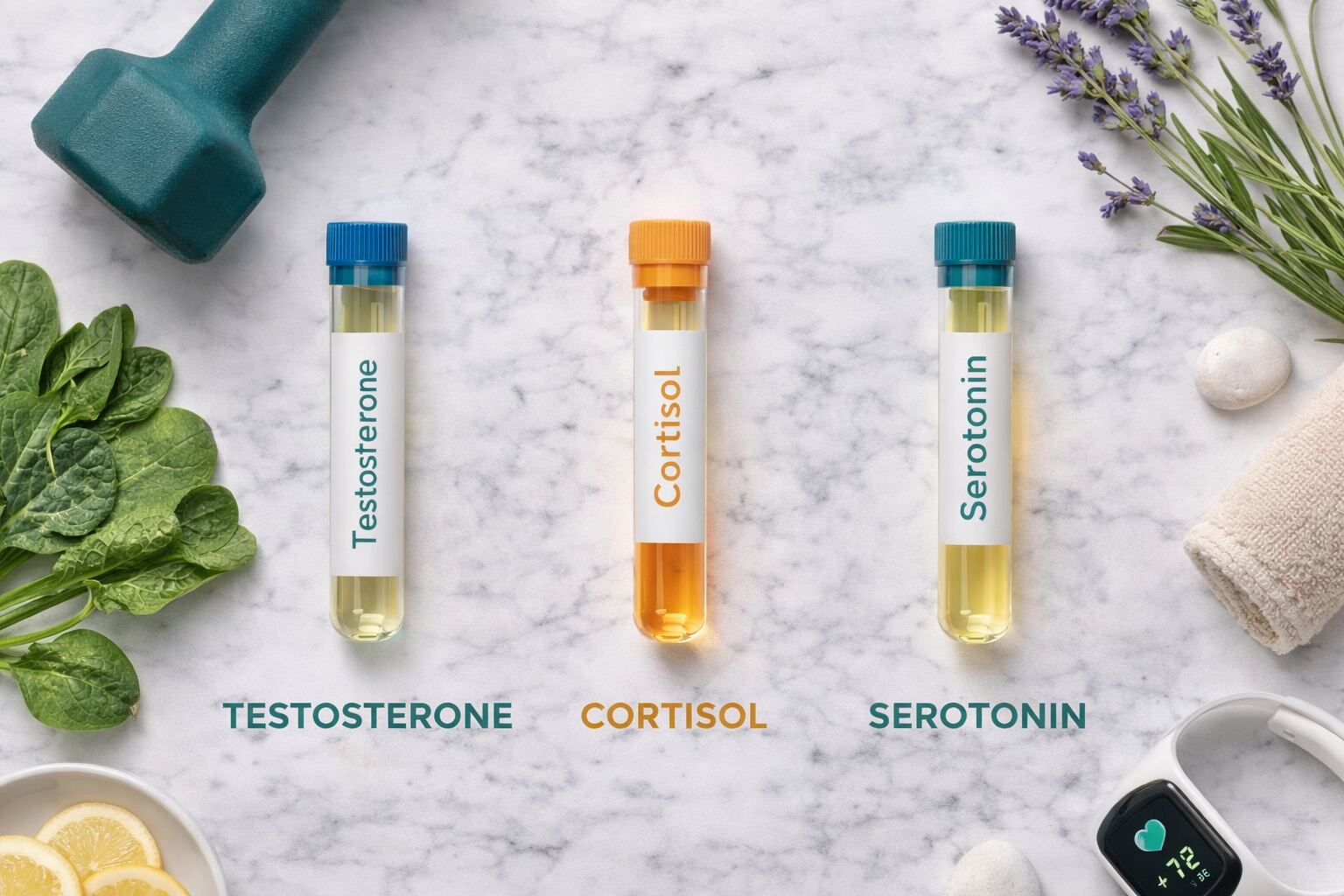
- Testosterone: Resistance training elevates testosterone in both men and women, directly supporting sex drive (Journal of Clinical Endocrinology & Metabolism, 2012)
- Cortisol: Chronic stress and overtraining suppress libido; recovery is as important as the workout
- Dopamine & Serotonin: Aerobic exercise boosts mood-regulating neurotransmitters, which improve desire and intimacy
Pro Tip: If your libido has dropped, check your training load. Overtraining syndrome is a documented libido suppressor — rest and recovery matter.
Understanding Desire Discrepancy

A common challenge in long-term relationships is mismatched libido — what sex therapists call desire discrepancy. One partner wants more intimacy; the other is content with less. This is not a sign of failure — it’s deeply normal.
The early phase of a relationship triggers neurochemical changes (elevated dopamine and norepinephrine) that temporarily heighten desire. Over time, as the relationship matures, these levels normalize.
Strategies to manage desire discrepancy:
- Scheduled intimacy — just as you schedule workouts, schedule time for connection; research supports that anticipated intimacy can increase desire (Sexual and Relationship Therapy, 2019)
- Broaden the definition — physical closeness, massage, or non-sexual touch maintains bonding hormones like oxytocin
- Address root causes — fatigue, low testosterone, or poor sleep are addressable health issues, not permanent states
Practical Timing & Optimization
Timing matters — in training and in intimacy. Most couples make the mistake of leaving sex for bedtime, when energy and testosterone levels are at their lowest.
Better timing options:
- Morning — testosterone peaks in the early hours for most adults
- Post-workout (not immediately after) — exercise elevates mood and body confidence; allow 30–60 minutes for cortisol to normalize
- Weekends or rest days — when physical recovery is higher and cognitive stress is lower
When to Seek Support
Low libido is not a personal failing — it’s often a symptom. If desire discrepancy or low drive is persistent, consider evaluating:
- Hormonal panels (testosterone, estradiol, thyroid)
- Sleep quality (poor sleep reduces testosterone by up to 15%, per JAMA, 2011)
- Mental health — anxiety and depression are among the leading causes of reduced libido
- Couples therapy or sex therapy — evidence-based interventions with strong outcomes
Key Takeaways
- Frequency is personal — aim for mutual satisfaction, not a societal benchmark
- Exercise supports libido — but overtraining can harm it
- Schedule intimacy — it’s not unromantic; it’s intentional
- Desire discrepancy is common — address it with communication, not shame
- Low libido has treatable causes — hormones, sleep, and stress are all optimizable
Disclaimer: This article is for informational and educational purposes only. It does not constitute medical or therapeutic advice. If you are experiencing persistent changes in libido or relationship concerns, please consult a licensed healthcare provider or certified sex therapist.
Sources:
- Muise, A. et al. (2017). Archives of Sexual Behavior — Sexual frequency and relationship well-being
- Vingren, J.L. et al. (2012). Journal of Clinical Endocrinology & Metabolism — Testosterone and resistance training
- Leproult, R. & Van Cauter, E. (2011). JAMA — Sleep and testosterone levels
- McCarthy, B. & Wald, L.M. (2019). Sexual and Relationship Therapy — Desire discrepancy interventions