
If you’re serious about performance, recovery, and long-term health, you’ve probably already explored fish oil, magnesium, and adaptogens. But one supplement that often flies under the radar — despite a history spanning thousands of years — is black seed oil. Pressed from the seeds of Nigella sativa, this potent oil is earning renewed attention in both clinical research and the fitness community.
What Is Black Seed Oil?
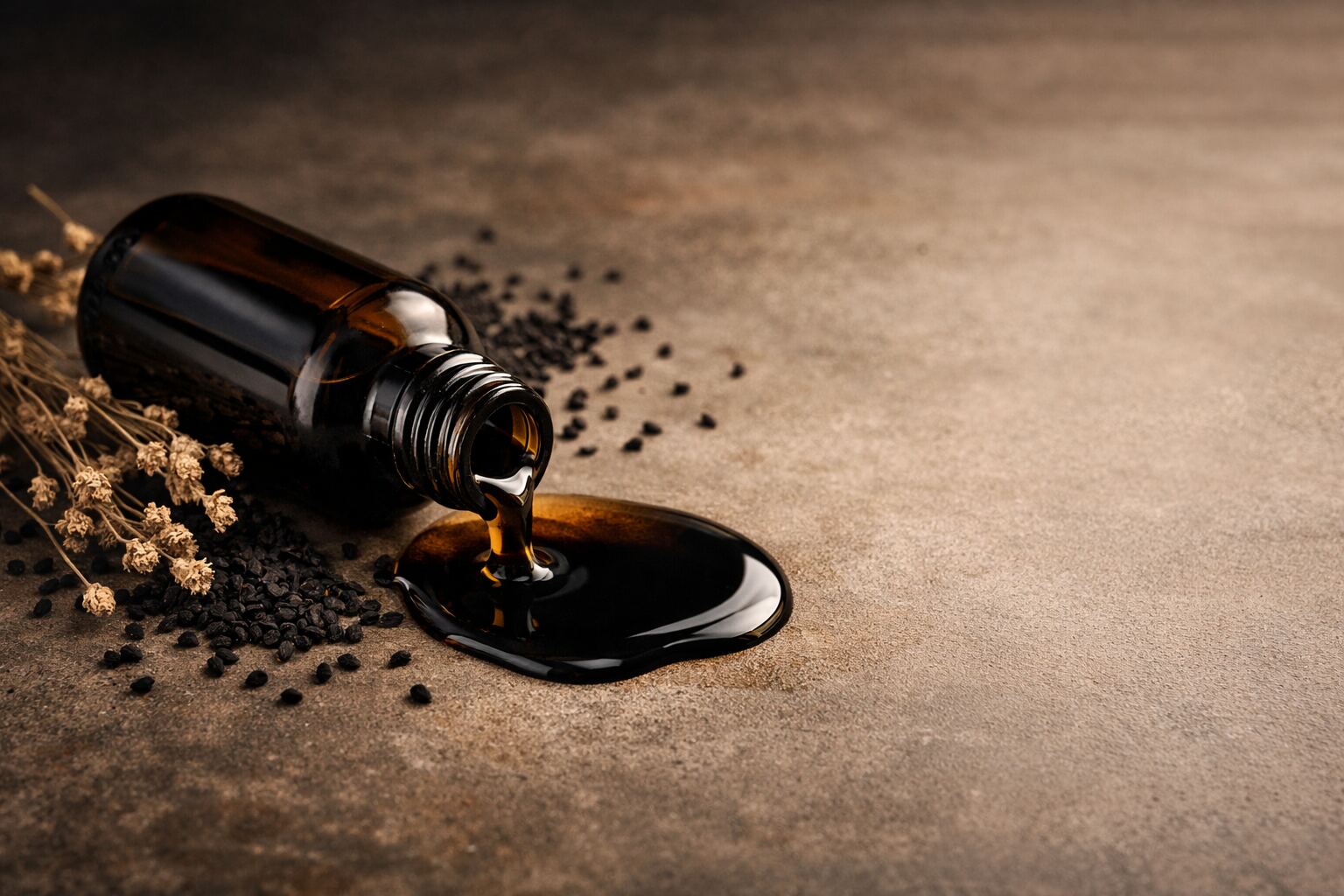
Nigella sativa is a flowering shrub native to Eastern Europe, the Middle East, and western Asia. Its tiny black seeds — also known as black cumin, black caraway, or kalonji — have been used medicinally for millennia. Archaeologists even discovered them in King Tutankhamun’s tomb, a testament to their long-standing value.
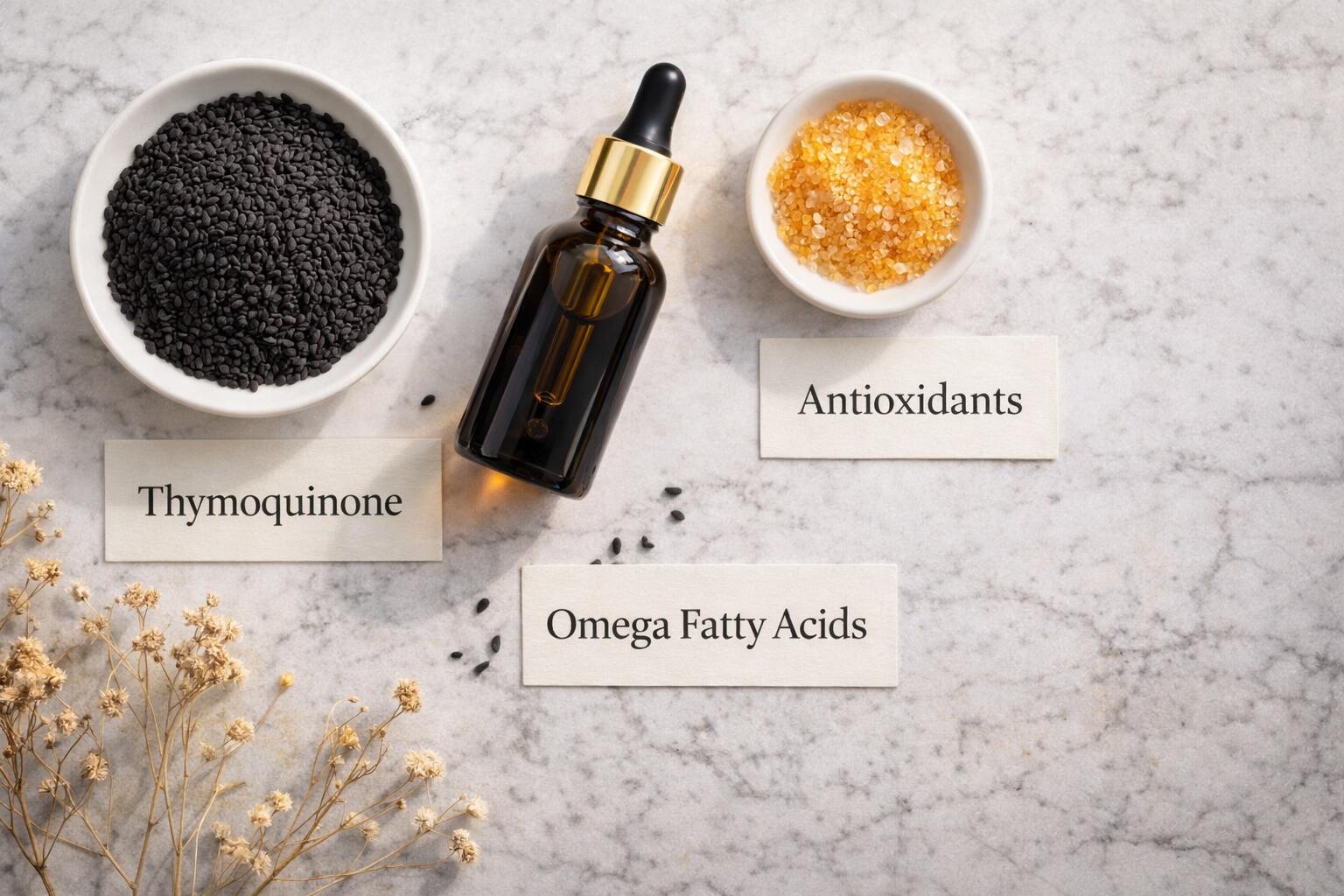
The seeds are cold-pressed to produce an oil rich in thymoquinone (TQ), the primary bioactive compound responsible for most of its therapeutic effects.
Science-Backed Benefits for Active Individuals
1. Reduces Inflammation & Supports Recovery
Chronic low-grade inflammation is one of the biggest barriers to consistent training progress. Thymoquinone has demonstrated potent anti-inflammatory and antioxidant activity in multiple studies, comparable to non-steroidal anti-inflammatory agents in some applications (Journal of Ethnopharmacology, 2013). By neutralizing free radicals generated during intense exercise, black seed oil may help reduce muscle soreness and speed up recovery between sessions.
2. Supports Cardiovascular Health & Endurance
A healthy cardiovascular system is foundational to athletic output. Research published in Complementary Therapies in Medicine (2016) found that Nigella sativa supplementation meaningfully reduced total cholesterol, LDL, and triglyceride levels in participants. Notably, one study found that powdered black seed — when combined with aerobic exercise — helped raise HDL (“good”) cholesterol, suggesting a synergistic effect for endurance athletes.
3. May Improve Respiratory Function
Your lungs are your engine. A controlled trial found that black seed oil supplementation improved asthma symptom control more effectively than placebo (Phytotherapy Research, 2017). For athletes training in variable conditions or those dealing with exercise-induced bronchoconstriction, this is a compelling area of ongoing research.
4. Antioxidant Defense for Cellular Health
Intense training generates significant oxidative stress. Black seed oil’s thymoquinone content acts as a potent antioxidant, helping protect cells from exercise-induced damage — a benefit particularly relevant for athletes training at high volumes (Oxidative Medicine and Cellular Longevity, 2014).
Practical Guidance: Dosage & Timing
- Typical dose: Between 500 mg and 2,000 mg per day, most commonly split into two doses
- Forms available: Liquid oil, softgel capsules, or whole seeds
- Best taken with: Food, to improve absorption and reduce digestive discomfort
- Taste note: The oil has a strong, bitter flavor — mixing with honey, a protein shake, or a smoothie makes it more palatable
Pro tip: Start at the lower end (500 mg/day) and assess your tolerance over 2–4 weeks before increasing.
How to Use It in Your Routine
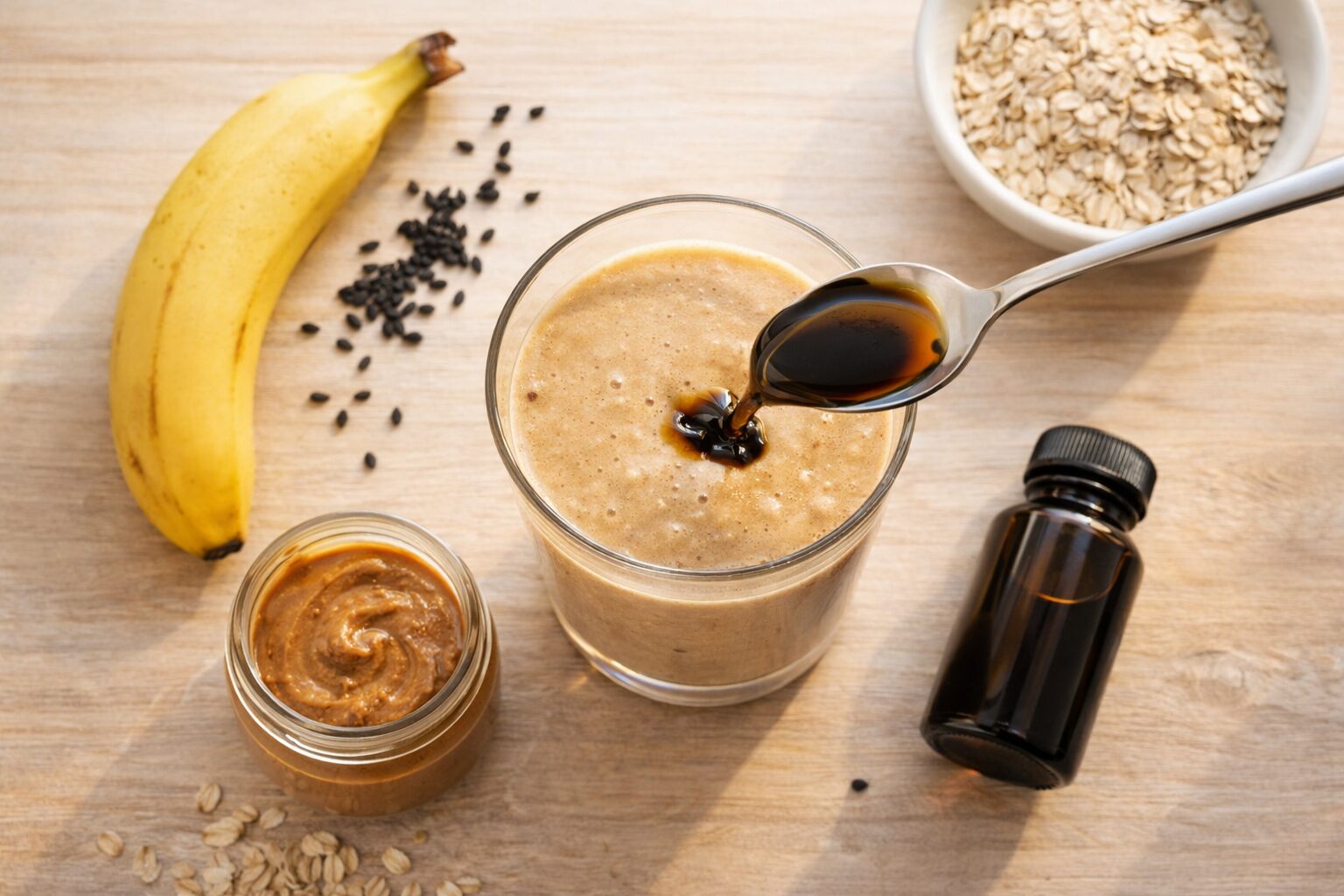
Black seed oil integrates easily into everyday nutrition:
- Post-workout smoothie: Blend 1 tsp with banana, almond butter, and oat milk
- Morning ritual: Take 1 tsp with warm water and honey on an empty stomach
- Salad dressing: Combine with olive oil, lemon juice, and garlic
- Capsule form: Ideal for those sensitive to the bitter flavor
Cautions & Contraindications
While generally regarded as safe for most adults, keep these points in mind:
- Blood clotting: Black seed oil may slow clotting time — avoid if you’re on blood thinners or scheduled for surgery
- Liver/kidney load: High doses in animal studies have shown potential organ stress; stay within recommended ranges
- Pregnancy: Not recommended during pregnancy without medical supervision
- Drug interactions: Consult a healthcare provider if you take medications for diabetes, hypertension, or immunosuppression
The Bottom Line
Black seed oil is one of the more well-researched herbal supplements available, with emerging evidence supporting its role in inflammation management, cardiovascular health, and antioxidant defense — all relevant to active individuals. While it’s not a replacement for a solid training and nutrition foundation, it may offer meaningful support as part of a well-rounded wellness routine.
Disclaimer: This article is for informational purposes only and does not constitute medical advice. Supplements are not evaluated by the FDA for treating or preventing disease. Always consult a qualified healthcare provider before beginning any new supplement, especially if you have a pre-existing condition or take prescription medications.
Sources
- Randhawa, M.A. & Alghamdi, M.S. (2011). Anticancer activity of Nigella sativa. American Journal of Chinese Medicine.
- Sahebkar, A. et al. (2016). Effect of Nigella sativa on lipid profiles. Complementary Therapies in Medicine.
- Koshak, A. et al. (2017). Nigella sativa for asthma. Phytotherapy Research.
- Darakhshan, S. et al. (2015). Thymoquinone and its biological effects. Pharmacological Research.