
Your fitness routine tracks your sleep, calories, and recovery — but what about your sexual health? For active individuals and couples, libido is a direct reflection of hormonal balance, stress load, and overall wellness. Understanding what’s “normal” can reduce unnecessary pressure and help you build a healthier relationship alongside your healthy body.
Es gibt keine magische Zahl
Eine der meistgesuchten Fragen im Bereich Beziehungsgesundheit ist:“How much sex should married couples be having?”Die kurze Antwort:Es gibt keinen universellen Maßstab.
Forschung, veröffentlicht in derArchives of Sexual Behavior(2017) analysierte Daten von über 26.000 Amerikanern und stellte fest, dass Paare, die einmal pro Woche Sex hatten, die höchste Beziehungszufriedenheit meldeten – aber häufigerer Sex das Glück nicht signifikant über diese Schwelle hinaus steigerte.
Was wichtiger ist als die Häufigkeit:
- Mutual satisfaction — both partners feel fulfilled
- Consistency — regular intimacy, even if infrequent
- Communication — open dialogue about needs and expectations
Whether that means twice a week or twice a month, the “right” amount is what works for yourBeziehung – nicht die deines Freundes.
Die Verbindung zwischen Fitness und Libido
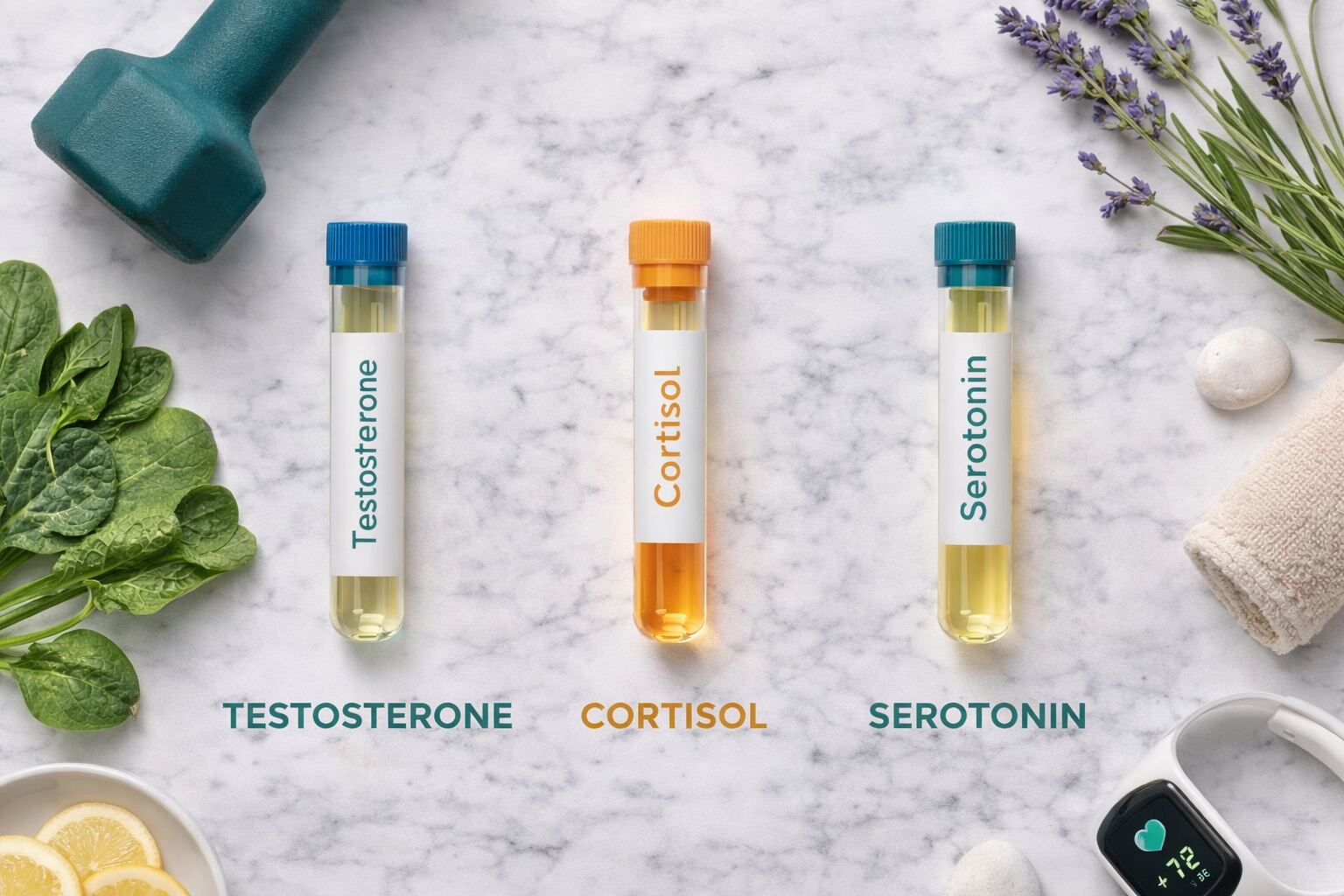
Als jemand, der körperliche Gesundheit priorisiert, haben Sie bereits einen Vorteil. Bewegung beeinflusst die Libido erheblich durch ihre Wirkung auf wichtige Hormone:
- Testosterone: Resistance training elevates testosterone in both men and women, directly supporting sex drive (Journal of Clinical Endocrinology & Metabolism, 2012)
- Cortisol: Chronic stress and overtraining suppress libido; recovery is as important as the workout
- Dopamine & Serotonin: Aerobic exercise boosts mood-regulating neurotransmitters, which improve desire and intimacy
Pro Tip: If your libido has dropped, check your training load. Overtraining syndrome is a documented libido suppressor — rest and recovery matter.
Verständnis der Wunschdiskrepanz

Eine häufige Herausforderung in langfristigen Beziehungen ist die unpassende Libido – was Sexualtherapeuten so nennenWunschdiskrepanz. Ein Partner will mehr Intimität; der andere ist mit weniger zufrieden. Das ist kein Zeichen von Scheitern – es ist völlig normal.
Die frühe Phase einer Beziehung löst neurochemische Veränderungen aus (erhöhtes Dopamin und Noradrenalin), die das Verlangen vorübergehend steigern. Mit der Zeit, wenn die Beziehung reift, normalisieren sich diese Werte.
Strategien zur Bewältigung von Verlangensunterschieden:
- Scheduled intimacy — just as you schedule workouts, schedule time for connection; research supports that anticipated intimacy can increase desire (Sexual and Relationship Therapy, 2019)
- Broaden the definition — physical closeness, massage, or non-sexual touch maintains bonding hormones like oxytocin
- Address root causes — fatigue, low testosterone, or poor sleep are addressable health issues, not permanent states
Praktisches Timing & Optimierung
Das Timing zählt – sowohl im Training als auch in der Intimität. Die meisten Paare machen den Fehler, den Sex erst ins Bett zu lassen, wenn Energie- und Testosteronwerte am niedrigsten sind.
Bessere Timing-Optionen:
- Morning — testosterone peaks in the early hours for most adults
- Post-workout (not immediately after) — exercise elevates mood and body confidence; allow 30–60 minutes for cortisol to normalize
- Weekends or rest days — when physical recovery is higher and cognitive stress is lower
Wann man Unterstützung suchen sollte
Geringe Libido ist kein persönliches Versagen – es ist oft ein Symptom. Wenn Wunschabweichungen oder niedriger Antrieb anhaltend sind, sollten Sie Folgendes prüfen:
- Hormonal panels (testosterone, estradiol, thyroid)
- Sleep quality (poor sleep reduces testosterone by up to 15%, per JAMA, 2011)
- Mental health — anxiety and depression are among the leading causes of reduced libido
- Couples therapy or sex therapy — evidence-based interventions with strong outcomes
Wichtige Erkenntnisse
- Frequency is personal — aim for mutual satisfaction, not a societal benchmark
- Exercise supports libido — but overtraining can harm it
- Schedule intimacy — it’s not unromantic; it’s intentional
- Desire discrepancy is common — address it with communication, not shame
- Low libido has treatable causes — hormones, sleep, and stress are all optimizable
Disclaimer: This article is for informational and educational purposes only. It does not constitute medical or therapeutic advice. If you are experiencing persistent changes in libido or relationship concerns, please consult a licensed healthcare provider or certified sex therapist.
Quellen:
- Muise, A. et al. (2017). Archives of Sexual Behavior — Sexual frequency and relationship well-being
- Vingren, J.L. et al. (2012). Journal of Clinical Endocrinology & Metabolism — Testosterone and resistance training
- Leproult, R. & Van Cauter, E. (2011). JAMA — Sleep and testosterone levels
- McCarthy, B. & Wald, L.M. (2019). Sexual and Relationship Therapy — Desire discrepancy interventions