
تتدرب بجد، وتأكل جيدا، وتحقق الماكروز — لكن إذا قضيت معظم يومك متوقفا على كرسي، فقد تقلل من كل هذا الجهد بهدوء. الأبحاث المنشورة فيAnnals of Internal Medicineيؤكد أن الجلوس المطول مرتبط بشكل مستقل بنتائج صحية سيئة، حتى بين الأشخاص الذين يمارسون الرياضة بانتظام. الجسم ببساطة لم يكن مهيأ للخمول الطويل، والعواقب أعمق بكثير من تيبس الظهر.
ماذا يحدث لجسمك عندما تجلس لفترة طويلة
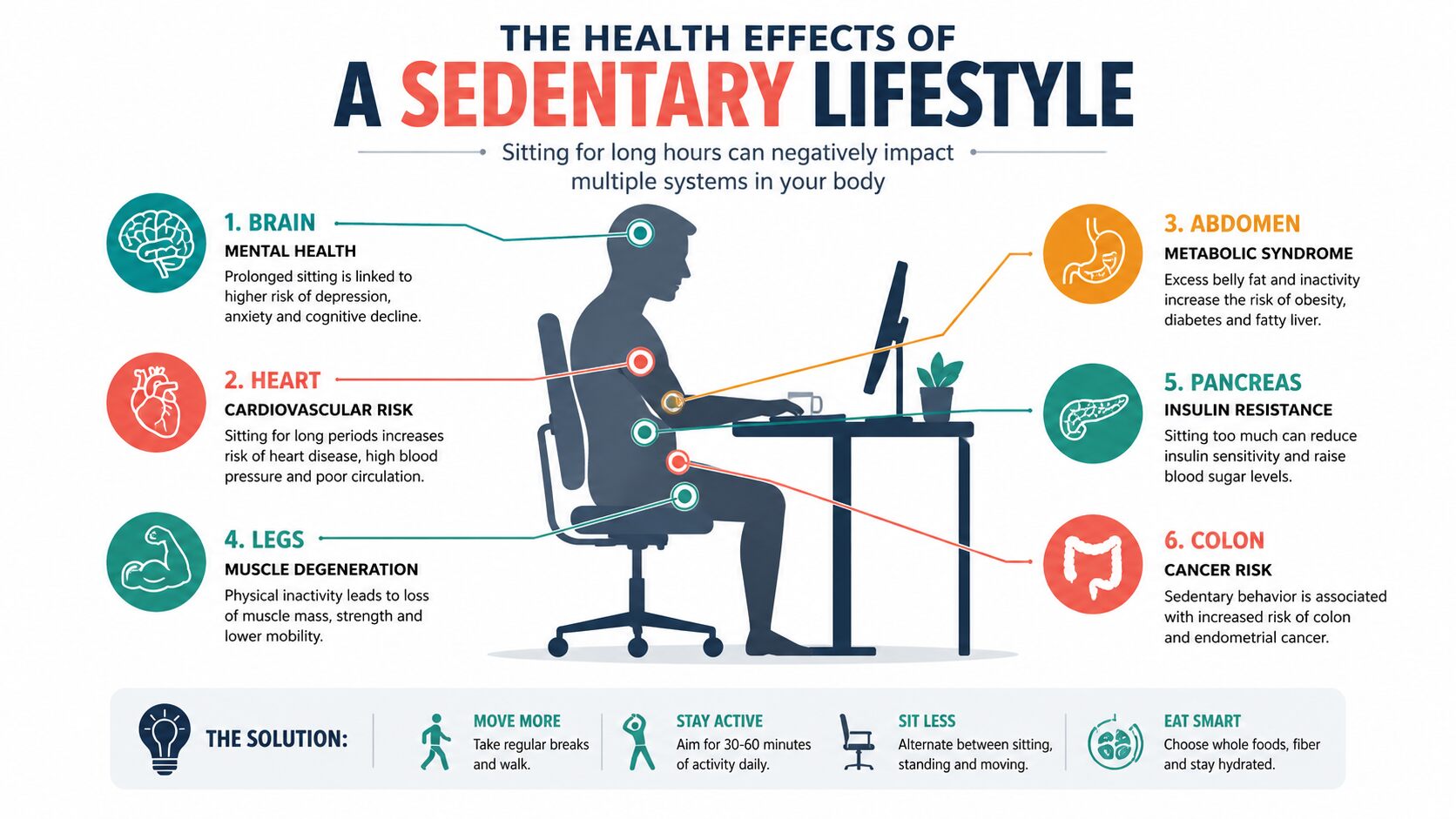
تتراكم المخاطر المرتبطة بنمط الحياة الخامل بسرعة. وفقا لمايو كلينك ومصادر متعددة محكمة الجلوس يرتبط ب:
- Metabolic syndrome: A cluster of conditions including elevated blood pressure, high blood sugar, excess abdominal fat, and abnormal cholesterol — each a risk factor for cardiovascular disease and type 2 diabetes.
- Cardiovascular disease: Reduced blood flow during prolonged inactivity raises blood pressure and disrupts lipid metabolism. A meta-analysis in the British Journal of Sports Medicine found that sedentary time significantly increases cardiovascular mortality risk.
- Insulin resistance: Extended sitting blunts glucose uptake in muscle tissue. Research in Diabetologia shows that interrupting sitting with short activity breaks meaningfully improves insulin sensitivity.
- Muscle degeneration: Staying still for hours reduces the neuromuscular stimulus needed to maintain muscle tone, accelerating the atrophy that undermines your strength goals.
- Cancer risk: The Journal of the National Cancer Institute has published evidence linking high sedentary time to increased risk of colon, breast, and endometrial cancers, independent of leisure-time physical activity.
- Mental health decline: Physical inactivity correlates with elevated rates of depression and anxiety. Movement triggers endorphin release and regulates cortisol — both critical for psychological resilience.
مفارقة الرياضيين
إليك الحقيقة المزعجة: ساعة واحدة من التدريب في النادي الرياضي لا تعوض ثماني ساعات من الجلوس. دراسة بارزة فيThe Lancetووجد التفاعل بمشاركة أكثر من مليون مشارك أن 60–75 دقيقة من النشاط متوسط الشدة يوميا كان مطلوبا للقضاء على خطر الوفاة المرتفع المرتبط بالجلوس المطول. معظم الناس لا يصلون إلى هذا الحد بكثير.
كيفية كسر دورة الجلوس

الحل لا يتطلب الذهاب إلى صالة رياضية. يتطلب تكرارا. الهدف هو قطع فترات الجلوس كل 30 دقيقة مع حركة لا تقل عن دقيقتين إلى ثلاث دقائق. أدلة منMedicine and Science in Sports and Exerciseتظهر أن هذه الانقطاعات القصيرة تحسن تنظيم الجلوكوز، وخفض ضغط الدم، وتقليل التعب.
استراتيجيات عملية:
- Set a timer to stand and move for 2–3 minutes every 30 minutes during your workday.
- Take calls on your feet — walking or standing.
- Switch to a standing desk or elevate your workstation temporarily with books or a counter.
- Replace seated meetings with walking meetings.
- Position a treadmill under an adjustable workstation for low-intensity movement throughout the day.
نتائج الأداء
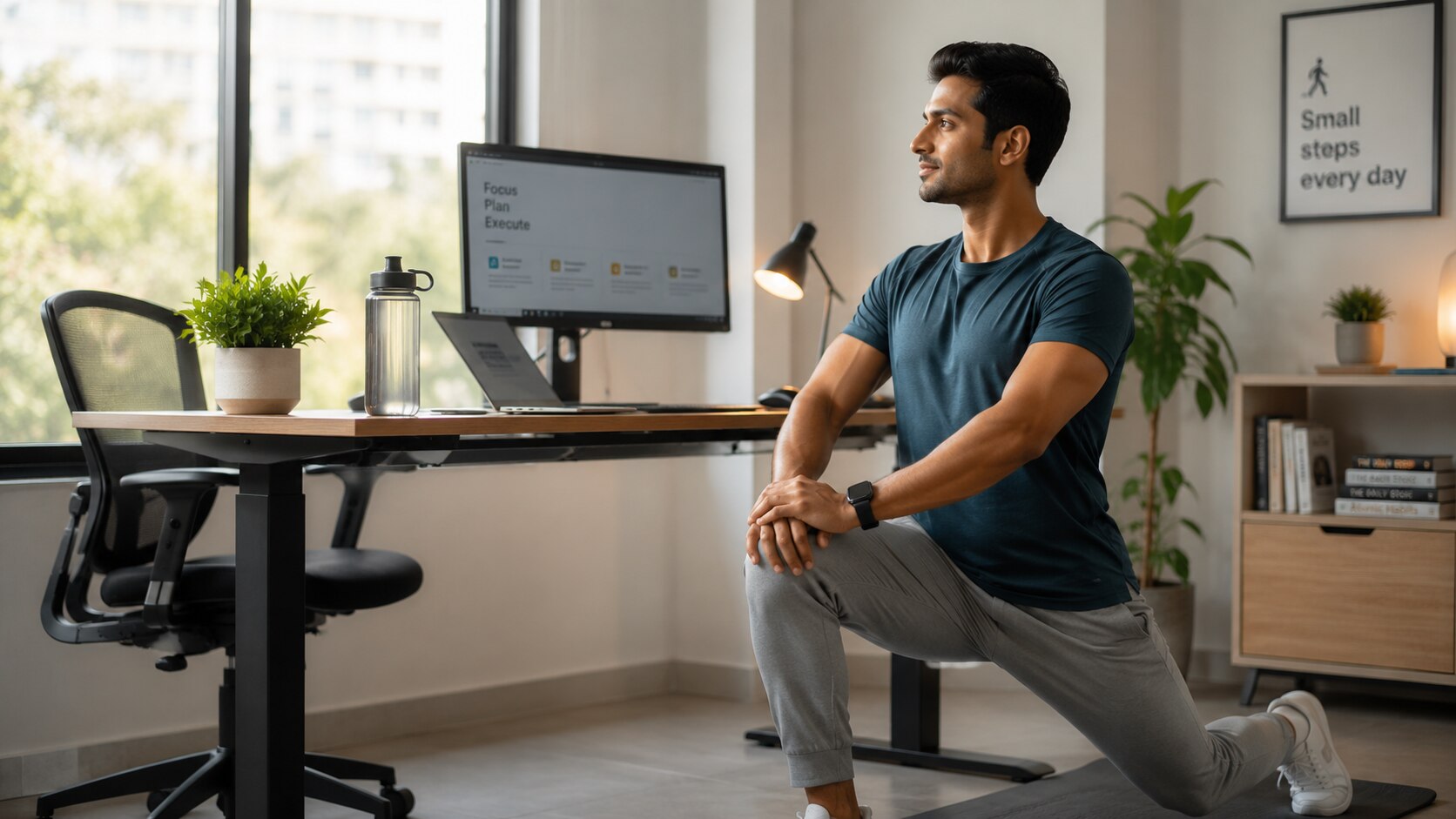
فكر في فترات الاستراحة الحركية كجلسات تدريب صغيرة. كل واحدة منها تجهز جهازك القلبي الوعائي، وتحافظ على حساسية الأنسولين حادة، وتحافظ على أنماط تنشيط العضلات التي تعمل على بنائها في النادي الرياضي. الوضعية الجيدة أثناء فترات الجلوس مهمة أيضا — ادعم عمودك الفقري القطني، حافظ على قدميك مسطحتين على الأرض، وتجنب وضعية الرأس الأمامية التي تجهد العمود الفقري العنقي وتقيد التنفس.
قلة الجلوس وزيادة الحركة — حتى الحركات منخفضة الشدة — هي تعزيز حقيقي للأداء، وليست مجرد توصية صحية. ضعها مع تدريبك، لا ضده.
المصادر:
- Biswas A, et al. Annals of Internal Medicine, 2015.
- Ekelund U, et al. The Lancet, 2016.
- Dunstan DW, et al. Diabetologia, 2012.
- Wilmot EG, et al. Diabetologia, 2012.
- Matthews CE, et al. Journal of the National Cancer Institute, 2009.
- Biswas A, et al. British Journal of Sports Medicine, 2015.
Disclaimer: This article is for informational purposes only and does not constitute medical advice. Consult a qualified healthcare professional before making significant changes to your activity levels, particularly if you have pre-existing health conditions.